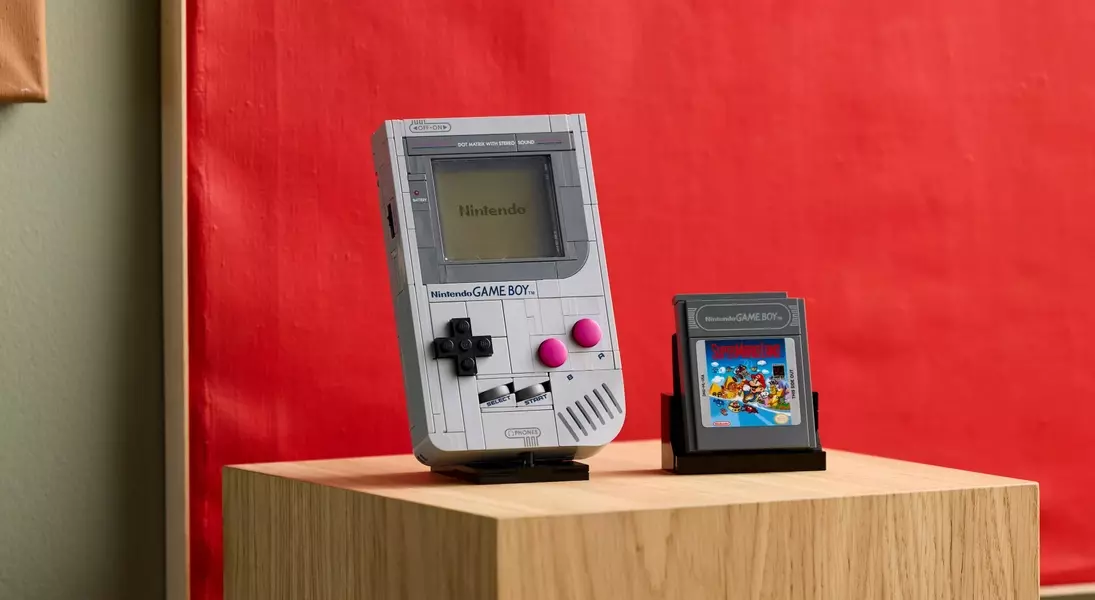
The recent release of a Lego set meticulously recreating the classic Nintendo Game Boy has inadvertently sparked a lively online discussion among enthusiasts. Many builders, both seasoned and new to the world of the iconic handheld console, have found themselves at odds over the precise placement of a small, yet significant, piece on the replica game cartridges. This minor construction detail, which mirrors a design element on the original Game Boy games intended for ease of use, has become a focal point of playful debate and correction within the Lego and retro gaming communities.
Released in late last year, the 421-piece Lego Game Boy set quickly became a popular holiday gift, with many proud new owners taking to social media to showcase their completed builds. However, eagle-eyed long-time fans of the Nintendo Game Boy noticed a recurring error in these posts: the incorrect positioning of a specific tab on the miniature game cartridges. This piece, designed to simulate an offset indent found on the original Game Boy games to facilitate insertion and removal, was often being placed centrally by builders, seemingly due to a lack of familiarity with the console's historical design.
The issue stems from the design of the Lego cartridges, which include a distinct long piece meant to replicate the offset indent. For those who grew up with the original Game Boy, the correct placement is intuitive. However, individuals without prior experience with the console, or those simply going by visual 'vibes', often opt for a symmetrical, central placement. This has led to numerous good-natured "public service announcements" from veteran fans on platforms like Reddit and Facebook, guiding others to the historically accurate build. Some builders have openly admitted their initial error, expressing gratitude for the corrections, while others have expressed surprise at the forgotten design nuance.
Interestingly, the confusion is not entirely the fault of the builders. Some online commentators have pointed out that even the official Lego Game Boy box art appears to depict the cartridges with the tab incorrectly placed in certain images. This oversight from the manufacturer adds another layer to the discussion, suggesting that even those involved in the product's creation might have overlooked the subtle design detail that is now captivating the online community. The phenomenon underscores how minute details can become significant talking points, especially when bridging generational gaps in design knowledge and nostalgia.
This ongoing dialogue about the Lego Game Boy's cartridge assembly offers a fascinating glimpse into the intersection of nostalgia, detailed design, and community interaction. It highlights how a seemingly minor element can ignite widespread conversation and education among enthusiasts, reinforcing the lasting impact and attention to detail surrounding beloved cultural artifacts like the Nintendo Game Boy.
