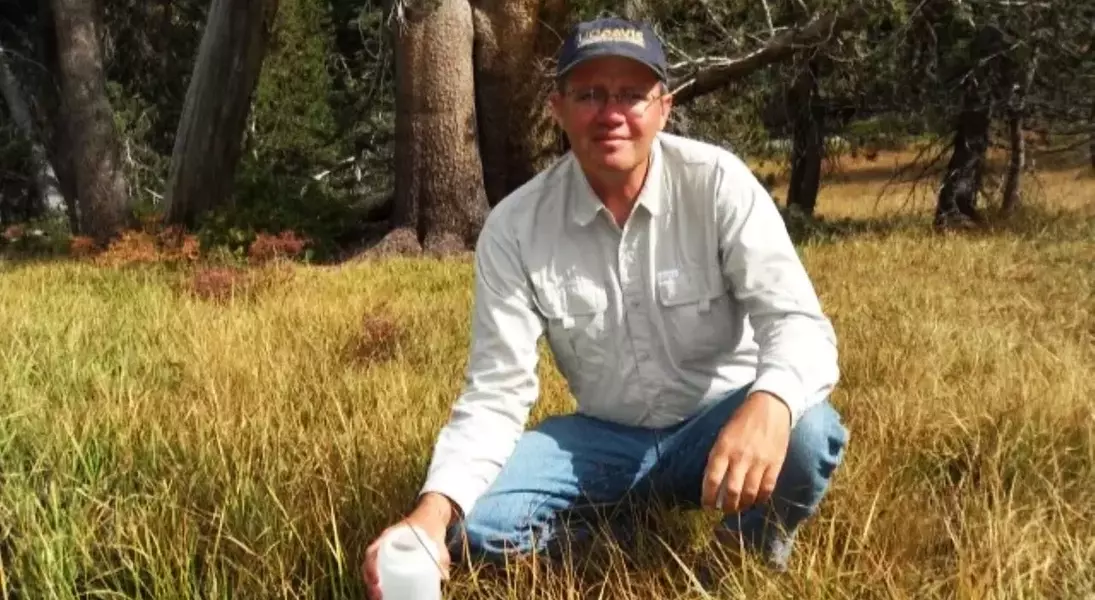
Dr. Kenneth Tate, a distinguished figure in the realm of rangeland science and management affiliated with the University of California, Davis, recently passed away at 58. Throughout his impactful three-decade career, Dr. Tate consistently forged connections between sophisticated scientific inquiry and tangible solutions for agricultural practitioners and policy formulators. His pioneering contributions profoundly influenced strategies for water purity, grazing methodologies, and wildlife preservation across California's extensive rangeland ecosystems, leaving an enduring imprint on both the natural environment and the farming sector.
Kenneth W. Tate, a Cooperative Extension specialist and professor within the Department of Plant Sciences at UC Davis, unexpectedly passed away on June 5, 2025, in Oregon. Born in Newark, California, and raised in Norman, Oklahoma, Dr. Tate began his tenure at the University of California in 1995. This followed his academic achievements, which included a Ph.D. in water resources, a master’s degree in range ecology and management, and a bachelor’s degree in range ecology and management, all from Oklahoma State University. He also held an associate’s degree in range management from Northeastern Oklahoma A&M College.
Over his professional life, Dr. Tate became a prominent voice in rangeland science and its practical application. He addressed numerous agricultural and environmental challenges spread across California's more than 30 million acres of rangelands. His expertise led to the formation and leadership of successful interdisciplinary teams. These teams investigated how various management techniques influenced critical ecosystem functions and overall environmental health, ranging from localized plots to entire ranching operations and hydrological basins. His efforts were consistently aimed at enhancing conservation outcomes while simultaneously boosting agricultural advantages, such as the efficiency and financial viability of ranching. Dan Macon, a colleague and UC Cooperative Extension livestock and natural resources advisor, remarked on Dr. Tate’s unique ability to merge advanced scientific principles with real-world applicability. Macon noted that Tate excelled at helping ranchers comprehend the scientific underpinnings of their management practices and translating this practical field knowledge into effective policy.
Tim Koopmann, a rancher from the Bay Area, integrated Dr. Tate’s findings directly into his operational strategies. Koopmann observed Tate’s work on nutrient loading and E. coli presence in the irrigated lands of Bridgeport Valley and on fecal pathogens in leafy green produce from Salinas Valley, highlighting Tate's capacity to deliver pragmatic scientific insights for actionable solutions. Their collaboration began in 1998, when the San Francisco Public Utilities Commission considered ending managed livestock grazing on a 40,000-acre watershed due to concerns about Cryptosporidium parvum. Dr. Tate, alongside UCCE specialist Rob Atwill, UCCE livestock advisor Sheila Barry, the USDA Natural Resources Conservation Service, the Alameda County Resource Conservation Service, and local ranchers, conducted crucial research on cattle and local wildlife. Koopmann emphasized that this research yielded data that led to enhanced management approaches, preserving the beneficial role of managed grazing in reducing fire fuel, improving habitats, and controlling invasive plants.
Dr. Tate's unwavering dedication to the ranching community was notably demonstrated during California’s severe drought from 2012 to 2016. He chose to forgo his sabbatical to assist ranchers grappling with the harsh conditions. In collaboration with the U.S. Drought Monitor Group, the State of California, and the ranching community, he organized the 2014 “Ranching and California’s Drought Workshop and Webcast.” This event facilitated discussions among participants at UC Davis and 16 rural locations across California, covering topics such as state and federal drought declarations, ranchers' experiences, and livestock feeding strategies during drought. Rick Roberti, president of the California Cattlemen's Association and a rancher from Plumas County, worked with Tate for over two decades. Roberti reflected that Tate's influence would resonate for generations in the Sierra Valley, praising Tate's integrity and his success in engaging individuals who were otherwise hesitant to cooperate with governmental bodies. Agricultural organizations have widely honored Dr. Tate's memory, with the California Rangeland Trust and the California Cattlemen's Association both issuing heartfelt tributes recognizing his profound and lasting contributions to rangeland conservation and the ranching community.
Beyond his extensive research and outreach, Dr. Tate was also a dedicated mentor to over 50 graduate students, postdoctoral researchers, and numerous undergraduate interns. Many of his former students have since become influential leaders in the fields of rangeland conservation and management, a testament to his profound impact on emerging professionals. Leslie Roche, a UC Cooperative Extension Specialist, was among his mentees. She credits Tate as her mentor and unwavering supporter throughout her academic and professional journey. Roche fondly remembers him as a tireless advocate for working rangelands and the ranching community, always leading with integrity and a commitment to scientifically sound, practical solutions. She notes that his compassion, humility, and remarkable ability to connect with diverse individuals left an enduring impression on everyone fortunate enough to know him.
