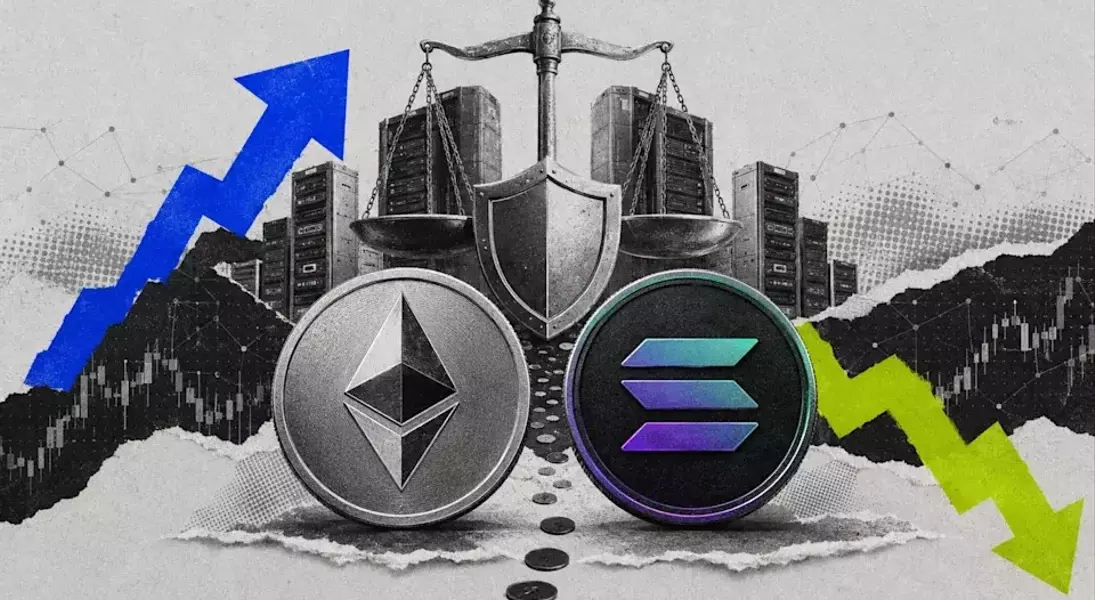
Major blockchain platforms, Ethereum and Solana, are currently reviewing their token issuance models. This re-evaluation stems from a critical need to balance network security funding with the objective of preserving token value for holders. The proposed adjustments aim to optimize the economic foundations of these leading decentralized networks, ensuring their long-term viability and appeal in the dynamic crypto landscape.
Blockchains Redefine Issuance for Security and Scarcity
In a significant move to refine their economic models, Ethereum and Solana, two prominent blockchain ecosystems, are actively debating modifications to their respective inflation schedules. This initiative is driven by a fundamental question: what level of new token generation is truly necessary to uphold robust on-chain security without unduly diluting the holdings of participants?
On Monday, August 10, 2026, industry experts, including Galaxy Research Vice President Lucas Tcheyan, highlighted the ongoing reassessments within both communities. Stakeholders are meticulously examining whether current security budgets remain appropriate and if the benefits derived from these budgets genuinely outweigh the potential for token dilution. While no definitive decisions have been reached, and proposals are still undergoing rigorous technical and governance reviews, the outcomes are poised to significantly influence the future supply and value trajectories of ETH and SOL.
For Ethereum, a group of six researchers, notably Justin Drake from the Ethereum Foundation, have put forth EIP-8361, dubbed the Tapered Issuance Burn. This proposal suggests a mechanism where a greater proportion of validator rewards would be 'burned' as staking participation increases. Should 50% of Ethereum's total supply be staked, all new tokens generated at the consensus layer would be incinerated, effectively removing the incentive for further increases in staking ratios. Under current conditions, where approximately one-third of ETH is staked, this change could see consensus-layer yields drop from around 2.6% to 1.2%, though priority fees and maximum extractable value (MEV) revenue would remain untouched. Proponents argue this could curb excessive staking concentration and bolster ETH's monetary characteristics, while critics express concerns about the viability of solo staking and the appeal to institutional investors. If adopted, possibly through Ethereum's projected Hegotá upgrade, implementation would likely occur no earlier than 2027.
Concurrently, Solana is leveraging its nascent on-chain governance system to evaluate two critical proposals. The first, SIMD-0550, aims to double Solana's annual disinflation rate to 30%. This accelerated disinflation would bring forward the network's terminal inflation rate of 1.5% from 2032 to 2029, effectively eliminating an estimated 18.9 million SOL from future emissions. The second proposal, SIMD-0553, seeks to replace Solana's existing flat signature fee structure with a resource-based fee model, wherein fees would be determined by the computational resources demanded by each transaction. These fees would then be entirely burned. Initial estimates suggest this could significantly increase the daily SOL burn rate from approximately 650 tokens to between 7,500 and 9,000. Both SIMD-0550 and SIMD-0553 have garnered sufficient initial backing to proceed to formal discussion, requiring a two-thirds approval from participating decisive stake for passage.
In essence, both Ethereum and Solana are transitioning from models heavily reliant on inflation to incentivize validators, a strategy prevalent during their developmental stages. As these networks mature, there's a collective shift towards funding security through transaction activity rather than continuous token emissions. While reduced inflation could reinforce scarcity narratives and mitigate dilution for long-term holders, it also poses challenges by potentially compressing validator and staker returns, which could impact decentralization and overall network security.
The ongoing debates in both the Ethereum and Solana communities highlight a profound evolution in blockchain economics. These discussions reflect a maturing understanding that while token scarcity can be a powerful narrative, it cannot replace genuine network demand and utility. The platforms are meticulously calibrating their tokenomics to achieve a sustainable balance between incentivizing network participants, maintaining robust security, and enhancing long-term value for their ecosystems. The outcomes of these proposals will undoubtedly set new precedents for how decentralized networks manage their economic policies, emphasizing that a blockchain's enduring value ultimately hinges on its fundamental utility, widespread adoption, and real-world activity, rather than merely on supply reforms. This strategic pivot signifies a move towards more refined, demand-driven economic models that could shape the future trajectory of the entire cryptocurrency market.
