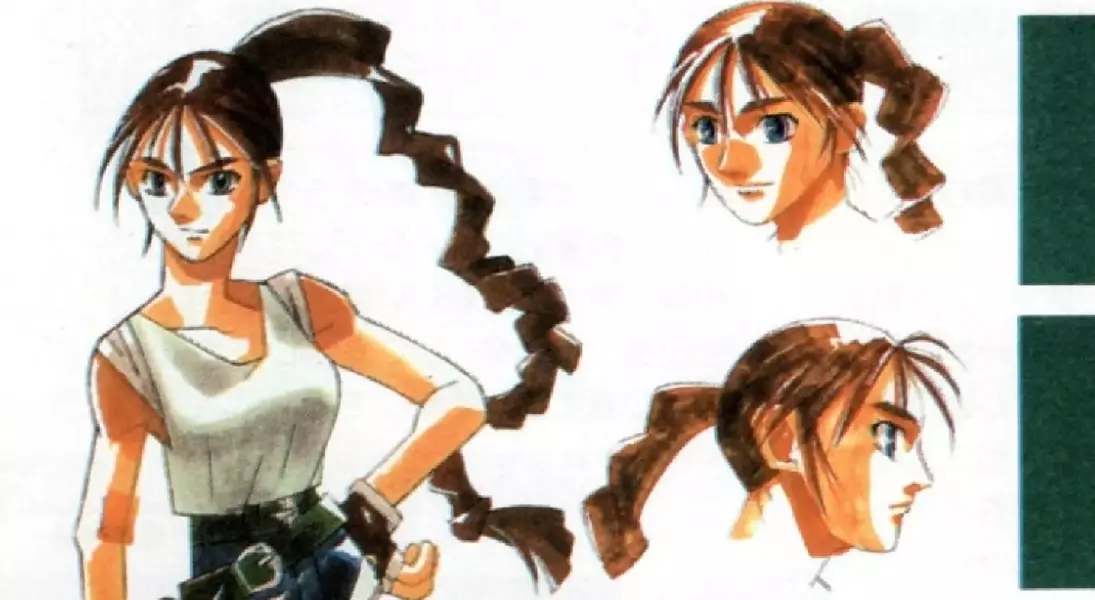
Lara Croft, a distinguished icon in video game history, almost underwent a dramatic visual transformation. Early in the development of the original Tomb Raider, its Japanese publisher, Victor, suggested a significant overhaul of her appearance to better resonate with the Japanese audience. They envisioned a character with larger eyes and a more exaggerated head, drawing parallels to popular Japanese franchises like Final Fantasy 7 or Street Fighter.
These proposals were detailed in scans from a '90s Saturn Fan magazine and recently recirculated by Paul Douglas, the game's co-creator, on BlueSky. The concept art showcased a distinct anime aesthetic, which, while visually appealing, deviated sharply from the established Western design. Despite these efforts, including the creation of a 3D render, Douglas confirmed that game's other co-creator, Toby Gard, staunchly opposed altering Lara's core in-game model. Ultimately, the only adjustments made for the Japanese market were in the game's manuals and guides, with the original in-game character design remaining intact. Further investigation suggests that Hiromasa Ota (or Ohta/Oota), a character designer for Victor, was behind these alternative illustrations, as his signature "Ohchan" appears on the art and his name is credited in the Japanese Saturn manual.
This historical anecdote reveals a fascinating crossroads in Lara Croft's development, highlighting a moment when her identity could have shifted dramatically. The decision to retain her original design proved prescient, cementing her global appeal and enduring legacy. It demonstrates the importance of creative vision and the courage to uphold it, even in the face of market pressures, ultimately shaping a character who transcended cultural boundaries without conforming to every local trend.
