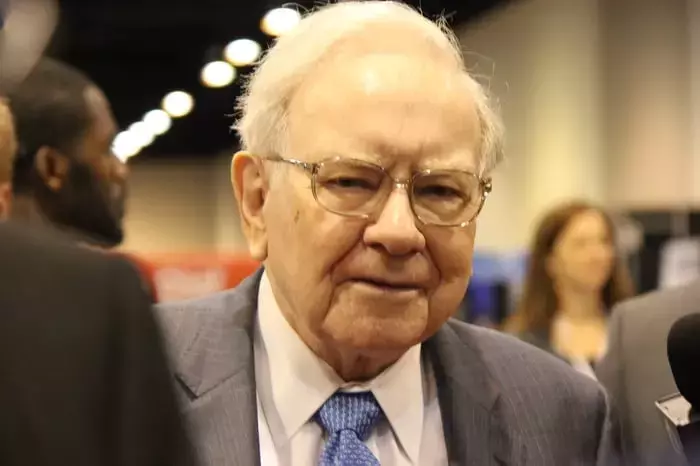
This report details Kraft Heinz's significant decision to bifurcate its operations, a strategic move that has garnered notable attention, particularly due to the publicly expressed reservations of its largest shareholder, Warren Buffett. The article explores the rationale behind the split, the challenges the company aims to address, and the broader implications for its future and investor confidence.
Kraft Heinz Divides: A Bold Reorganization Meets Shareholder Skepticism
Unpacking Kraft Heinz's Strategic Division and Its Market Impact
Kraft Heinz is embarking on a pivotal reorganization, splitting its operations into two distinct publicly traded entities. The first, Global Taste Elevation Co., will focus on the more dynamic condiments and sauces sector, aiming for accelerated expansion. The second, North American Grocery Co., will manage the traditional North American grocery business, with an emphasis on consistent cash flow generation through operational streamlining. This restructuring comes at a critical juncture for Kraft Heinz, as its stock has seen a significant downturn over the past five years, grappling with shifts in consumer preferences towards healthier options and a substantial debt burden.
Warren Buffett's Disapproval: A Stinging Rejection of Corporate Strategy
The announcement of Kraft Heinz's impending split has elicited a rare public display of displeasure from Warren Buffett, CEO of Berkshire Hathaway, the conglomerate holding the largest stake in the food giant. Buffett, instrumental in the formation of Kraft Heinz through the 2013 acquisition of Heinz and the subsequent 2015 merger with Kraft, vocalized his disappointment with the decision. His concerns stem from the estimated $300 million in separation costs, the projected year-long completion timeline, and the absence of a shareholder vote on the matter. This divergence of opinion underscores the strained relationship between Kraft Heinz's management and its most prominent investor, with Berkshire Hathaway having recently relinquished its board seats and adjusted its valuation of the position.
The Legacy of a Merger: Persistent Challenges and a Search for New Growth
Despite the initial high hopes surrounding the 2015 merger orchestrated by Berkshire and 3G Capital, Kraft Heinz's stock performance has been largely unfavorable, experiencing a substantial decline since the deal's inception. The company has grappled with evolving market dynamics, including the increasing demand for fresh and less processed foods, which has put pressure on its traditional product lines. The current split is an attempt to inject new life into the company's various segments, aiming to foster growth in some areas while optimizing efficiency in others. However, the path forward remains fraught with uncertainties, especially given the considerable investment required for the separation.
A New Direction: Global Taste Elevation vs. North American Grocery
The newly formed Global Taste Elevation Co. is envisioned to lead with its rapidly expanding portfolio, including iconic brands such as Heinz, Philadelphia Cream Cheese, and Kraft Mac & Cheese. This segment, which reported $15.4 billion in net sales and $4 billion in adjusted EBITDA in 2024, will concentrate on maximizing high-margin growth and fortifying market leadership. Conversely, the North American Grocery Co., encompassing brands like Oscar Mayer, Kraft Singles, Lunchables, Capri Sun, and Maxwell Coffee, aims to generate robust free cash flow by leveraging operational efficiencies from its established brands. With approximately $10.4 billion in sales and $2.3 billion in adjusted EBITDA last year, this division will focus on stability and consistent returns.
Navigating Uncertainty: The Road Ahead for Kraft Heinz Post-Split
The upcoming separation, slated for the latter half of 2026, introduces a degree of unpredictability for Kraft Heinz. Key unresolved aspects include the precise reallocation of debt between the two entities and the individual growth trajectories of the new companies. There is speculation that the Global Taste Elevation business might attract greater investor interest due to its growth potential, while the North American Grocery Co. could become a bastion for dividend-focused investors. While Kraft Heinz's attractive dividend yield is expected to persist initially, the long-term success of this ambitious restructuring will demand patience and a sustained focus on performance. The absence of Berkshire's full endorsement adds another layer of scrutiny, emphasizing that any positive outcomes will not materialize overnight but rather through dedicated, long-term strategic execution.
