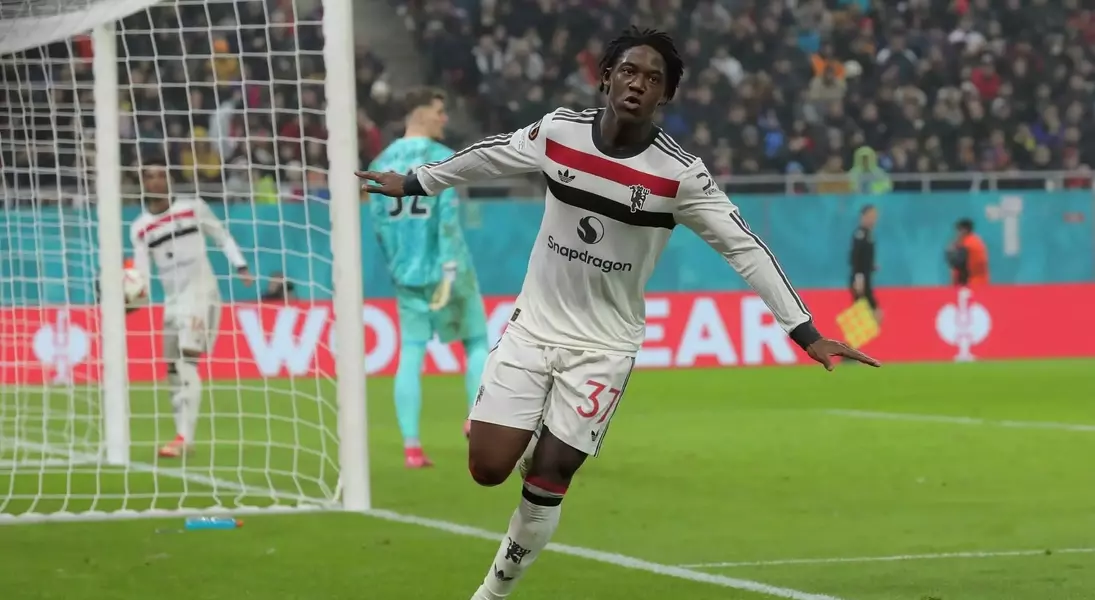
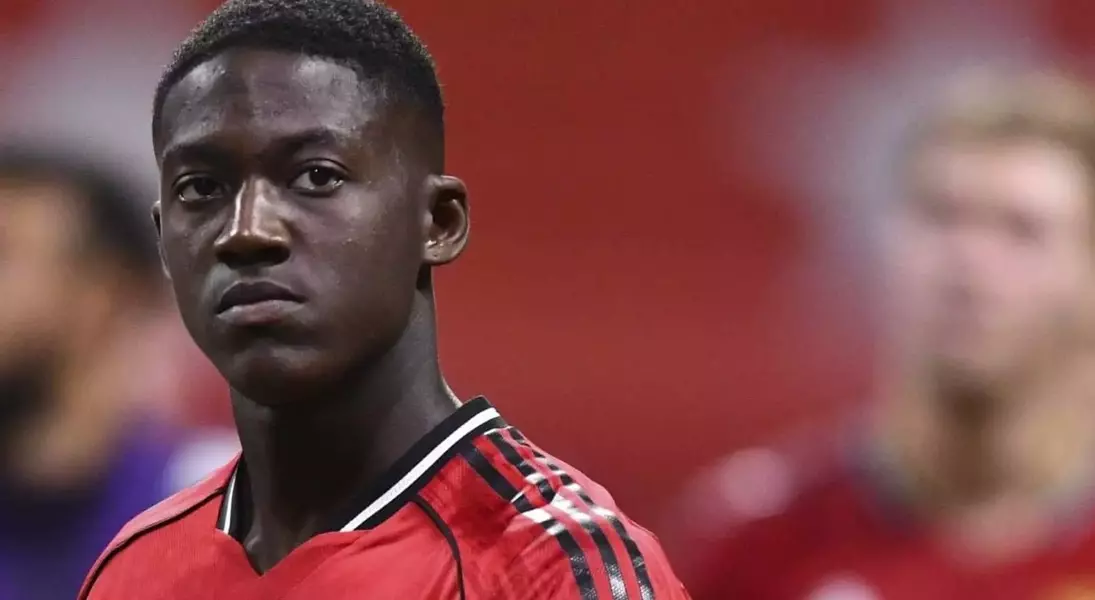
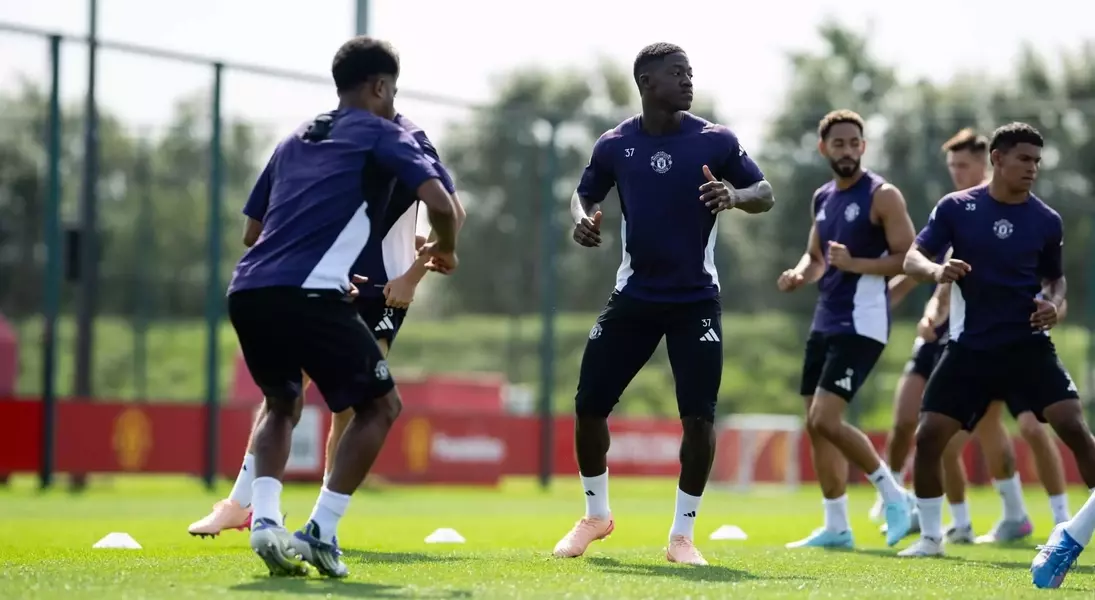
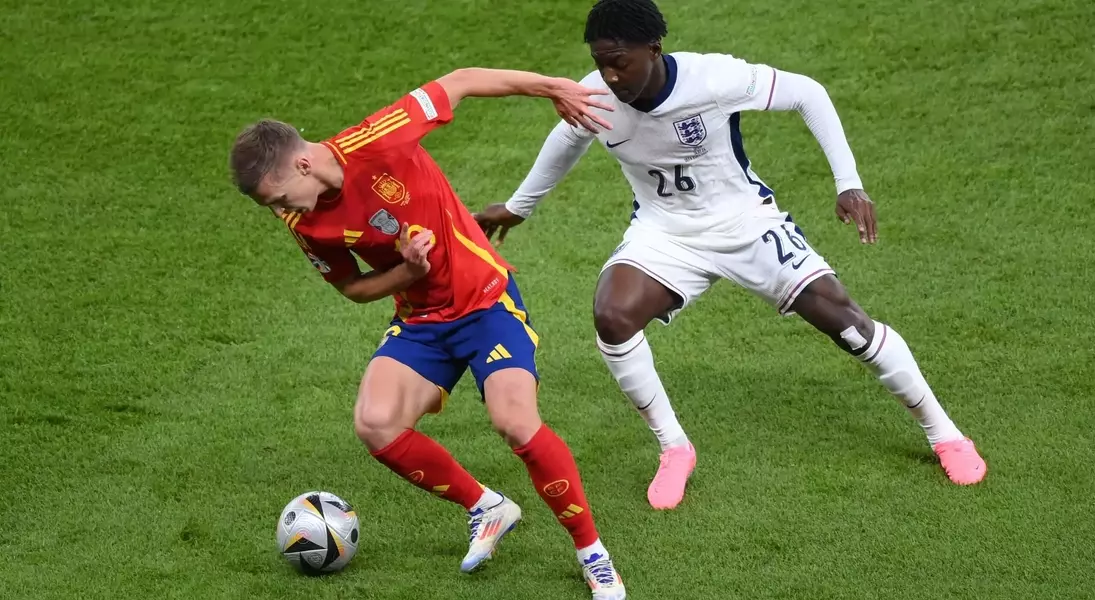
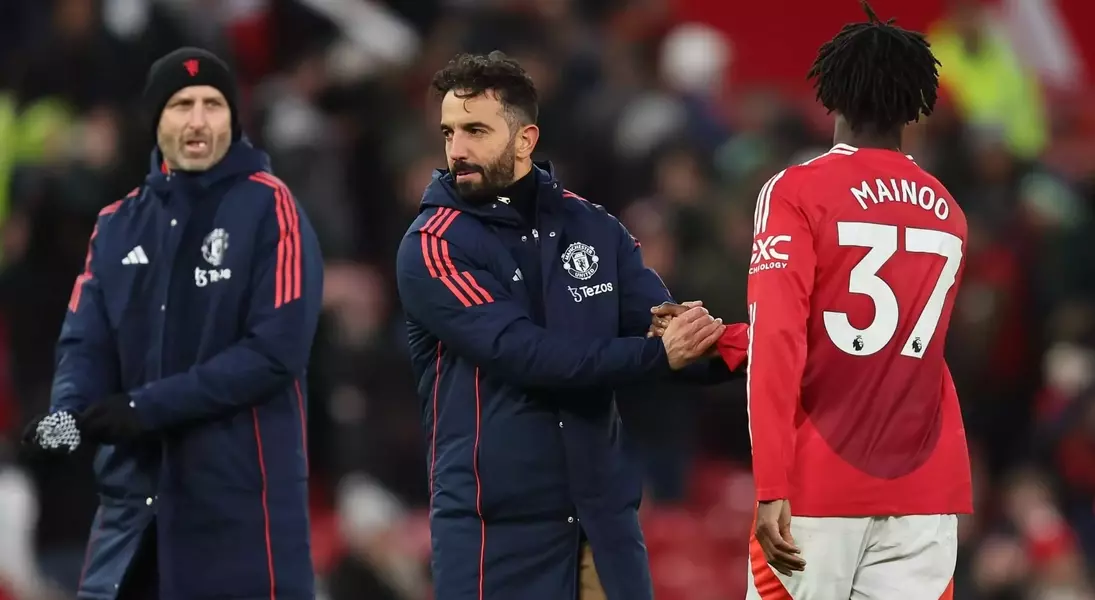
A cloud of uncertainty hovers over Kobbie Mainoo's tenure at Manchester United. The promising young midfielder finds himself in a precarious position, grappling with a significant reduction in playing minutes under the current managerial setup and an ongoing deadlock in contract extension talks. This challenging situation, exacerbated by his frustration over being sidelined in recent matches, suggests a potential parting of ways for the academy graduate and his boyhood club.
Since the close of the previous season, Mainoo has experienced a notable shift in his standing within the Manchester United squad. Despite his impressive breakthrough last season, which saw him feature prominently and even net a crucial goal in the FA Cup final, his involvement has waned considerably. This decline in playing time has led to palpable disappointment for the 20-year-old, who has reportedly expressed his desire for a move before the transfer window closes. Club insiders, speaking on background, acknowledge that Mainoo's current dissatisfaction stems from his limited appearances and evolving role within Ruben Amorim's tactical framework.
The club's stance on Mainoo's future has also become clearer throughout the summer. While they assert no active intent to push him out, there has been an openness to consider offers for the midfielder since June. Although Mainoo is not part of the group of players specifically marked for immediate departure, he has been identified as a potential sale if the right valuation is met. Reports indicate that an asking price of £70 million was initially quoted to interested parties like Chelsea in January, though this figure has reportedly dropped to around £45 million as the transfer deadline approaches. Major European clubs, including Bayern Munich and Erik ten Hag's Bayer Leverkusen, had explored the possibility of acquiring Mainoo, but financial considerations ultimately deterred formal bids. Mainoo himself is said to favor a move to a continental club over remaining in the Premier League, an inclination he has held since his academy days.
Adding to the complexity is the impasse in contract negotiations. Mainoo signed a four-year deal with an option for an additional year in February 2023. However, his rapid ascent and increased importance to the squad, particularly during the previous season under Ten Hag, led to expectations of a significantly improved salary. Despite his emergence as a key player, even occasionally starting ahead of high-earners like Casemiro, the club has been hesitant to meet his desired wage increase, which is reportedly up to ten times his current £20,000 per week. United's reluctance is rooted in their belief that a substantial pay rise should follow further development over the next year or two. Consequently, the prospect of a new deal appears remote, as Mainoo, understandingly, is disinclined to commit to a club where his regular playing time is no longer guaranteed, especially during a World Cup year.
Mainoo's diminishing role under Amorim is a central theme in this unfolding narrative. The manager has publicly expressed his desire for Mainoo to enhance his mobility and increase the tempo of his play, suggesting areas for improvement. While Mainoo reportedly maintained his fitness and even bulked up during an injury layoff, questions have been raised about whether these physical changes might affect his agility. Amorim has also indicated that Mainoo's primary competition for a midfield spot is now Bruno Fernandes, who is expected to play a deeper role this season following new attacking signings. This tactical shift has undeniably pushed Mainoo to the fringes, as his opportunities in central midfield have steadily decreased. Instances where he was deployed out of position, such as a No. 10 or even a false nine, further underscore the challenges he faces in securing his preferred role. This reduction in minutes and shifting positional responsibilities are critical factors influencing his desire for a move.
The situation also carries significant implications for Manchester United's proud tradition of fostering academy talent. The club has maintained an unbroken streak of having an academy graduate in every senior matchday squad since 1937, a remarkable run that stretches over 4,300 games. Mainoo's potential departure could jeopardize this long-standing record, as he was often the sole academy representative in recent matchday squads. While the season is still in its early stages, and Amorim has hinted at future opportunities for fringe players, the current dynamics suggest a difficult path for Mainoo to regain a consistent and central role. His rapid rise was perhaps inevitably going to be followed by a period of adjustment, but there is a growing sentiment that his progress has now stagnated, and meaningful advancement may only be possible by seeking new opportunities away from Old Trafford.
