In today's volatile hardware market, reviewing SSDs has become a complex endeavor, fraught with inconsistencies in component specifications, fluctuating prices, and sampling challenges from manufacturers. Amidst these difficulties, Kioxia has commendably launched its Exceria Pro G2, a PCIe 5.0 SSD, making a bold statement by providing review samples to critics. This 2TB drive, featuring the Silicon Motion SM2508 controller and Kioxia's own 218-layer BiCS8 TLC NAND, promises high endurance and a single-sided M.2-2280 form factor. However, its real-world performance, particularly in gaming load times, presents a mixed bag compared to its contemporaries, raising questions about current manufacturing conditions and market availability, with pricing disparities and scarcity making it a drive of its time.
Despite its robust internal hardware and Kioxia's direct manufacturing advantage, the Exceria Pro G2 struggles to match the benchmark performance of some older, highly-regarded SSDs like the SanDisk WD Black SN8100, especially in 3DMark and game loading tests. While it boasts impressive sequential read and write speeds, its random 4K performance, crucial for gaming, is adequate but not exceptional. The drive also runs hotter than some competitors, which could be a factor for certain users. Its uneven performance, coupled with significant price variations and limited stock, highlights the broader challenges in the SSD market, where manufacturing priorities and supply chain issues may be impacting the availability of top-tier components for consumer products.
Understanding the Kioxia Exceria Pro G2's Design and Market Standing
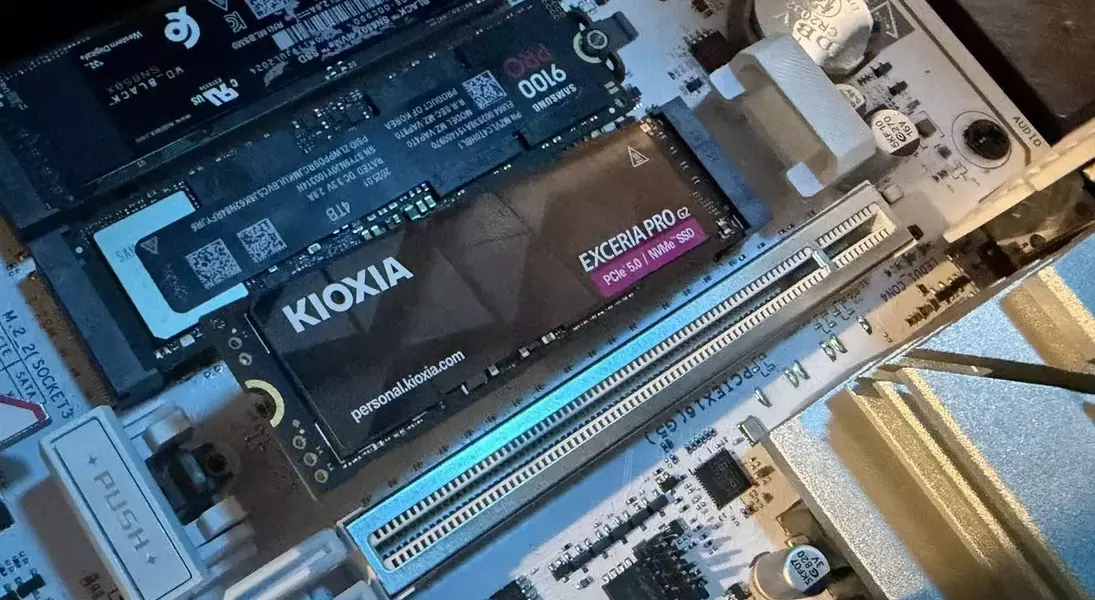
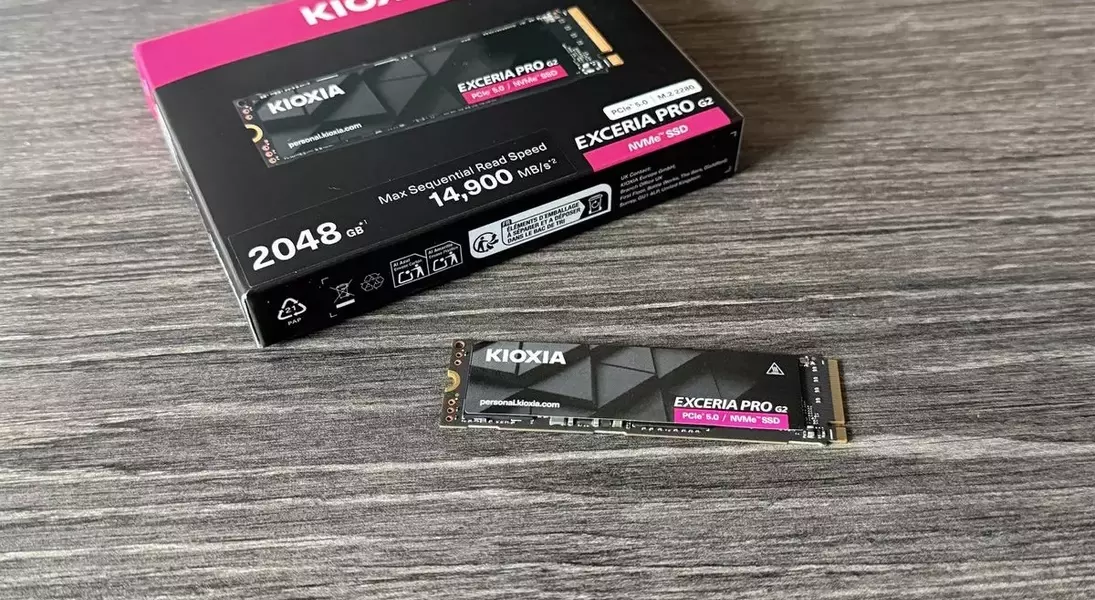
The Kioxia Exceria Pro G2 2TB SSD is a noteworthy entry into the PCIe 5.0 market, particularly for its hardware composition and Kioxia's commitment to releasing a consumer product during a challenging NAND supply period. At its core, the drive utilizes the Silicon Motion SM2508 8-channel controller, a component previously seen in other high-performance SSDs. This is paired with Kioxia's proprietary 218-layer BiCS8 TLC NAND, a testament to the company's vertically integrated manufacturing capabilities. The drive also includes 2GB of LPDDR4X and boasts a solid 1200 TBW endurance rating, all within a compact, single-sided M.2-2280 design, which is a desirable feature for various system builds. Despite its promising specifications and the pedigree of its components, the market availability and pricing remain somewhat volatile, with potential buyers facing issues such as limited stock and inflated reseller prices in certain regions, particularly outside the UK where it offers a more competitive price point.
The integration of Kioxia's own BiCS8 NAND with the SM2508 controller is a significant aspect of the Exceria Pro G2, as this combination has historically been associated with strong performance, especially in random 4K operations which are critical for fast game loading. However, the review points out that the drive's firmware might be a limiting factor, preventing it from fully leveraging its hardware potential to achieve the same level of real-world results as some older SSDs that featured similar underlying technology. The contrast in performance suggests that even with excellent components, optimization through firmware is crucial. Furthermore, the discussion touches upon the current industry-wide challenges, including the diversion of high-quality NAND to data centers, which may explain why even well-specced consumer drives like the Exceria Pro G2 might not consistently reach the peak performance levels observed in previous generations or in specific, pre-binned samples. This context underscores the difficulty in delivering consistent top-tier performance to consumers in the current market environment.
Analyzing Performance Benchmarks and Real-World Implications
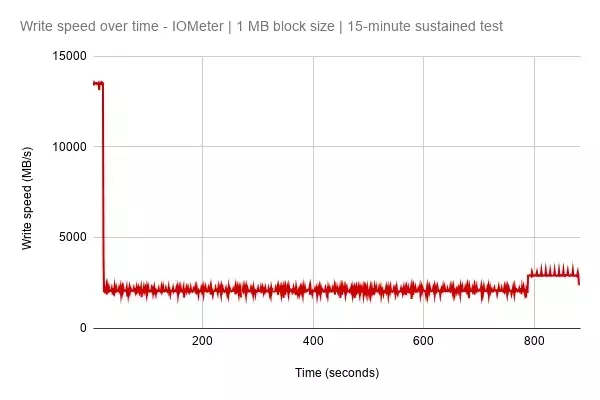
In terms of performance, the Kioxia Exceria Pro G2 2TB SSD showcases a mixed performance profile. While it achieves rapid sequential read and write speeds, clocking in at 14.7 GB/s and 13.3 GB/s respectively, its overall performance in synthetic benchmarks like 3DMark and real-world game loading tests lags behind some expected standards. For instance, in 3DMark, the Pro G2 scored nearly 2,300 points lower than the Kingston Fury Renegade G5 and exhibited significantly less SSD bandwidth. This disparity is particularly noticeable despite the Pro G2 running at a slightly higher temperature during tests, indicating that thermal management or firmware optimization might be playing a role in its benchmark outcomes. Its random 4K performance, though respectable at 90 MB/s for reads and 311 MB/s for writes, doesn't quite deliver the 'breathtaking' results seen in its predecessors, like the SN8100, that shared similar core components. This suggests that while the raw hardware capability is present, the implementation might not be fully optimized to unlock its complete potential, especially when compared to its peers.
The most significant concern highlighted in the review pertains to the drive's in-game loading times. The Kioxia Exceria Pro G2 recorded a total load time of 8.332 seconds in the Final Fantasy XIV: Shadowbringers benchmark, placing it among the slower drives tested and notably behind many competitors. This aspect is crucial for gamers, as quick load times directly impact the user experience. The discrepancy in performance, particularly when the underlying hardware has a strong pedigree, leads to speculation that current market conditions, such as the scarcity of premium NAND for consumer products due to data center demand, might be forcing manufacturers to utilize components or firmware configurations that do not allow for maximum performance tuning. This situation implies that the Exceria Pro G2, while a solid and dependable all-rounder with decent specifications, may not represent the absolute cutting edge in performance that users might expect from a Gen5 drive, instead reflecting the compromises necessary in a constrained supply environment. Despite these limitations, its availability, especially in the UK market at a more reasonable price, is still a notable achievement given the current industry climate.
