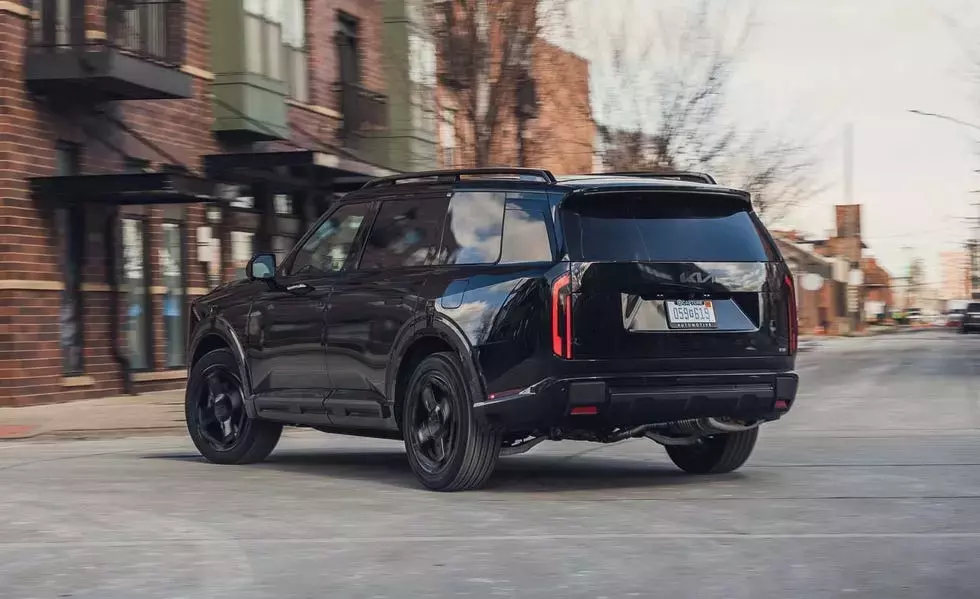


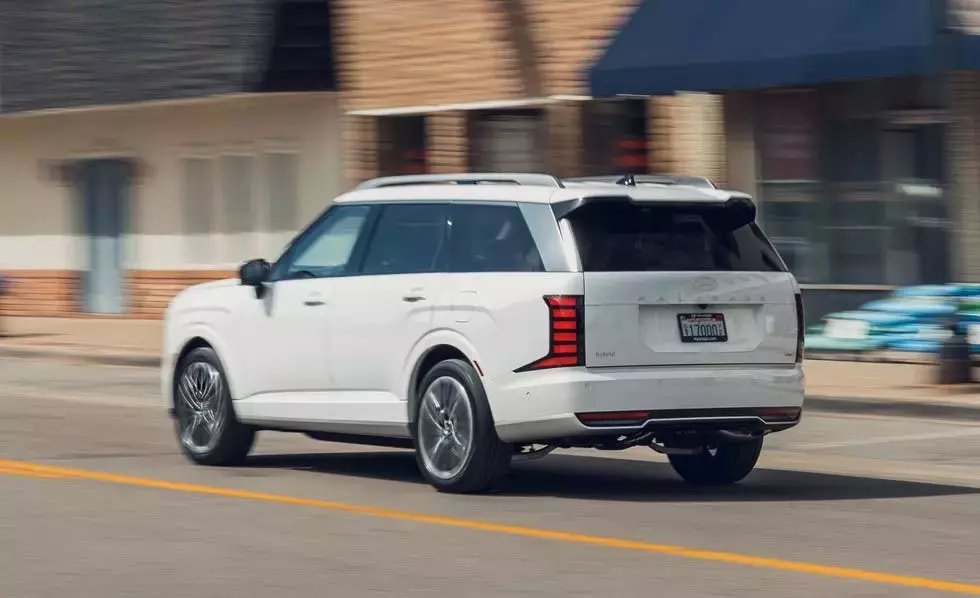
In a recent comparison test between the new 2027 Kia Telluride and the 2026 Hyundai Palisade, the Telluride, featuring a turbocharged four-cylinder engine, remarkably outpaced its V-6-powered counterpart. Both SUVs, built on a shared platform, have introduced distinct engine options in their latest iterations. The Kia's 2.5-liter turbo-four, despite a lower horsepower rating of 274 hp compared to the Palisade's 287 hp V-6, delivered a significant advantage in torque, producing 311 pound-feet versus the Palisade's 260 pound-feet. This torque advantage, coupled with the Telluride's slightly lighter curb weight, proved crucial in its superior acceleration.
Testing results revealed the Telluride's clear performance edge across various speed benchmarks. The Kia accelerated from 0 to 60 mph in 7.4 seconds, a notable six-tenths of a second quicker than the Palisade. It also completed the quarter-mile half a second faster. Even in rolling-start tests, where turbocharged engines sometimes face a disadvantage due to boost lag, the Telluride maintained its lead. Furthermore, the Telluride's four-cylinder engine demonstrated better responsiveness in daily driving scenarios and offered a marginally quieter cabin experience at both full throttle and cruising speeds, enhancing overall driver satisfaction.
While both models also offer a hybrid powertrain option that promises even faster acceleration, the non-hybrid Telluride presents a compelling choice for those prioritizing performance without the additional cost of a hybrid. This shift in engine strategy by Kia has resulted in a vehicle that not only performs better but also offers a more engaging driving experience. This outcome highlights how effective engineering and strategic powertrain choices can lead to unexpected and favorable results, even when seemingly less powerful on paper.
The automotive industry constantly evolves, striving for innovation and efficiency. This comparison underscores the importance of a well-engineered powertrain and its impact on vehicle dynamics and driver satisfaction. It is a testament to how manufacturers can optimize different engine types to deliver superior performance and a more enjoyable driving experience, ultimately benefiting consumers with more choices that cater to diverse preferences and priorities.
