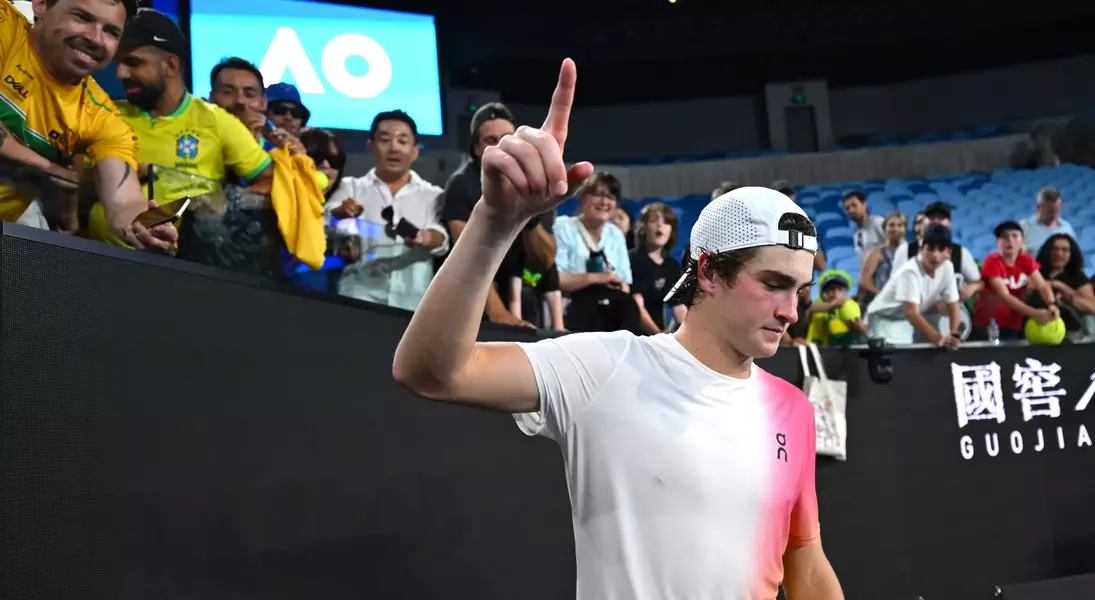
Brazilian tennis prodigy Joao Fonseca attributes his remarkable progress and maturity on the court to a conscious decision to limit his engagement with social media and digital devices. This deliberate detachment, fostered by his upbringing, has allowed him to cultivate a focused mindset, which he believes is instrumental to his burgeoning career. His approach highlights a growing trend among young athletes who are finding balance between their demanding professions and the pervasive digital world, demonstrating that traditional values can still play a vital role in modern success stories.
The 18-year-old talent burst onto the professional tennis scene during the 2025 ATP season, making an immediate impact. His breakthrough began at the Australian Open, where he stunned the tennis world by defeating the highly-ranked Andrey Rublev in the opening round. This significant victory signaled his arrival and set the stage for further achievements. Just two weeks later, Fonseca continued his impressive run by securing his first ATP title at the Argentina Open, solidifying his aspirations to climb the ranks within the Association of Tennis Professionals.
Hailing from Rio de Janeiro, Fonseca's personal development was significantly shaped by his family environment. His parents, with a background in sports and business, always encouraged him to prioritize outdoor activities over screen time. This emphasis on physical engagement and real-world interaction, rather than constant digital connectivity, proved to be a foundational element in his growth. He fondly recalls spending time in the mountains, cycling, and playing various sports with siblings and friends, away from the distractions of cell phones. This upbringing, as he notes, instilled a sense of responsibility and maturity, proving beneficial in his athletic journey.
Fonseca acknowledges the unique challenge his generation faces with pervasive smartphone use, yet he has found a way to navigate it effectively. He has learned to manage his relationship with his phone, understanding when to use it and when to set it aside. This disciplined approach has not only contributed to his personal well-being but also directly influenced his professional focus and mental resilience.
His playing style, characterized by a blend of precision and raw power, has drawn comparisons to the legendary Swiss maestro, Roger Federer, who is also one of Fonseca's idols. Despite the immense pressure and high expectations that come with such comparisons and rapid ascent in the sport, Fonseca views these as a privilege rather than a burden. He embraces the pressure, believing it often elevates his performance. He also employs mental strategies, such as breathing exercises, to manage nerves during intense match situations, recognizing that experience and maturity will continue to refine his ability to handle such demands. Currently ranked 57th globally, Fonseca aims to break into the top 50 following his participation in the upcoming Wimbledon Championships. His recent performance at the Eastbourne Open, where he reached the round of 16 before falling to defending champion Taylor Fritz, marks a key part of his grass court preparation.
Joao Fonseca's journey underscores the profound impact of disciplined focus and balanced living on an athlete's career. By consciously limiting digital distractions and prioritizing real-world engagement, he has not only advanced rapidly in the highly competitive world of professional tennis but also cultivated a robust mental fortitude. His commitment to these principles serves as a compelling testament to the enduring value of traditional developmental paths in achieving contemporary success.
