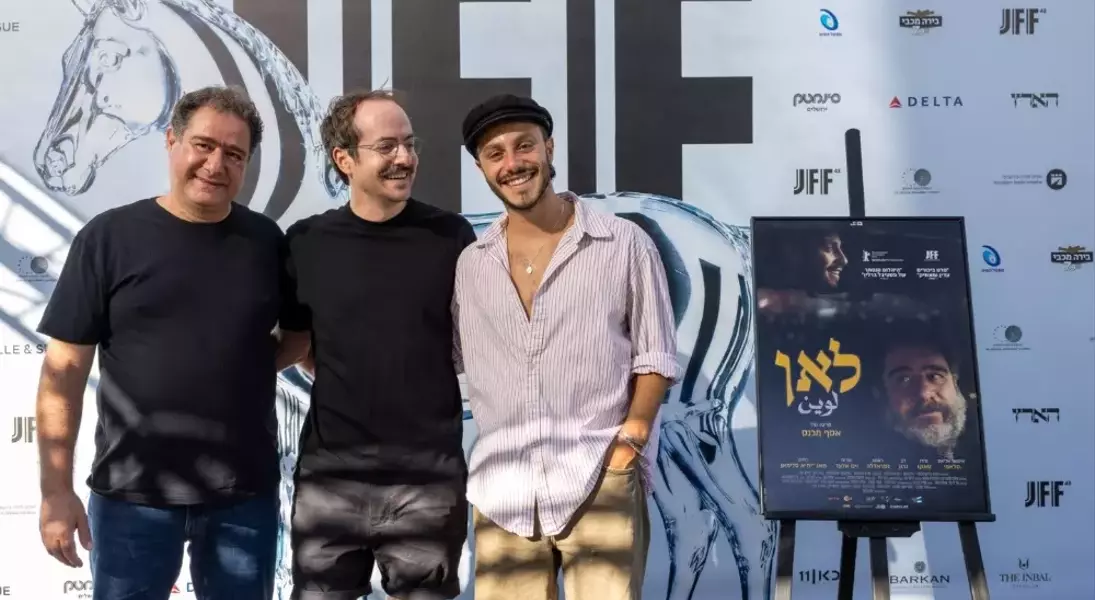
Roni Mahadav-Levin, the director of the Jerusalem Film Festival, has extended an earnest appeal to Palestinian filmmakers, urging them to contribute to the upcoming festival. Her message underscores the festival's role as a vital platform for diverse audiences, including Jewish and Arab, secular and religious citizens, to connect through shared cinematic experiences. Mahadav-Levin firmly believes that such cultural engagement is instrumental in dismantling rigid narratives and fostering a more cohesive society.
Jerusalem Film Festival Fosters Dialogue Amidst Regional Complexities
In a significant development for cultural diplomacy, Roni Mahadav-Levin, the executive director of the Jerusalem Cinematheque and the Jerusalem Film Festival, recently penned an open letter on July 20, 2026. This letter, addressed to artists globally and specifically to Palestinian filmmakers, serves as a powerful call for their participation in the festival's next installment. Mahadav-Levin's appeal follows the successful conclusion of the 43rd edition of the festival on July 19, which commenced on July 9 with the premiere of Moshe Rosenthal's film, "Tell Me Everything."
Highlighting the inclusive atmosphere of the recently concluded festival, Mahadav-Levin noted that the cinemas were filled with a melting pot of attendees – Jews and Arabs, individuals of secular and religious backgrounds, as well as local and international guests. For a brief yet impactful period, these diverse groups found common ground through the narratives presented on screen. The post-screening discussions in the lobby, she observed, were pivotal in confronting societal truths and nurturing empathy, which she views as fundamental to building a resilient community and challenging entrenched ideologies.
Despite ongoing calls for boycotts of Israeli-linked film institutions, the 43rd Jerusalem Film Festival saw the valuable participation of several Palestinian and Arab-Israeli filmmakers. Notably, Palestinian actor Ehab Elias Salami was recognized with the award for best acting performance for his role in Assaf Machnes's feature, "Where To?". Furthermore, the festival showcased "All That Remains," a compilation of short films by six Palestinian filmmakers, meticulously curated by Fadi Far. Mahadav-Levin's renewed invitation for next year aims to expand this critical dialogue and artistic collaboration.
Her letter strongly refutes the efficacy of boycotts and cultural disengagement, arguing that such actions inadvertently strengthen hardline factions. She contends that those who seek to censor art and those who advocate for boycotts share a common, albeit ironic, goal: to stifle discourse, isolate communities, and perpetuate division. Mahadav-Levin implores filmmakers not to fall into this trap, urging them to allow their art to confront, challenge, and inspire audiences who are most in need of diverse perspectives.
Organizing the festival in a city as intricate and diverse as Jerusalem, especially under the shadow of a hardline government and a region marked by profound conflict, was a deliberate and weighty undertaking. Mahadav-Levin clarified that the presence of numerous international directors, actors, producers, and scriptwriters was not an endorsement of the Israeli government's policies. Instead, it was a testament to the enduring power of culture, dialogue, and artistic exchange as tools to resist extremism, overcome divisions, and sustain democratic discourse.
Drawing parallels to global political landscapes, Mahadav-Levin underscored that threats to democracy are not confined to the Middle East. She pointed to political unrest and polarization in the United States, the reversal of authoritarianism in Hungary, and ongoing uprisings in Iran as evidence of a global struggle against populist leaders and fundamentalist groups who seek to consolidate power through division and suppression of dissent. She firmly believes that real change emanates from within, through civil resistance and widespread demonstrations, rather than external pressures or diplomatic isolation.
To bolster these internal movements, Mahadav-Levin emphasized the necessity of maintaining open channels for cultural exchange. The participation of international artists and filmmakers in Jerusalem this year served as an affirmation that genuine connections are forged between individuals, transcending national, political, or sociological boundaries. The festival presented Israeli, Palestinian, and international stories side-by-side, encouraging audiences to engage with varied experiences and realities. Films, festival guests, and the festival itself, she asserted, represent the shared human condition, not governments or nations.
Mahadav-Levin's letter concludes with a fervent plea for brave engagement, reflection, and art, stressing that silence is not the path to better days for Israel, Palestine, and the broader region. She calls on filmmakers to be courageous, to lean into the moment, and to be heard, participating in the change that is so desperately needed.
The Jerusalem Film Festival's founder, Roni Mahadav-Levin, has presented a compelling vision for cultural dialogue and unity. Her open letter to Palestinian filmmakers is not merely an invitation to a festival; it is a profound call to action, urging artists to harness the power of cinema to bridge divides and challenge extremist narratives. This initiative underscores the belief that art can serve as a potent catalyst for social change, fostering understanding and empathy even in the most complex geopolitical landscapes. The emphasis on internal movements for change, supported by open cultural channels, highlights a strategic approach to conflict resolution and societal healing. It reminds us that at the heart of any progress lies the courage to engage, reflect, and share human experiences, transcending barriers of nationality, religion, and politics. The success of the 43rd festival, with its diverse audience and inclusion of Palestinian voices, provides a hopeful blueprint for future collaborations, proving that shared narratives on screen can indeed be the building blocks of a more resilient and unified society.
