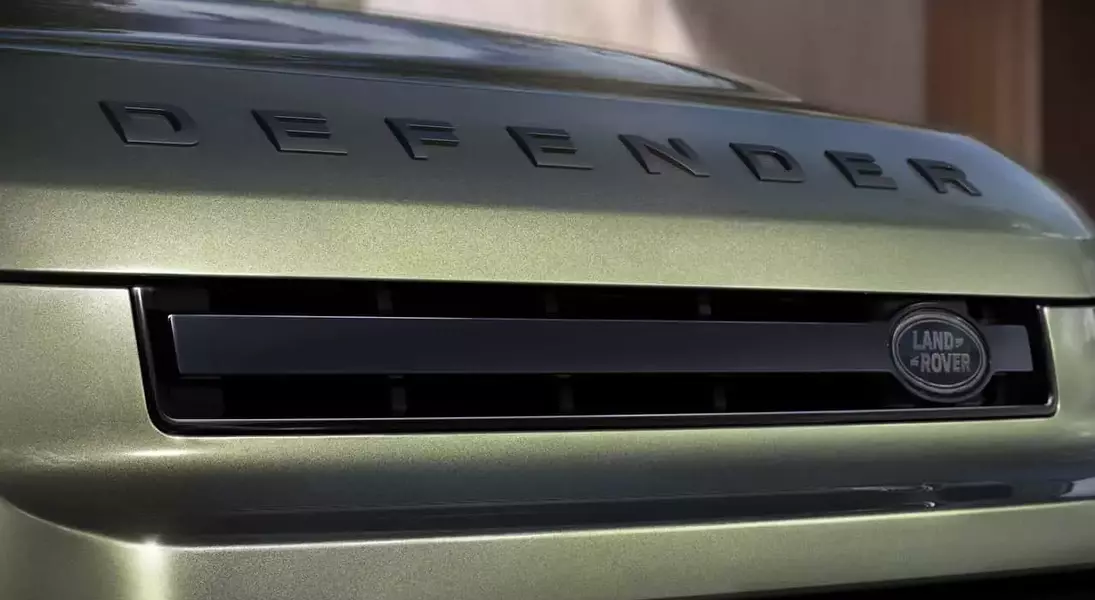
Jaguar Land Rover (JLR) and Stellantis are seriously considering a collaborative venture to manufacture a Defender-badged pickup truck within the United States. This potential alliance, solidified by a non-binding memorandum of understanding signed in May 2026, aims to strategically position the new vehicle in the North American market while sidestepping significant import tariffs. The decision to build in the US would be a crucial element in making a Defender pickup financially viable, especially given the longstanding 'Chicken Tax' that imposes a 25% tariff on imported light trucks.
Jaguar Land Rover and Stellantis Explore US Defender Pickup Manufacturing
In a significant development for the automotive industry, Jaguar Land Rover (JLR) and Stellantis are in advanced discussions to produce a new Defender pickup truck on American soil. This strategic move, which began with a non-binding memorandum of understanding in May 2026, seeks to circumvent the substantial 25% tariff on imported light trucks in the United States, commonly known as the 'Chicken Tax'.
JLR's Chief Financial Officer, Richard Molyneux, has indicated that the final agreement is anticipated by the close of the current year, providing a concrete timeline for what has been a subject of speculation. Pathamadai Balachandran Balaji, CEO of JLR, emphasized the commercial rationale behind the partnership, highlighting its importance for the British automaker's long-term expansion goals in the US and surrounding markets.
Currently, all Defender models sold in the US (the 90, 110, and 130 versions) are manufactured in Slovakia. While imported passenger vehicles typically face a 2.5% tariff, additional recent trade measures have increased duties on many EU and UK-built models. For a pickup variant, this challenge is amplified by the 25% 'Chicken Tax', rendering European production economically unfeasible for the US market.
By establishing production in the US, JLR would instantly resolve this financial hurdle and revive a practice not seen in over half a century – Land Rover's direct manufacturing in America. This echoes the brand's history of selling Series pickups in the US until the early 1970s.
According to reports from Automotive News, Stellantis is exploring specific US facilities for this project, with Belvidere, Illinois, frequently mentioned as a potential site. Neither company has publicly confirmed this location, and Stellantis CEO Antonio Filosa has refrained from naming any specific plant. Filosa has only confirmed that both groups are evaluating a collaboration centered on a particular factory, without disclosing its identity or the vehicles under consideration.
A critical detail emerging from external reports is the possibility that the JLR-Stellantis collaboration might utilize existing Ram and Jeep platforms and powertrains, rather than developing a bespoke chassis for the Defender pickup. However, neither Stellantis nor JLR has confirmed any specific platforms, engines, or powertrains. The fundamental question of whether the vehicle will adopt a body-on-frame structure, akin to a Ram 1500, or retain the Defender's unibody heritage remains unanswered. Reports on JLR's US production plans underscore that the platform decision is the most significant outstanding element of the entire agreement.
The potential partnership between Jaguar Land Rover and Stellantis to build a Defender pickup in the US presents an intriguing blend of strategic market positioning and engineering collaboration. From a journalistic perspective, this move signals a proactive approach by JLR to navigate complex trade policies and expand its footprint in a crucial market. The leveraging of Stellantis's established manufacturing capabilities and potentially its existing truck platforms could accelerate the Defender pickup's market entry, offering a robust, American-made option to consumers. However, the ultimate success and brand integrity of the vehicle will heavily depend on the platform choice. Adopting a pre-existing platform might streamline production and reduce costs, but it also poses the challenge of maintaining the distinct off-road identity and premium feel associated with the Defender. Conversely, developing a bespoke chassis would preserve the brand's unique characteristics but would entail significant investments in time and resources. This collaboration could set a precedent for future cross-brand manufacturing partnerships, demonstrating how automakers adapt to global economic landscapes while striving to deliver products that resonate with their core brand values.
