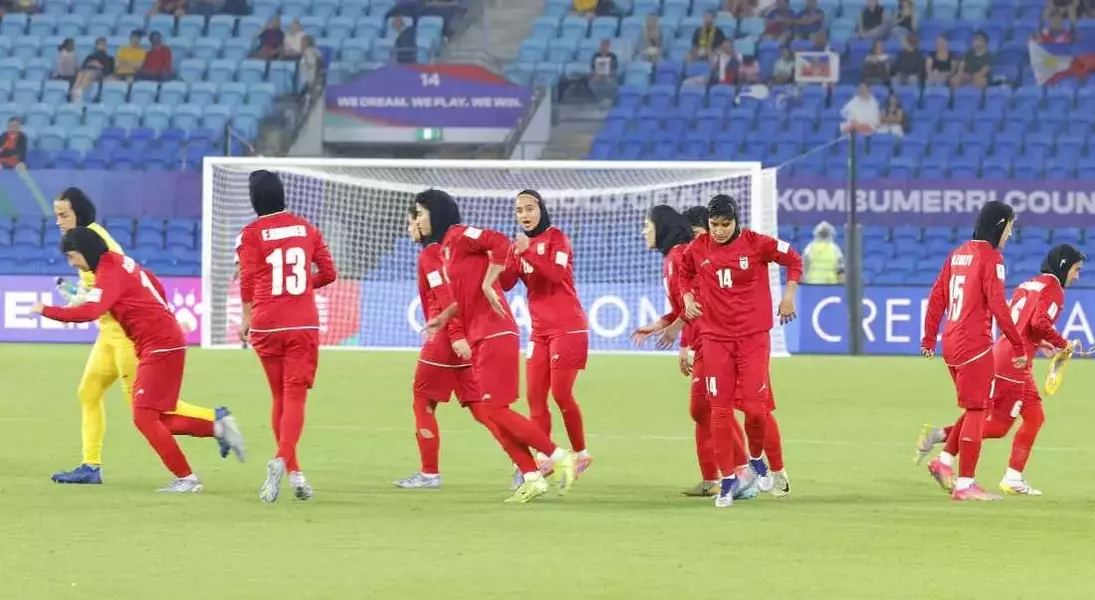
A nuanced situation has unfolded involving members of the Iranian women's national soccer team in Australia. What began with several players and staff seeking humanitarian protection in Australia has seen a majority of them return to Iran, with only two remaining. This evolving scenario underscores the intricate dynamics of international asylum processes, personal choices, and the geopolitical pressures that can influence such sensitive matters.
The Iranian women's soccer team arrived in Australia for the Women's Asian Cup last month, prior to the escalation of conflict in the Middle East. Initially, six players and one support staff member from the 26-person squad accepted humanitarian visas to remain in Australia. This decision was made before the rest of the Iranian contingent departed Sydney for Kuala Lumpur on March 10. However, the situation quickly changed, with one player subsequently choosing to leave Australia. On Sunday, a fifth member of the team also departed, reducing the number of remaining asylum seekers to just two players.
The departures have been met with contrasting interpretations. Iranian authorities have portrayed the women's return as a triumph against perceived Australian and U.S. political agendas. Conversely, some members of the Iranian diaspora in Australia attribute the players' change of heart to pressure from Tehran. Home Affairs Minister Tony Burke's office confirmed the departure of two players and a support staff member to Malaysia on Saturday, further signaling the complex nature of these individual decisions. The Australian government, through Assistant Immigration Minister Matt Thistlethwaite, has acknowledged the deeply personal and complex nature of these choices, reaffirming its commitment to supporting the two remaining individuals.
Kylie Moore-Gilbert, an academic who previously experienced detention in Iranian prisons, suggested that the high-profile nature of the asylum requests may have inadvertently provoked a strong response from the Iranian regime, prioritizing a 'propaganda victory' over the individuals' well-being. She posited that a quieter asylum process might have resulted in a less interventionist stance from Iranian officials, drawing parallels to past defections by other Iranian athletes. Concerns regarding the players' safety in Iran were amplified after they abstained from singing the Iranian national anthem before their initial match in Australia, a gesture often interpreted as a form of protest.
Adding to the complexity, the Iranian Tasnim News Agency celebrated the returnees, framing it as a 'disgraceful failure of the American-Australian project and another failure for Trump.' This narrative underscores the political undertones surrounding the athletes' decisions. Allegations have also surfaced from within the Iranian diaspora in Australia, accusing the support staffer who returned of disseminating Iranian government propaganda via text messages to persuade teammates to leave Australia. However, Australian officials, including Thistlethwaite, have stated there is no evidence to support these claims, reiterating that the individuals remaining in Australia are considered 'genuine asylum seekers.' The Australian government has confirmed that the remaining women were relocated to an undisclosed safe location and maintained communication with their families, and some even with the Iranian embassy in Australia, highlighting the delicate balance between protection and communication access.
The broader diplomatic context between Australia and Iran remains strained. This was evident after Australia expelled the Iranian ambassador last year following intelligence reports linking the Revolutionary Guard to arson attacks on Jewish community targets in Sydney and Melbourne in 2024. The Australian-Iranian Society of Victoria's vice-president, Kambiz Razmara, acknowledged the immense pressure on the women who sought asylum, expressing understanding for their decisions despite his surprise at their ultimate choice to leave Australia. This ongoing saga reflects the intersecting challenges of human rights, political asylum, and international relations.
