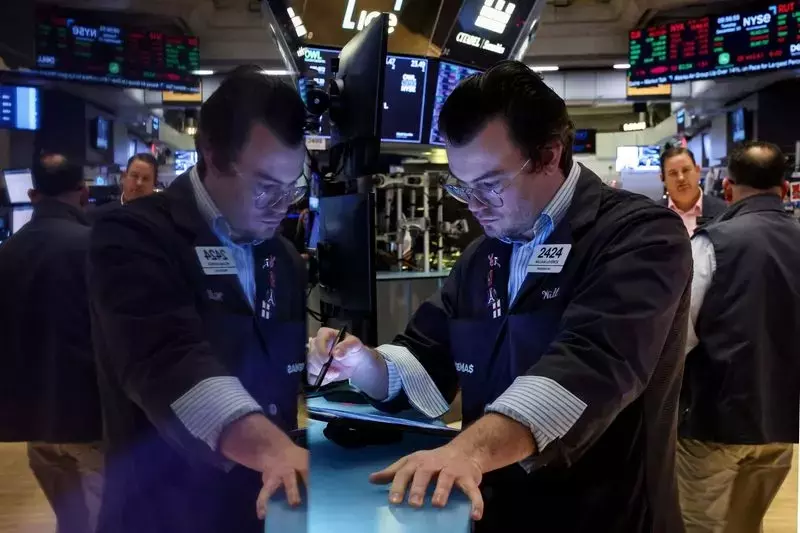
In the financial markets, investors are growing increasingly wary of the potential rise in the benchmark U.S. 10-year Treasury yield to a significant threshold of 5%. This concern stems from uncertainties surrounding the incoming administration's policies and their potential impact on inflation and fiscal deficits. Traders are closely monitoring this critical level, recalling how a similar yield spike in October 2023 led to a sharp decline in the S&P 500 index. Higher interest rates could spell trouble for stocks and increase borrowing costs for both consumers and businesses. Market participants are also keeping an eye on swaptions and futures options, which suggest a growing bearish sentiment towards Treasury yields.
Detailed Market Observations and Investor Sentiment
As winter approaches, market analysts and traders are bracing for a possible surge in the U.S. 10-year Treasury yield, with some predicting it could reach or exceed 5% in the near future. This anticipation is fueled by concerns over the new administration’s proposed policies, particularly those related to tariffs and tax cuts, which could exacerbate inflation and widen the federal deficit.
Market watchers are paying particular attention to the March contract for 10-year Treasury futures put options, where open interest has been steadily increasing. These contracts target yield levels between 4.75% and 5%, indicating that traders are positioning themselves for a potential sell-off in Treasury bonds. The put-to-call ratio of 1.23 suggests a bearish outlook, with more investors betting on higher yields rather than lower ones. Additionally, the cost of put premiums has risen, further emphasizing the market’s cautious stance.
In the swaptions market, volatility has surged, with one-month options on 10-year swap rates climbing to 24.06 basis points. This heightened volatility reflects increased uncertainty and expectations of higher rates in the short term. Analysts note that demand for protection against rising rates is evident, as investors are willing to pay a premium to hedge against potential losses.
The current 10-year Treasury yield stands at approximately 4.69%, having recently touched an eight-month high. Market strategists caution that while a 5% yield is not a certainty, it remains within the realm of possibility, especially given the policy uncertainties and Federal Reserve signals.
From a broader perspective, this market behavior underscores the delicate balance between economic growth and fiscal responsibility. As policymakers prepare to implement new measures, investors are preparing for potential disruptions in bond markets and beyond. The coming weeks will be crucial in determining whether these fears materialize or if the market can stabilize amid the shifting landscape.
For investors and economists alike, the approaching 5% yield level serves as a reminder of the interconnectedness of global financial systems. While higher yields could present challenges, they also highlight the importance of prudent fiscal management and strategic planning in navigating uncertain times. As the market continues to evolve, staying informed and adaptable will be key to mitigating risks and capitalizing on opportunities.
