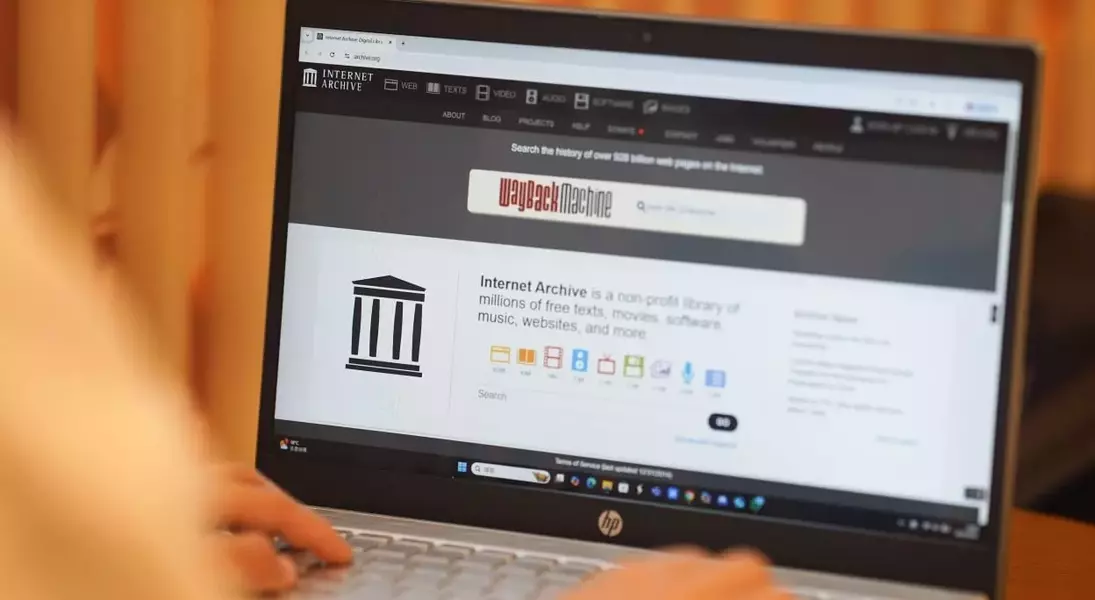
The Internet Archive, a non-profit digital repository embroiled in ongoing debates concerning intellectual property rights and freedom of expression, has recently achieved a significant milestone by being recognized as an official federal source for public government documents. This new classification positions the Archive alongside a vast network of over a thousand institutions across the United States, all tasked with preserving governmental records for public inspection. Unlike many of its counterparts, the Internet Archive's role as a designated federal depository library is uniquely digital, providing an entirely online platform for accessing these vital resources.
This important development was formally announced by California Senator Alex Padilla. The designation empowers the Internet Archive to contribute to the mission of universalizing knowledge through digitization. This includes, as articulated by the Archive's founder Brewster Kahle, integrating these materials into platforms like Wikipedia, thereby strengthening the internet's ecosystem and providing digital learners with enhanced access to governmental information.
The timing of this recognition is particularly noteworthy given recent efforts by previous administrations to remove information from federal websites. Now, visitors to the Internet Archive will have direct access to primary government sources, in addition to the vast collection of materials uploaded by users or saved from publicly accessible websites. The Archive also operates the renowned Wayback Machine, a crucial tool that archives web history spanning over 28 years, and collaborates with libraries through its 'Archive-It' initiative to identify and preserve important online archival content.
In an official communication to Scott Matheson, the Superintendent of Documents for the Government Publishing Office, Senator Padilla emphasized the Archive's role in breaking down barriers to information access. He stated that this designation will facilitate nationwide and global communities in accessing federal government publications online, thereby aiding the Government Publishing Office in its mission to digitize and disseminate these resources. By law, members of Congress can nominate up to two qualified libraries for this depository status. Reports indicate that some institutions have relinquished this status due to challenges in managing large volumes of physical materials, prompting increased investment in large-scale digitization efforts by the Government Publishing Office.
The Internet Archive has previously navigated various copyright disputes, with some legal challenges contending that the platform functions as an 'unlicensed digital copying and distribution business' that circulates 'derivative works' without explicit permission. In response, the Archive and its staunch supporters have consistently argued that the website serves as a specialized library, possessing the inherent right to preserve works, including books, music, and other materials, within its digital database. It is important to note that government documents are inherently free from copyright restrictions, strengthening the Archive's position in making these specific materials broadly available.
Just last year, the Internet Archive experienced multiple cyberattacks, which resulted in a prolonged outage affecting both the Archive and its Wayback Machine. During these incidents, hackers claimed to have compromised millions of user profiles and support tickets, with the stated objective of exposing vulnerabilities in the website's security infrastructure. Despite these challenges, Senator Padilla lauded the Internet Archive's immense contributions to information accessibility. In October, the platform reached a monumental milestone, surpassing one trillion archived pages.
