
Inter Miami's ownership has voiced strong disapproval regarding the Major League Soccer (MLS) rule that resulted in the suspension of star players Lionel Messi and Jordi Alba. The club views the league's mandate, which penalizes players for missing the All-Star exhibition, as excessively harsh and detrimental. This situation has ignited a broader discussion within the league about player welfare, scheduling demands, and the necessity for rules that are adaptable to the unique circumstances of high-profile athletes and their rigorous competitive calendars. The club insists that the decision to rest the players was a collective choice, made with their demanding match schedule in mind, highlighting a conflict between league requirements and team priorities.
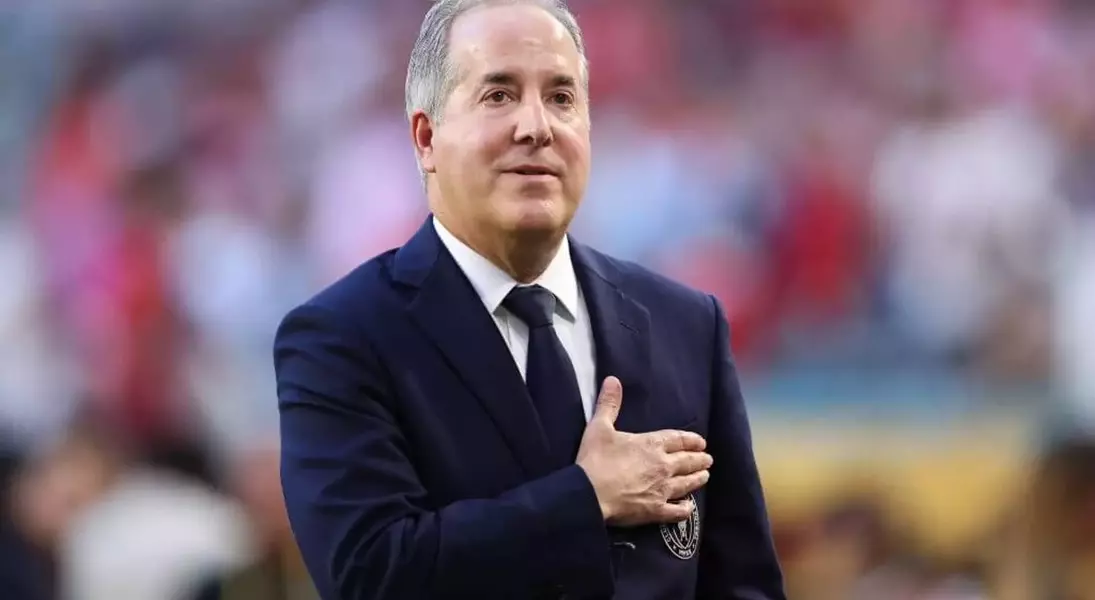
The controversy stems from the MLS All-Star Game. Inter Miami owner Jorge Mas openly challenged the league’s decision to uphold the suspensions of Messi and Alba. These suspensions prevented them from participating in a crucial Eastern Conference clash against FC Cincinnati, a direct consequence of their absence from the exhibition match against Liga MX stars in Austin, Texas. Mas convened a press briefing shortly after the league's announcement, where he characterized the rule as 'draconian,' underscoring his profound disagreement with its application.
Mas detailed the players' reaction to the disciplinary action, describing their considerable frustration. He conveyed that both Messi and Alba, driven by a strong desire to compete and contribute, found the league's rationale incomprehensible. The owner expressed concern that this episode could negatively affect Messi's long-term perception of the league, particularly as negotiations for a contract extension are underway, with his current agreement expiring in 2025. This incident underscores the delicate balance between league obligations and the mental and physical well-being of its marquee players.
The club's decision to rest Messi and Alba was a strategic one, aiming to mitigate the impact of an intense playing schedule that saw them compete in nine matches within a 35-day period. Mas pointed out that even a slight injury sustained by Alba in a previous game would have exempted him from the All-Star Game rule, underscoring the arbitrary nature of the regulation. He emphasized that for Inter Miami, every match is effectively an 'All-Star Game,' given the caliber of their players, and that prioritizing regular-season fixtures over an exhibition demonstrates the players' commitment to the club.
Mas acknowledged that the communication process leading to the players' absence could have been handled more effectively due to the limited timeframe. However, he firmly reiterated his belief that the rule itself is flawed, arguing that it unfairly forces players to choose between an exhibition event and critical league matches. He suggested that the rule negatively impacts not only the club and its fans but also sponsors and the league's media partners, including Apple, due to the diminished visibility of star players.
Mas echoed comments from the league commissioner, advocating for a reevaluation of the rule. He emphasized that the decision made by Messi and Alba was fully supported by Inter Miami, aligning with the club's commitment to player welfare and competitive integrity. Furthermore, Mas proposed that the MLS should restructure the All-Star Game to ensure players have adequate rest before and after the event, preventing scheduling conflicts that compromise their ability to perform in regular-season games. This adjustment would allow players to enjoy the All-Star festivities without jeopardizing their fitness for competitive matches, benefiting all stakeholders involved.
Looking ahead, Mas outlined Inter Miami's strategic goal of strengthening their roster during the current transfer window to contend for the Concacaf Champions League. Winning this tournament would secure a coveted spot in the 2029 Club World Cup, an event Mas views as the pinnacle of global club soccer. He stressed the importance of MLS teams investing in their squads to compete at this elite level, noting that only one MLS team, Seattle, has previously won the Champions League. This ambition highlights a desire for the league to elevate its competitive standing on the international stage.
Mas also addressed concerns about Messi's absence from the All-Star Game potentially affecting league sponsors. He asserted that Messi's unparalleled global influence has already revolutionized the financial landscape of MLS, benefiting every club, team, and sponsor. While acknowledging the importance of corporate sponsors, Mas underscored that competitive matches are Messi's priority. He suggested that the All-Star Game format should be adapted to accommodate player well-being, ensuring that star attractions like Messi can participate without compromising their physical conditioning for high-stakes games. Messi's presence has already generated unprecedented ticket sales and viewership, transforming the league's reach and financial prospects. Mas expressed hope that future scheduling of the All-Star Game will better integrate with the league's overall calendar, maximizing the benefits that Messi brings to the sport in North America.
There is an undeniable 'before and after' effect with Lionel Messi's arrival in MLS, Mas declared. The league is now experiencing global attention and engagement on an extraordinary scale. For example, a recent Club World Cup match involving Inter Miami against Paris Saint-Germain garnered nearly 30 million global viewers. Such figures were unimaginable for an MLS team just a few years ago. This new reality, Mas concluded, necessitates an adaptation of league rules to ensure that the league's most valuable assets—its star players—are consistently on the field, fostering continued growth and global visibility for Major League Soccer.
