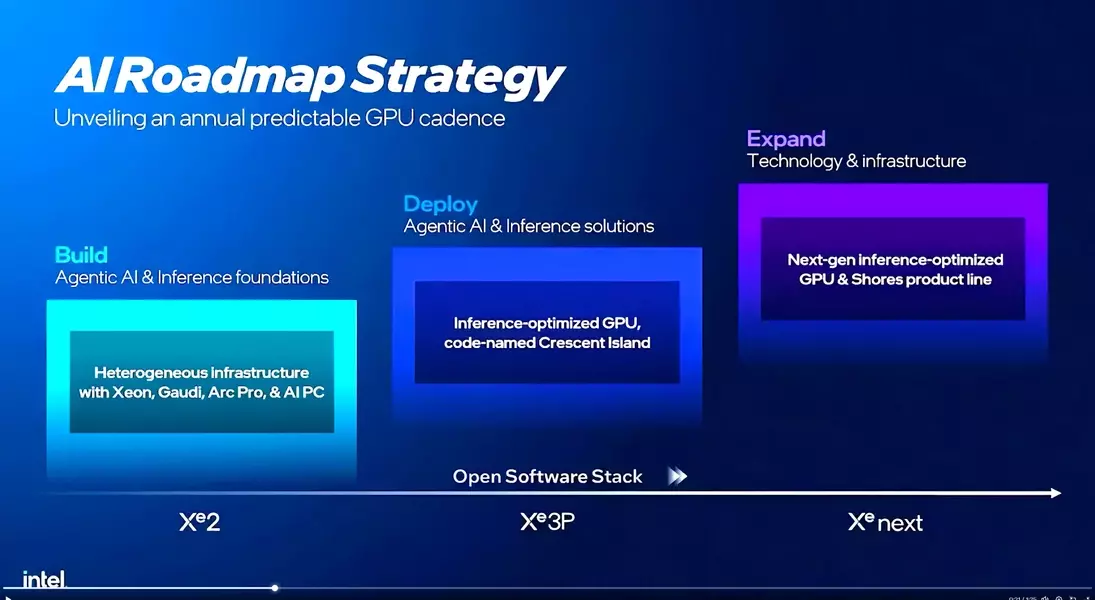
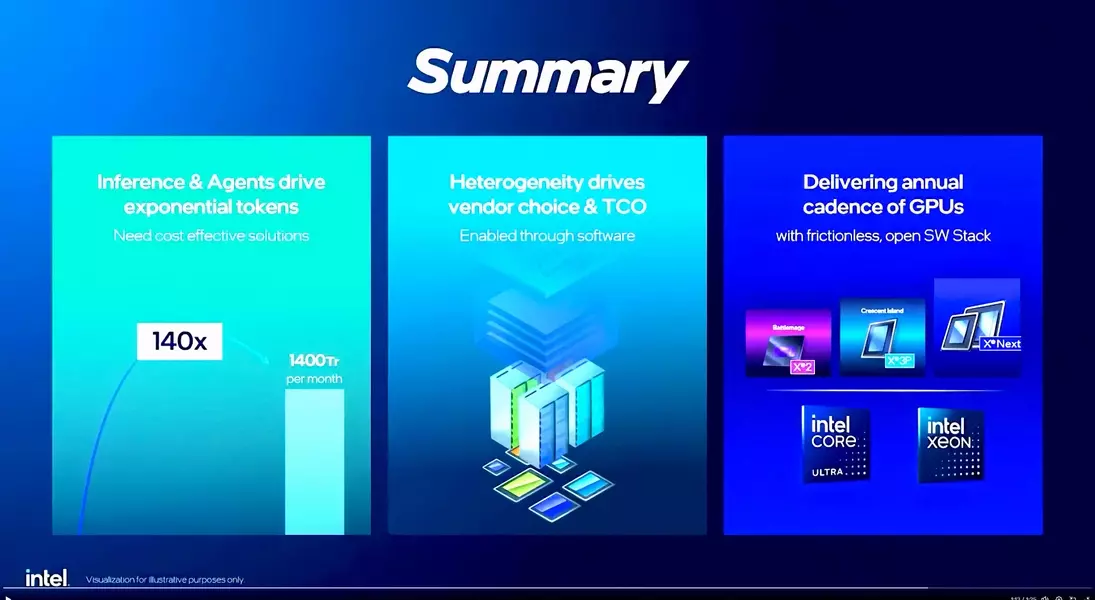
Intel's engineering advancements, particularly with the Core Ultra 300-series processors, have ignited anticipation for their future graphical processing units. Despite this, the company's recent announcements have heavily emphasized artificial intelligence applications, prompting speculation about the trajectory of its gaming-oriented GPU development. A recent video from Intel's vice president of data center AI accelerators, Anil Nanduri, shed some light on the Xe GPU roadmap. While it outlined the future of Xe, including the upcoming X3P-powered Crescent Island GPU and its expected integration into Nova Lake desktop processors, the discourse was almost exclusively centered on AI. This has led many to wonder if the gaming community will see new generations of Arc graphics cards, such as the eagerly awaited Celestial series, or if Intel's focus will remain predominantly in the lucrative AI sector.
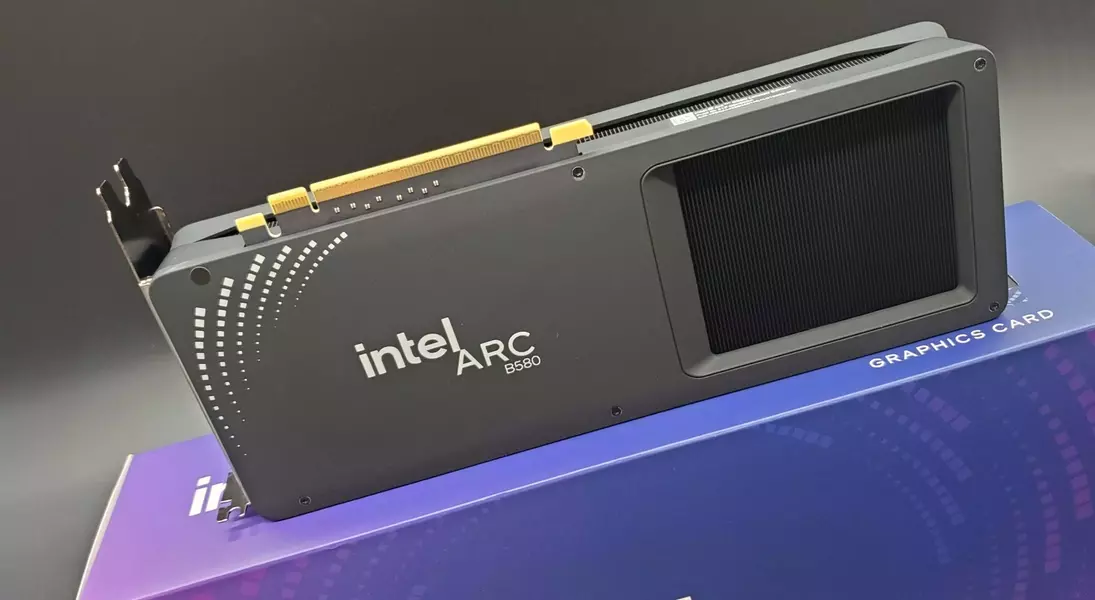
Intel's current standing in the consumer graphics card market presents a complex picture. The Arc B580, while a capable card, struggles to compete on price and performance against offerings from rivals like Nvidia, which designs its graphics architecture with AI as a primary consideration before adapting it for general consumers. The scarcity of Intel's discrete GPU options across various price points further exacerbates this challenge, limiting its ability to draw users away from established players like AMD and Nvidia. Although Intel has made commendable strides in enhancing its drivers and software, with XeSS often outperforming AMD's FSR 3 in multi-frame generation, the absence of a broader range of Arc models with improved shader counts continues to hinder its market penetration.
It appears that Intel is poised to hold back on significant advancements in the discrete graphics card market until the ongoing global memory crisis subsides. The large, matrix-unit-rich architecture of Arc GPUs, which are inherently expensive to produce, has historically been mitigated by using cost-effective GDDR6 VRAM. However, with the current surge in video DRAM prices, the economic incentive for Intel to invest in large-scale Xe3P or Xe Next gaming GPUs is diminished. Consequently, the company is likely to prioritize the highly profitable AI market, where it can command premium prices for its accelerators, leaving gamers to ponder the unrealized potential of a more competitive Intel presence in the consumer GPU landscape.
The rapid evolution of technology demands constant innovation and strategic adaptation from industry leaders. While Intel's pivot towards AI reflects the burgeoning opportunities in that domain, it also underscores the importance of a balanced approach. Companies that successfully bridge the gap between specialized high-end solutions and accessible consumer products will ultimately foster a more vibrant and competitive market, benefiting both developers and end-users alike. The future of graphics processing lies not just in raw power, but in thoughtful integration and broad market engagement.
