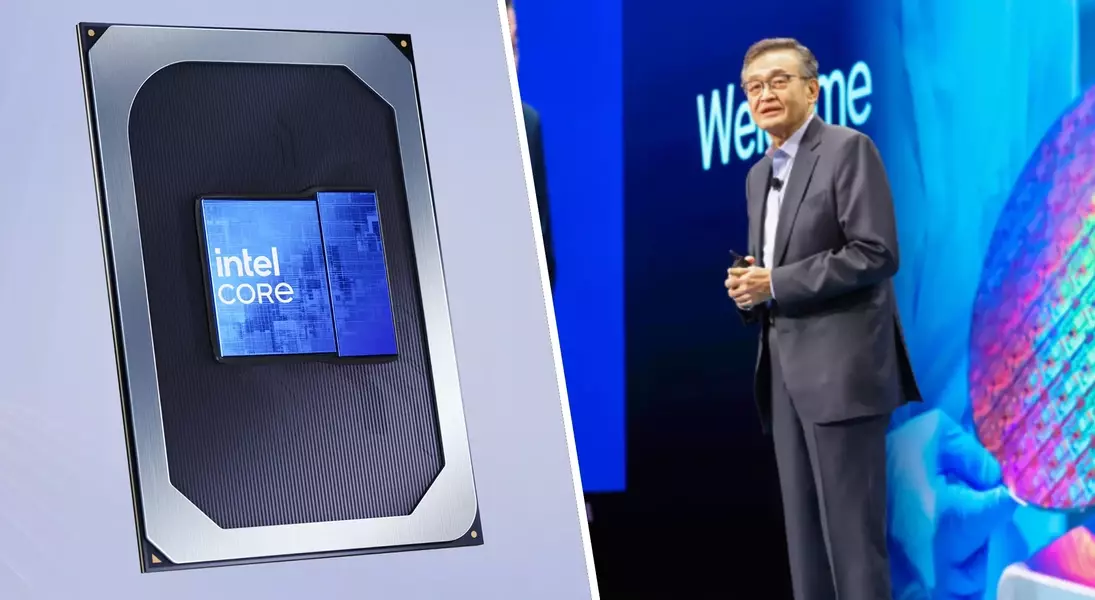
Intel is making a significant strategic adjustment, reallocating its advanced chip manufacturing resources from consumer PC processors to the data center sector. This decision is a direct response to a challenging period in the personal computer market, exacerbated by a persistent shortage and rising costs of memory and storage components. Despite positive performance from certain budget-oriented chip lines, the company foresees a sustained downturn in PC demand for the foreseeable future.
During a recent financial review, Intel's CEO highlighted the anticipated difficulties for the PC market in the upcoming quarters. This grim outlook has prompted the company to divert production capacity for its Panther Lake chips, which utilize the 18A process node, towards more lucrative data center chip manufacturing. The aim is to mitigate the impact of reduced PC sales by capitalizing on demand in other segments.
The company's financial leadership confirmed this shift, indicating that the capacity freed up from Panther Lake production would be utilized to increase the output of data center wafers. Currently, two consumer-focused chip families, Panther Lake and Wildcat Lake, are produced on the 18A node, alongside the corporate-oriented Clearwater Forest. Interestingly, while Panther Lake production has successfully ramped up, it's the more affordable Wildcat Lake offerings that have seen unexpectedly high demand, reportedly selling out completely.
Intel's CEO also acknowledged that despite a challenging market, the company's long-term product development remains robust. The strong demand for Wildcat Lake, described as a cost-optimized client CPU, has outstripped available supply, with sales increasing by approximately 70% sequentially. However, the constraints are not limited to wafer production but also extend to substrate availability, further complicating the supply chain.
Looking further ahead, Intel projects that the internal group responsible for gaming chips may experience a significant sequential decline exceeding 20% in the coming year. This forecast aligns with warnings from various research firms and memory suppliers, suggesting that the current memory crisis could persist for several more years, potentially until 2030. The ripple effect of this crisis is felt across the industry: consumers face higher prices, leading to decreased purchases, which in turn results in fewer orders from retailers and suppliers, eventually impacting chip manufacturers like Intel and their downstream partners. The market's reaction to these developments was reflected in a notable drop in Intel's share price following the announcement.
