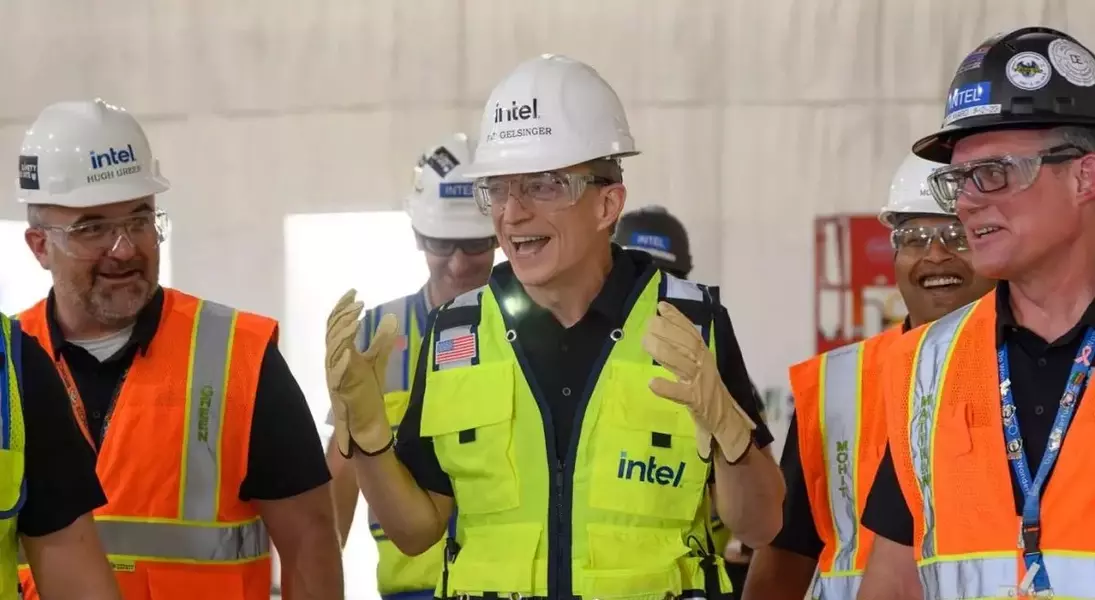
Intel has made significant leadership changes with the retirement of CEO Pat Gelsinger. This move comes as the company faces various challenges and undergoes a period of transition. Gelsinger's tenure at Intel has been marked by both achievements and setbacks.
Intel's Leadership Transition and Challenges
Intel's CEO Retirement and Succession Plan
Intel has announced that CEO Pat Gelsinger will retire effective December 1 and step down from the company's board of directors. This decision marks the end of an era for Intel. David Zinsner and Michelle Johnston Holthaus have been named interim co-CEOs. Zinsner holds the position of CFO, while Holthaus is the GM of Intel's client computing group. Holthaus has also been appointed to the newly created position of CEO of Intel Products, overseeing various business divisions. Frank Yeary, the independent chair of the Intel board, will serve as interim executive chair during the transition period. The Intel board has formed a search committee to find a permanent successor to Gelsinger.Intel's Foundry leadership will remain unchanged, focusing on chip design and manufacturing. This decision aims to ensure the continuity of key operations while the company navigates through the leadership transition.Gelsinger's Impressive Career at Intel
Gelsinger first joined Intel at the age of 18 after earning an associate's degree from Lincoln Tech. He played a crucial role as the lead architect of Intel's 4th generation 80486 processor introduced in 1989. At just 32 years old, he became the youngest VP in the company's history.Over the years, Gelsinger held various leadership positions at Intel. He became Intel's CTO in 2001 and led key tech developments including Wi-Fi, USB, and the Intel Core and Xeon chip lines. His contributions have had a significant impact on the company's technological advancements.However, Gelsinger's recent tenure at Intel was not without challenges. He faced difficulties in delivering on his promises and encountered setbacks in several initiatives.Intel's Challenges and Setbacks
Gelsinger reportedly offended TSMC by highlighting Taiwan's precarious relations with China, which led to Intel losing out on important discounts from the chip fabricator. He was overly optimistic about the capabilities of Intel's AI chips, such as Gaudi, in competing against products from incumbents like Nvidia. Additionally, his efforts to transform Intel into a chip manufacturer for other companies ran into technical problems.By early 2022, Intel's revenue from PC chips had dropped by 25%, and the company had lost ground in the data center chip market to rival AMD. A deal to supply chips to Waymo also fell through, and Intel missed out on potential clients like Sony for the next-gen PlayStation.In 2023, Intel's failed acquisition of Israeli company Tower Semiconductor for $5.4 billion was a major setback. Regulatory hurdles killed the proposal, and Intel had to pay a $353 million termination fee. The 18A manufacturing process for chips, intended to drive new business, became a liability as it failed to meet reliability expectations. Apple and Qualcomm reportedly passed on 18A, and Intel is not expected to start mass-producing chips with 18A until 2026.Despite these challenges, Intel took steps to spin off its foundry business into an independent subsidiary in early fall. This move was in line with shareholder demands and aimed to create a more focused and agile company.Intel's revenue shrunk to $54 billion in 2023, a significant decline from the year Gelsinger took over. The company has implemented cost-cutting measures, including slashing dividends and cutting more than 15,000 jobs in a $10 billion cost-reduction plan. It has also paused or delayed the construction of several chipmaking facilities.In October, Intel posted a $16.6 billion quarterly loss, the biggest in its 56-year history. Analysts predict the company will face an annual net loss for the first time since 1986.Intel continues to face challenges, as evidenced by the lukewarm reception to its latest consumer processors and the departure of semiconductor experts from the board. To turn things around, Intel is considering selling its autonomous driving arm Mobileye and its enterprise networking division. Qualcomm and other suitors have shown interest in a potential takeover.Despite the challenges, Intel's shares were up ~2.66% on the news of Gelsinger's departure. The company is now looking to move forward with a new leadership team and a focus on simplifying and strengthening its product portfolio.You May Like