
At CES 2026, Intel's Panther Lake processor emerged as the undisputed highlight, significantly outpacing competitors like Nvidia and AMD in terms of novel product introductions. While other tech giants focused on AI or refreshed existing lines, Intel's new chip, featuring the potent Arc B390 integrated GPU, promises a substantial leap in gaming performance. This innovation is not only a triumph for Intel but also signals a promising future for portable PC gaming, offering a genuinely exciting development in a period of otherwise incremental advancements.
Looking back just a year or two, few would have anticipated Intel leading the charge for the most captivating product debut at CES. However, in January 2026, the Panther Lake chip stands virtually alone as a truly fresh offering. Nvidia, deeply engrossed in artificial intelligence endeavors and addressing memory challenges, presented no new graphics processing units. Similarly, AMD's contributions were largely refinements of existing products, adding little in the way of novel hardware. Qualcomm's second-generation Snapdragon X2 chips, while interesting, still need to prove their mettle in the PC ecosystem.
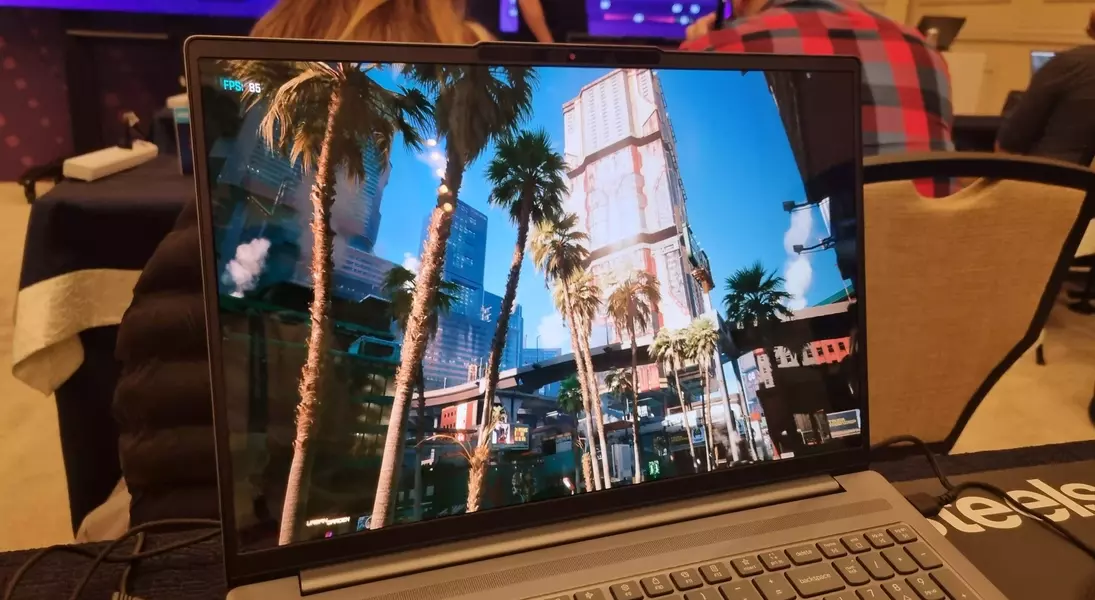
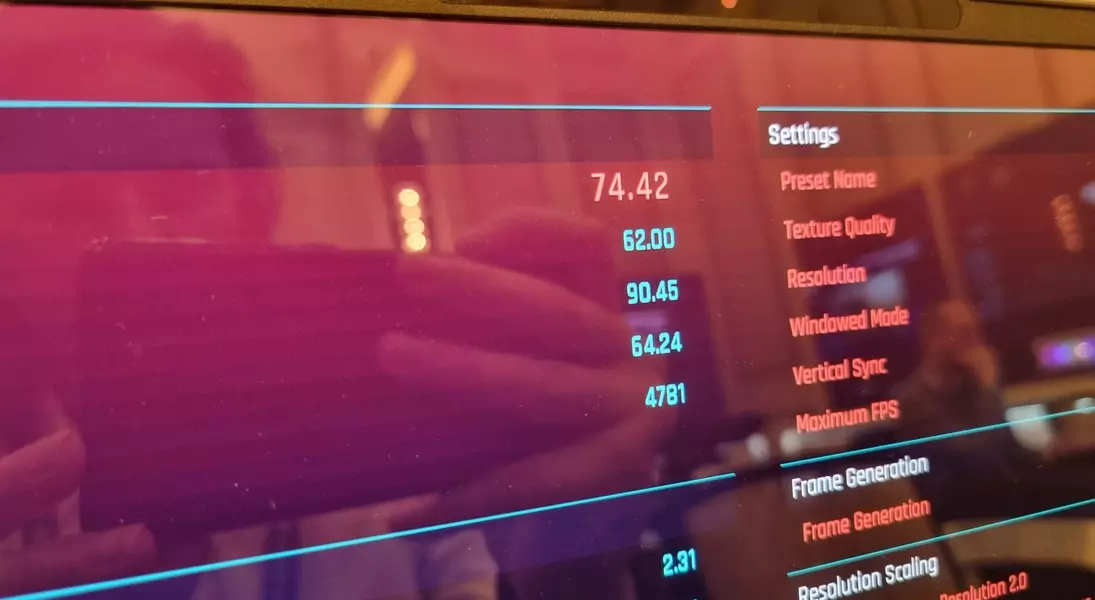
Thus, Panther Lake distinguishes itself not merely by default but through its intrinsic merits. Its most compelling feature for PC gaming enthusiasts is the new Arc B390 integrated GPU, which Intel claims delivers up to a 70% performance boost over the previous-generation Lunar Lake iGPU, an already respectable component. Initial tests in Las Vegas confirmed these impressive capabilities, with Cyberpunk 2077 achieving an average of 53 frames per second at 1200p on high settings without upscaling. With quality upscaling enabled, the frame rate soared to a highly playable 74 frames per second, showcasing the B390's capacity to handle demanding titles on an integrated graphics solution.
This makes Panther Lake arguably the fastest real-world gaming iGPU available for personal computers, excluding high-end, specialized units like AMD's Strix Halo, which are primarily designed for AI workloads rather than mainstream gaming. In contrast, AMD's "new" Ryzen AI 400 series is largely a cosmetic update to the 300 series, with no truly new Accelerated Processing Units expected for at least another year. Furthermore, Panther Lake appears to be remarkably power-efficient, with a version specifically tailored for handheld gaming PCs, a segment of the PC market that offers considerable entertainment value. The chip also marks Intel's debut on its new 18A node, presenting a promising initial glimpse into the capabilities of this advanced silicon technology.
Panther Lake undoubtedly represents Intel's most significant and promising chip release since the Alder Lake architecture in 2021, and possibly even further back. Its potential to revolutionize gaming handhelds, a rapidly growing sector, is particularly noteworthy. While a single chip cannot guarantee a perpetual golden age for PC technology, and the future of Intel Arc GPUs remains intertwined with Intel's strategic partnerships, Panther Lake undeniably marks a substantial stride forward. Its prominence as the most intriguing PC chip at CES underscores a significant achievement for Intel.
