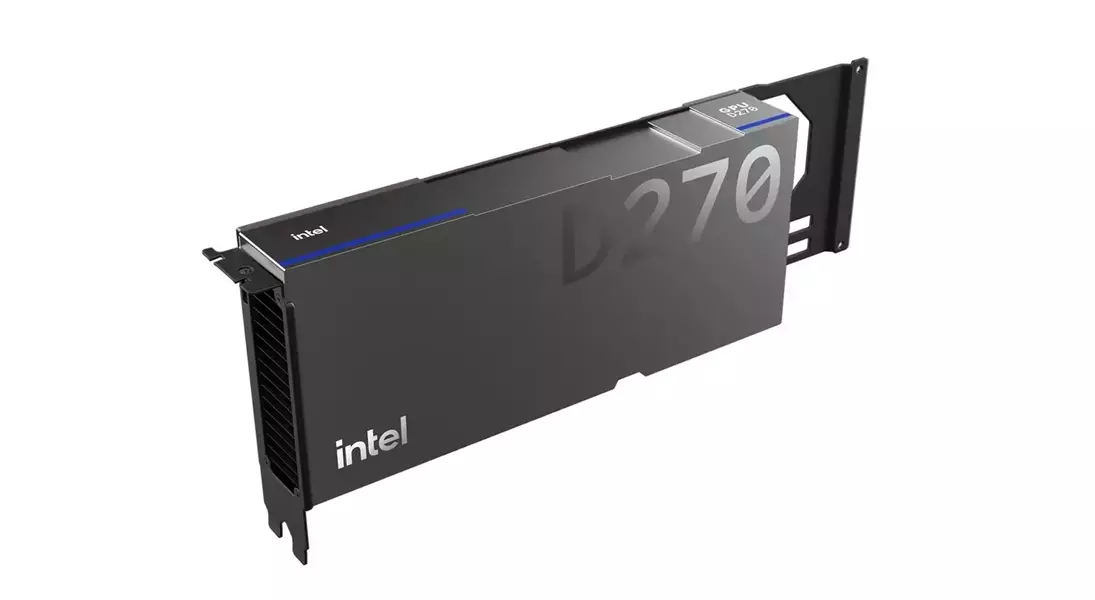
This article introduces Intel's latest GPU D-Series, highlighting its substantial memory capacity and focus on AI inference workloads. It explores how this new hardware aims to address the growing demand for efficient AI processing, contrasting it with the scarcity of consumer RAM and Intel's past attempts in the AI GPU market. The piece also delves into the technical specifications and strategic positioning of the GPU D-Series within the broader AI and gaming hardware landscapes.
Revolutionizing AI Workloads: Intel's Next-Gen GPU with Unprecedented Memory
Addressing the Memory Challenge: A Divergent Path for AI and Consumers
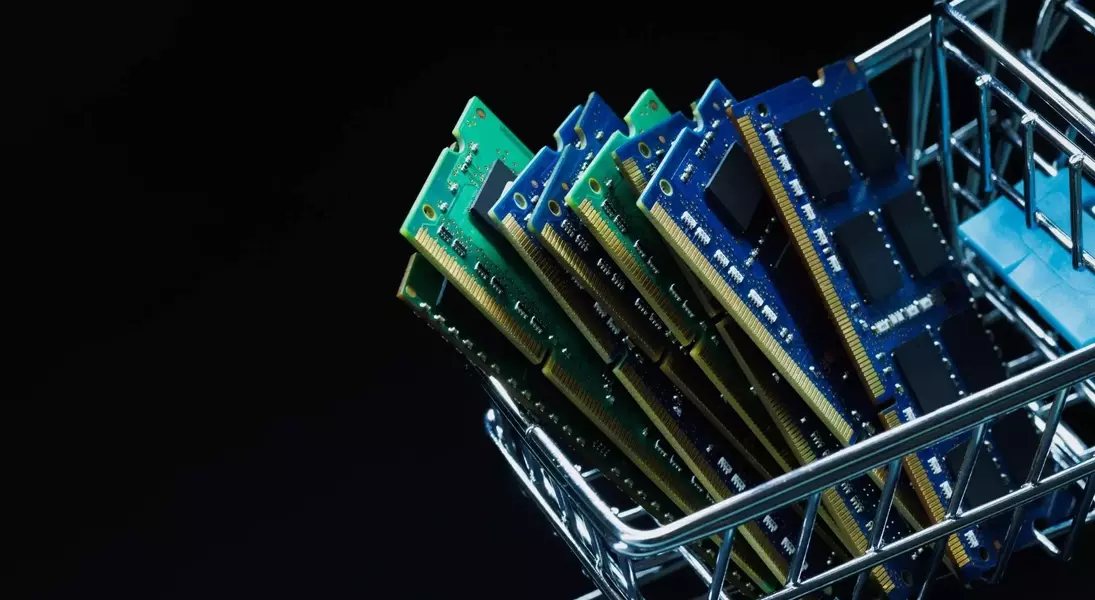
While the consumer market grapples with a persistent shortage of memory components, the AI industry is witnessing a surge in specialized hardware. This disparity is particularly evident with Intel's unveiling of its new AI-focused GPU, the D-Series, which comes equipped with a massive memory footprint, signaling a distinct trajectory for AI infrastructure compared to standard computing.
Introducing the 'Crescent Island' Architecture: Powering Advanced AI Inference
Intel's latest innovation, previously known as 'Crescent Island,' is the GPU D-Series. This advanced graphics processing unit integrates an impressive 480 GB of LPDDR5X memory directly with its core processor. This design is specifically engineered to handle intensive AI inference tasks, a critical area in artificial intelligence development.
Technical Prowess: Unpacking the GPU D-Series Specifications
The GPU D-Series leverages Intel's cutting-edge Xe3P architecture, delivering a formidable combination of capabilities. Beyond its extensive LPDDR5X memory, it offers an impressive 1.5 TB/s of memory bandwidth and 1.3 petaflops of FP8 compute power, all while maintaining a power consumption of just 350 watts. This carefully balanced specification set underscores Intel's commitment to optimizing AI infrastructure for practical, real-world inference applications.
Streamlined Integration for Data Centers: Simplifying AI Deployment
Intel emphasizes that the GPU D-Series is meticulously crafted to ensure seamless integration into existing data center environments. Furthermore, it supports broad application portability across Intel's diverse GPU platforms. This focus on ease of deployment and compatibility aims to accelerate the adoption and scaling of AI technologies within enterprise settings.
Shifting Focus: From AI Training to Efficient Inference
In light of previous challenges in competing with industry giants like Nvidia in AI GPU training, Intel has strategically refined its approach with the D-Series. The current iteration is primarily geared towards AI inference workloads, which involve applying trained AI models to new data. This pivot aims to carve out a niche for Intel in the rapidly expanding AI market, providing cost-effective and high-performance solutions for inferencing.
The Strategic Imperative: Balancing Performance and Cost for AI Inference
Anil Nanduri, Intel's VP of AI Products and Go-to-Market strategy, highlights the growing importance of inference as a defining AI workload. He stresses that businesses require infrastructure that delivers optimal performance at a manageable cost. The Intel GPU D-Series is positioned to meet this demand, making high-capacity inference both practical to deploy and economically scalable for a wide range of applications, including multi-tenant AI services, robotics, and other latency-sensitive operations.
Memory Type Evolution: LPDDR5X for Enhanced Efficiency
A notable evolution in the D-Series is its shift from HBM (High Bandwidth Memory), used in previous models like the Gaudi 3, to LPDDR5X memory. While HBM offers higher bandwidth, LPDDR5X provides greater power efficiency and increased capacity, making it well-suited for the specific demands of AI inference. This change enables the D-Series to offer significantly more memory than its predecessors, crucial for complex AI models.
Future Outlook: Implications for Consumer and AI Hardware Markets
The sheer scale of memory in Intel's new AI GPU raises questions about its potential impact on the consumer hardware market. With production lines increasingly catering to AI's voracious memory demands, the scarcity of RAM for gaming GPUs could persist or even worsen. The article speculates that future high-end gaming GPUs, like the rumored RTX 5080, might also incorporate AI-tailored memory and pricing, further blurring the lines between consumer and professional-grade hardware and potentially driving up costs for gamers.