Intel's latest Panther Lake CPU, eagerly anticipated by the tech community, has recently surfaced in Geekbench benchmarks, providing an initial glimpse into its capabilities. The early test results, while demonstrating some advancements, suggest a more measured evolution rather than a revolutionary leap in performance. This is particularly notable when comparing it to its immediate predecessor and leading Arm-based competitors.
These preliminary findings indicate that while Intel is making steady progress, the true value of Panther Lake may lie beyond raw computational power. Industry observers are now keenly awaiting further details, especially concerning power efficiency, a critical factor for mobile processors. The complete picture is expected to emerge with the official launch, which will shed more light on Intel's strategic direction for this new generation of chips.
Early Benchmarks: Modest Performance Uplift
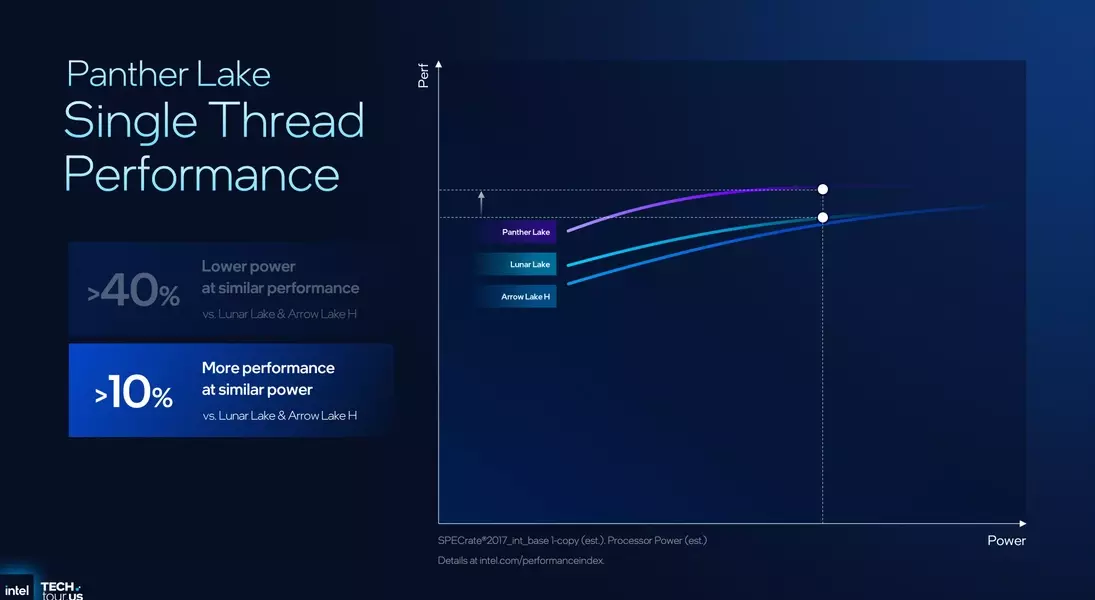
Initial Geekbench results for Intel's Panther Lake CPU, specifically the Core Ultra 9 386H model, reveal a cautious but discernible increase in processing capabilities. This mobile chip, configured with 16 cores (four performance, eight efficient, and four low-power efficient), posted scores of 2,849 in single-core tests and 15,434 in multi-core assessments. Comparing these figures to the Core Ultra 9 285H, a similarly structured 16-core mobile processor, Panther Lake shows an incremental improvement rather than a significant leap. The prior generation scored 2,608 single-core and 14,812 multi-core points, highlighting a modest generational performance gain for the newer architecture.
The Core Ultra 9 386H's Geekbench scores indicate a gradual enhancement over previous models. The single-core performance, which often provides a direct comparison between different generations of Intel's Performance cores, saw a moderate boost. However, the multi-core scores, influenced by varying configurations of Performance, Efficient, and Low Power Efficient cores, also showed an increase, albeit not a dramatic one. This suggests that while there are improvements, they are not on par with the substantial performance surges observed in some competing architectures. While these results are from early tests and may not reflect the final retail product's full potential, they offer an initial indication that Panther Lake's focus might extend beyond raw speed.
Panther Lake Versus the Competition: A Focus on Efficiency
In the broader competitive landscape, the early Geekbench results position Intel's Panther Lake somewhat behind the curve in terms of pure single-core performance when compared to leading Arm-based processors. Apple's latest M5 chip and Qualcomm's new Snapdragon X2 chip both demonstrate significantly higher single-core scores, exceeding 4,000 points. Even AMD's Ryzen AI 9 HX 370, another x86 chip, achieves single-core scores around 2,800 points, placing it in a similar range to Panther Lake. This disparity suggests that current x86 architectures, including Intel's new offering, are trailing the top Arm CPUs in this specific performance metric.
While Geekbench provides valuable synthetic benchmarks, it does not fully encompass real-world application performance, nor does it factor in crucial aspects like power consumption. For a mobile CPU like Panther Lake, built on Intel's new 18A process node, efficiency and battery life are paramount considerations, arguably even more so than peak raw performance. The current data implies that Intel may be prioritizing a balanced approach, emphasizing improved power efficiency alongside performance gains. The full scope of Panther Lake's advancements in these areas will become clearer upon its official launch at CES in January, where more comprehensive details on its power consumption and overall efficiency are expected to be unveiled. Until then, the initial benchmarks suggest that while Panther Lake is a solid step forward, it may not redefine performance expectations in the same way some competitors have.
