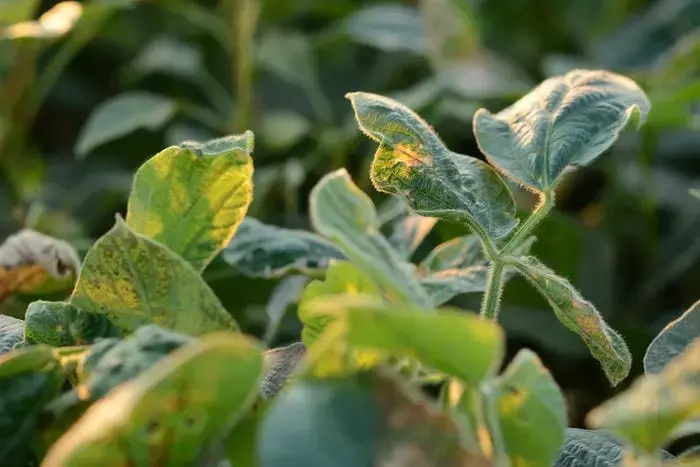
Researchers at the University of Illinois have unveiled a sophisticated remote-sensing system designed to pinpoint the precise extent of dicamba herbicide damage in soybean fields. This pioneering technology promises to deliver an impartial evaluation of the herbicide's impact, a long-standing challenge for farmers and regulators alike. By leveraging spectral analysis from aerial platforms, the system can detect subtle changes in plant health indicative of dicamba exposure, offering a critical tool for quantifying damage that often goes unnoticed until it's too late. This breakthrough is poised to revolutionize how agricultural incidents are documented and how future policy on herbicide application is shaped, moving beyond anecdotal evidence to data-driven insights.
Aerial Intelligence: Unveiling Hidden Herbicide Damage
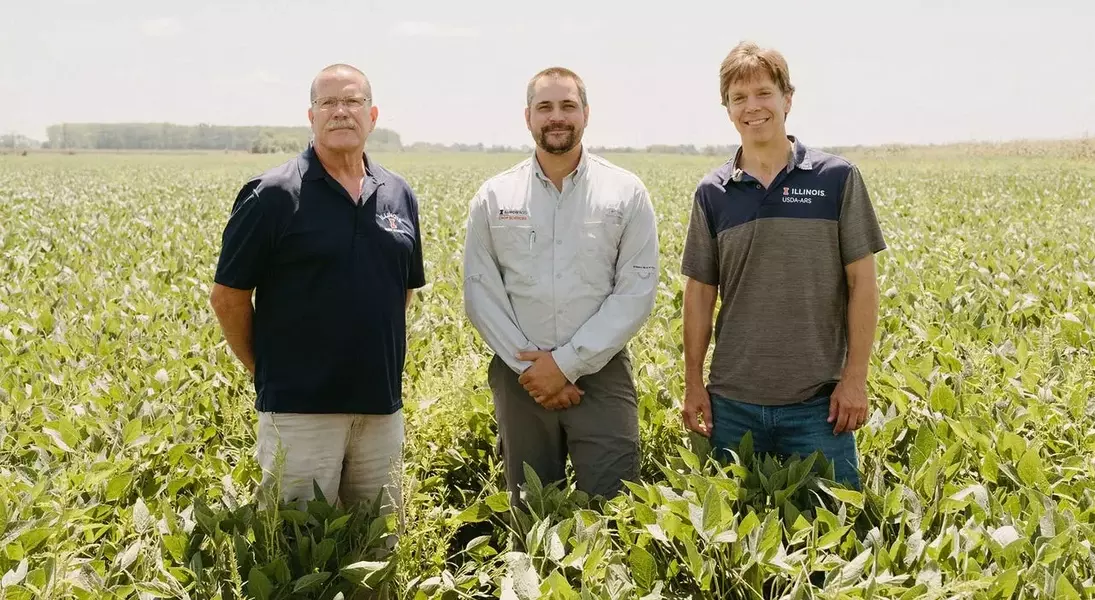
In a significant stride for agricultural science, a collaborative team at the University of Illinois, spearheaded by weed specialist Aaron Hager, crop sciences professor Marty Williams, and doctoral candidate Dylan Kerr, has developed an innovative remote-sensing system. This technology addresses the persistent challenge of identifying and quantifying the often-elusive damage caused by dicamba herbicide to soybean crops. Historically, farmers have struggled to prove the source and extent of damage due to delayed symptoms and varied exposure pathways. This new approach promises to provide clarity and unbiased data.
The genesis of this research dates back to 2015, following a rising concern over dicamba-related incidents. The problem escalated significantly in 2017 with the broader commercial availability and increased use of dicamba-tolerant soybeans, leading to a surge in reported damage complaints. The Illinois Department of Agriculture alone received 119 formal complaints that year, highlighting the urgent need for a more accurate detection method.
The core of this cutting-edge technology lies in its ability to analyze the spectral signature of soybean plants. This signature, essentially how plants reflect different wavelengths of light, changes subtly when exposed to dicamba. Crucially, the system can detect these alterations as early as eight days post-exposure, long before any visible signs of leaf cupping or discoloration appear to the naked eye. Initial testing with drones has demonstrated its efficacy in identifying damage from even minute concentrations of the herbicide, as low as 1/10,000 of the typical application rate.
Beyond detection, the technology is also capable of distinguishing between damage from volatilized dicamba in untreated fields and the effects on dicamba-tolerant soybean varieties. This distinction is vital, especially given that some farmers still utilize dicamba-tolerant varieties for their resilience against herbicide drift. The researchers emphasize that their work is not about taking sides in the ongoing debate surrounding dicamba use, but rather providing a much-needed scientific metric to assess its impact accurately. While the number of formal complaints has decreased since a peak in 2019, the researchers maintain that the problem of off-target dicamba movement remains substantial, as many incidents go unreported due to various factors.
Dicamba's off-target movement occurs through several mechanisms: physical drift during application, residue contamination from improperly cleaned equipment, and volatilization, where the liquid herbicide transforms into a gas and can travel significant distances. This last pathway is particularly problematic, as temperature plays a crucial role; higher temperatures, common during late-season soybean applications, significantly increase volatilization rates, allowing the gaseous herbicide to spread for miles. This contrasts with earlier corn applications when temperatures are typically lower.
Looking ahead, the next phase of this project involves scaling up the detection capabilities from drones to satellite imagery, specifically utilizing data from NASA. This transition will enable a more expansive and robust data collection, allowing researchers to retrospectively analyze past years' satellite images to assess the historical extent of dicamba damage. This historical perspective could be instrumental in evaluating the effectiveness of previous regulatory adjustments to product labels. The team anticipates wrapping up this satellite imagery analysis within the next twelve months, with the potential to influence future agricultural policies by offering concrete data on the real-world consequences of herbicide application practices.
The development of this remote-sensing technology is a game-changer for agriculture. It offers an objective, data-driven approach to understanding the complex issue of herbicide drift, fostering greater accountability and potentially leading to more effective, science-backed regulations. From a journalist's perspective, this story underscores the power of interdisciplinary collaboration in solving pressing agricultural challenges. It also highlights the critical role of unbiased scientific research in informing public discourse and policy-making, especially in contentious areas like herbicide use. As a reader, one can appreciate the potential for this technology to bring transparency to an issue that has historically relied on subjective reports, ultimately benefiting both farmers and the environment by promoting more precise and responsible chemical application practices.
