
The Infrastructure Capital Equity Income ETF (ICAP) employs an advanced investment approach to achieve a substantial dividend yield, integrating various financial instruments and strategies. This ETF is designed for investors prioritizing consistent income streams, leveraging dividend-paying equities, preferred shares, and tactical covered call options. However, its reliance on option premiums and capital appreciation for distributions introduces a dynamic risk profile influenced by overall market trends and volatility. Understanding ICAP's operational framework, portfolio composition, historical performance, and how it measures against similar investment vehicles is crucial for prospective investors evaluating its role within a diversified portfolio.
ICAP, an actively managed fund, prioritizes income generation, though its equity selection also considers potential capital growth. A significant portion of its net assets, including borrowed funds, is allocated to dividend-yielding stocks, encompassing common and preferred shares, as well as convertibles. While the fund generally targets large-cap companies, its mandate allows for flexibility in company size. The management team at ICAP uses a four-step process for selecting investments and executing its strategy. This process involves formulating earnings forecasts through proprietary models and direct engagement with corporate management. These forecasts then inform price targets, which are determined based on price-to-earnings ratios and growth at a reasonable price (GARP) methodologies. Options are subsequently written at strike prices aligned with these targets. Specifically, the fund utilizes covered calls on individual stocks, meaning it already owns the underlying shares it might be obligated to sell. Only 30% to 40% of the portfolio is subject to covered calls, allowing most holdings to appreciate without being automatically sold. Additionally, ICAP engages in writing uncovered options on market indexes. A key component of ICAP's strategy is the use of leverage, where borrowed capital is invested alongside shareholder funds, thereby expanding the portfolio's asset base and amplifying both potential gains and losses. This borrowed capital, however, incurs interest charges.
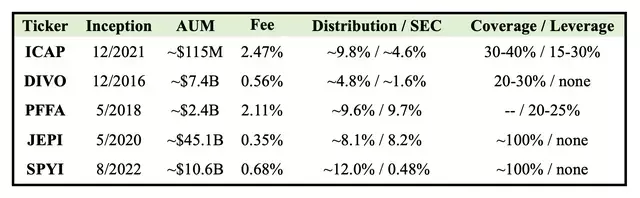
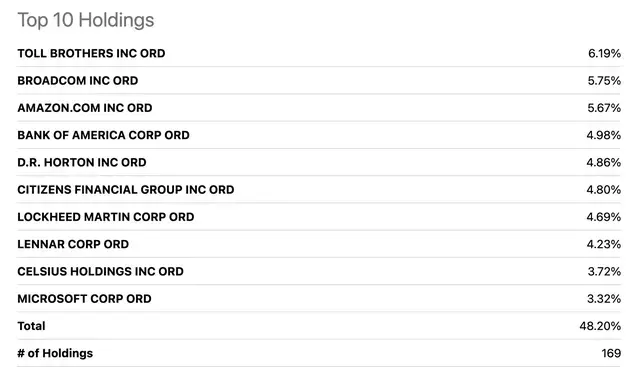
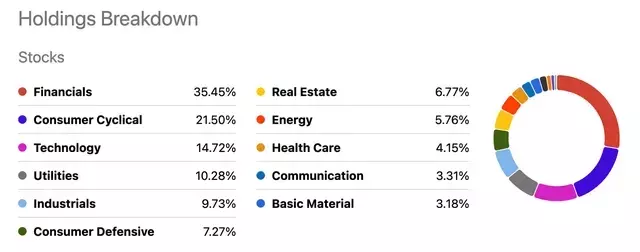
Launched in December 2021, ICAP currently manages approximately $115 million in assets. Its management fee stands at 0.80%, with a reported expense ratio of 2.47%. The fund's portfolio is primarily composed of equities (~85%) and preferred shares (~15%). Notable large holdings include companies like Broadcom Inc., Amazon.com, Inc., and Celsius Holdings, Inc., many of which do not offer high dividends themselves. The yield is primarily generated through options and leverage, rather than solely relying on the underlying stocks' dividend payouts. The largest sector allocation is to Financials, representing about 35% of the portfolio, followed by Consumer Discretionary at approximately 21.5%. Morningstar categorizes ICAP as a mid-cap value fund, noting its portfolio-level price-to-earnings ratio of 16.6x, which is slightly higher than the category average of 14x. The fund also exhibits a high portfolio turnover rate of 253% for fiscal year 2025, significantly above the 74% average for similar mid-cap value funds.
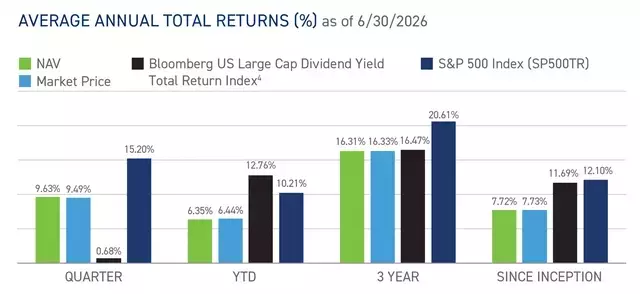
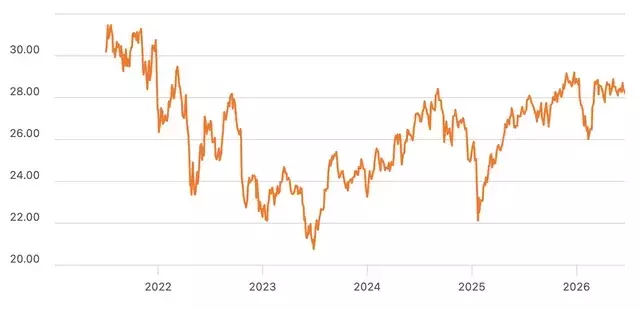
ICAP distributes dividends monthly, with total payments amounting to $2.77 per share over the past twelve months, equating to a yield of roughly 9.8%. However, the 30-day SEC yield is reported at about 4.6%, as this calculation excludes option premiums and realized gains, which are significant contributors to ICAP's distributions. Financial statements from 2025 reveal that only 18% of the $5.7 million distributed came from dividends and interest, while option premiums accounted for 29%, and sales of appreciated stock contributed a substantial 46%. Since its inception, ICAP has generated an annual return of 7.72% through June 30, 2026, lagging behind the Bloomberg US Large Cap Dividend Yield Total Return Index's 11.69% over the same period. Over a three-year horizon, their performances are more comparable, both hovering around 16.3% to 16.5%. The fund's share price has experienced fluctuations, starting around $30 in December 2021, dropping to about $20.50 by mid-2023, and then recovering to above $28. This price movement suggests that a significant portion of the total return has been distributed as cash payouts, with gains from appreciated holdings being realized and distributed rather than accumulating in the net asset value. This characteristic makes ICAP particularly appealing to retirees and income investors who prefer receiving regular payouts over accumulating capital appreciation, or those who wish to reinvest distributions to compound their share count, provided the NAV remains stable or grows.
The primary attraction of a fund like ICAP lies in its distributions, making it suitable for retirees and income-focused investors who prefer regular cash flows rather than selling shares. Reinvesting these distributions can also lead to compounding income and positive total returns, assuming stable or appreciating net asset value. Due to the tax implications, where most payouts are taxed as ordinary income rather than at a lower qualified dividend rate, ICAP is often best suited for tax-advantaged accounts. Option premiums are never classified as qualified dividends, and the fund's high turnover rate results in mostly short-term capital gains, which also do not qualify for preferential tax treatment. However, this high yield comes with a trade-off in price stability. ICAP's use of leverage and its concentration in cyclical sectors means that it can experience magnified losses during market downturns. The fund's performance can also be significantly affected by interest rate changes; for instance, rising borrowing costs and revaluation of preferreds, REITs, and utilities have historically worked against ICAP. In flat market conditions, ICAP’s strategy of generating income from premiums and dividends can be effective, especially when options expire worthless. Yet, a prolonged flat market with low volatility could pose challenges, as the fund relies on asset appreciation for realized gains, and cheaper options generate less income. This could necessitate payout cuts or distributions funded by a return of capital. When compared to peers, ICAP stands out due to its combined use of leverage and covered calls. Funds like the Amplify CWP Enhanced Dividend Income ETF (DIVO) offer a similar strategy but without leverage, resulting in a lower yield. The Virtus InfraCap U.S. Preferred Stock ETF (PFFA), a sister fund, also uses leverage and options but focuses on preferred securities for income. Other high-yield ETFs, such as the JPMorgan Equity Premium Income ETF (JEPI) and NEOS S&P 500 High-Income ETF (SPYI), achieve comparable yields through different means, such as equity-linked notes or index call spreads, without employing leverage. These comparisons highlight ICAP's unique risk-return profile, which offers a higher yield but with increased sensitivity to market conditions and a complex tax structure.
The Infrastructure Capital Equity Income ETF (ICAP) strategically blends a meticulously chosen portfolio of dividend-paying stocks and preferred shares with leverage and a covered call approach on a portion of its assets. This intricate framework enables the fund to convert modest underlying yields into a substantial distribution nearing 10%. The fund's income is predominantly derived from option premiums and realized gains from asset appreciation, with a smaller fraction sourced from traditional dividends and interest. This distribution model makes ICAP particularly vulnerable to periods of market stagnation, downturns, or rising interest rates, as such conditions can impede capital appreciation and depress option premiums. Consequently, the stability of its distributions is contingent on favorable market dynamics for asset growth and option writing.
