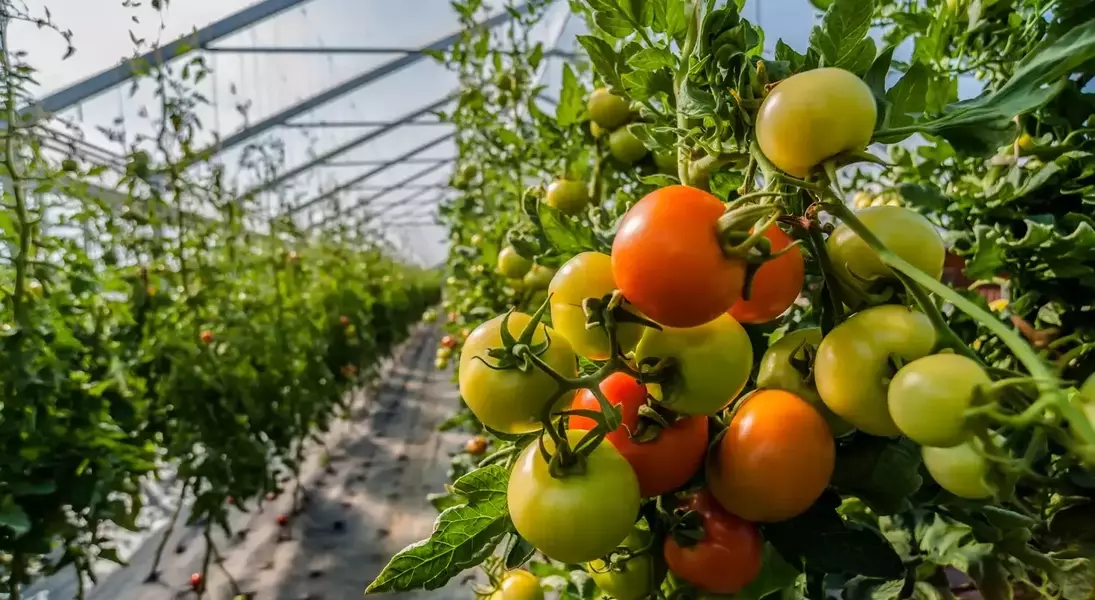
With climate change intensifying and water scarcity becoming a global issue, the future of agriculture, particularly for water-demanding crops like tomatoes, is uncertain. This overview delves into how advanced indoor cultivation techniques, such as hydroponics and vertical farming, could revolutionize tomato production. These methods promise substantial reductions in water consumption and may even improve crop quality. However, the path to widespread adoption is not without obstacles, including high initial investment costs, significant energy demands, and the need for specialized labor. Despite these challenges, ongoing research and development suggest a promising future for indoor farming as a sustainable solution to secure our food supply.
Tomatoes are a cornerstone of American cuisine, second only to potatoes in popularity, with the average person consuming over 30 pounds annually. Rich in the antioxidant lycopene, tomatoes offer significant health benefits, whether enjoyed fresh or in various culinary forms. Originating in South America, tomatoes have become a global staple, featuring in dishes from shakshuka to pico de gallo. However, their future is imperiled by climate change. A substantial portion of the world's tomatoes, approximately 26.4 billion pounds each year, are grown in California, a region increasingly plagued by severe droughts since 2022. Dr. Joe Masabni, a professor at Texas A&M AgriLife Research and Extension Center, emphasizes that tomatoes are \"heavy feeders,\" requiring considerable water and fertilizer for optimal growth. As climate change is expected to exacerbate the frequency and intensity of droughts, innovative agricultural solutions are vital to ensure the continued viability of tomato production.
One such innovation is indoor farming, championed by experts like Dr. Daniel Wells, an associate professor at Auburn University. For nearly a decade, Dr. Wells has focused on hydroponic cultivation—growing plants in nutrient-rich water instead of soil—to develop more water-efficient farming practices. Hydroponic systems, particularly those housed in controlled environments like greenhouses or vertical farms, drastically reduce water consumption. Counterintuitively, water-based growing methods can use 80% to 90% less water than traditional field farming, primarily due to water recycling within the systems. This not only conserves water but also enables year-round local production, minimizing seasonality and transportation distances, thereby bringing fresh produce closer to consumers. Masabni further notes that vertical farming maximizes space by stacking hydroponic systems, allowing for greater yields in smaller areas with less water usage.
Despite the environmental advantages, the widespread adoption of indoor tomato farming faces significant economic hurdles. Dr. Wells points out that constructing a high-tech greenhouse can cost between $1 million and $3 million per acre, and ongoing operational expenses for heating and cooling are substantial, making these operations three to five times more expensive than conventional farms. Labor costs are also elevated, as hydroponic systems require skilled workers to manage specialized equipment. While universities are training new talent, the scarcity of experienced personnel remains a barrier. Consequently, hydroponically grown tomatoes command a higher price, often selling for $3 to $6 per pound compared to $1 to $2.50 for field-grown varieties. However, consumers often perceive a superior taste and consistent quality in greenhouse-grown tomatoes, as they can be ripened on the vine and delivered fresh within days. Masabni anticipates that future advancements will not only enhance flavor but also boost nutritional content, further justifying the premium cost.
Countries like the Netherlands and Spain are at the forefront of indoor farming, with Canada also making strides through companies like Nature Fresh Farms and Pure Flavor. Auburn University's \"Food U\" program serves as a successful model, supplying campus dining and local restaurants with produce grown in its facilities. In the U.S., indoor farming has found greater traction with leafy greens, which require less light than tomatoes. Tomatoes necessitate managing substantial heat generated by intense lighting, making fully enclosed indoor systems less practical. Greenhouses, which leverage natural sunlight while maintaining environmental control, offer a more sensible approach for tomato cultivation. Looking ahead, Masabni believes that greenhouse-controlled environments are the long-term solution. He foresees continuous technological improvements making these systems more efficient, including comprehensive water recycling. While large-scale indoor tomato farming may not yet be a global reality, ongoing research and educational initiatives are steadily bringing this vision closer to fruition.
