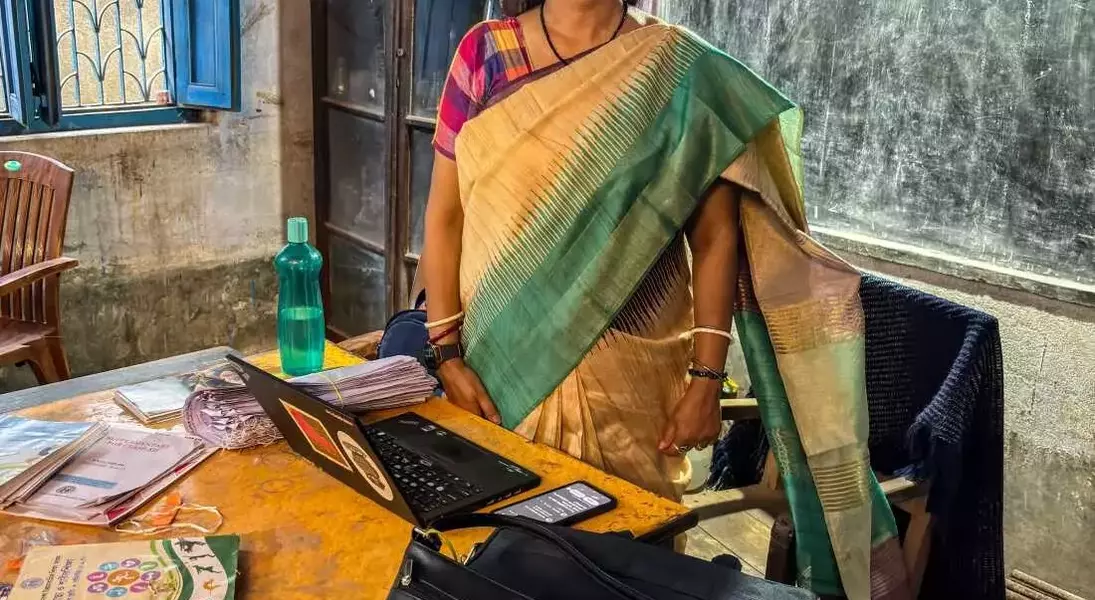
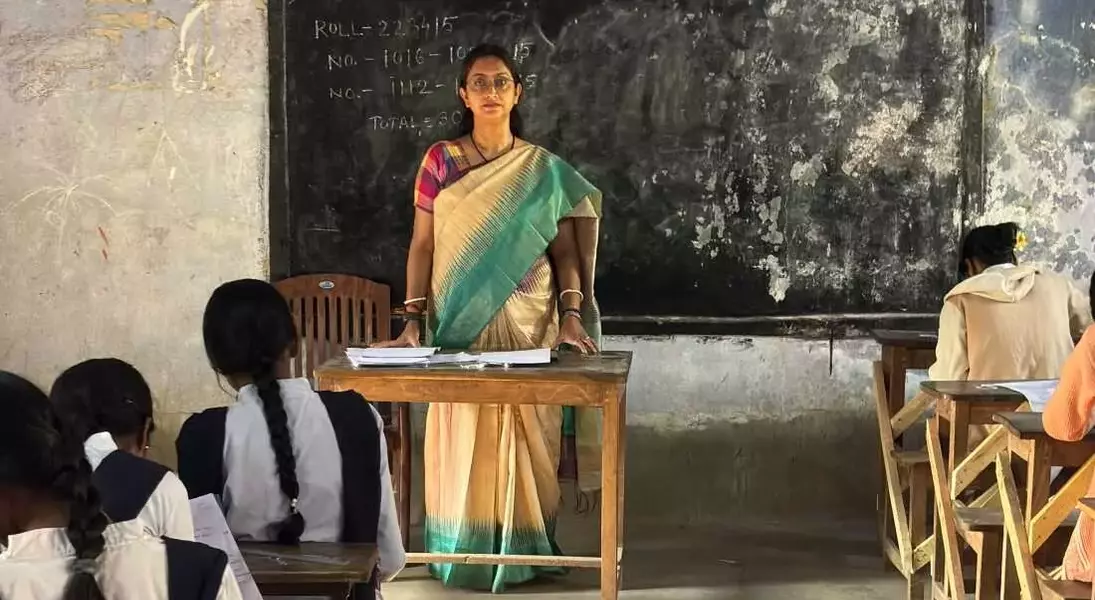
A dedicated English teacher from rural West Bengal, India, found her elation at receiving a prestigious U.S. scholarship swiftly tempered by societal inquiries focusing on her domestic responsibilities rather than her academic pursuit. This personal account delves into her commitment to fostering equitable language learning for underprivileged children, highlighting the stark contrast between her professional aspirations and the ingrained patriarchal norms that challenge women's ambitions. It underscores her journey to empower young girls through education, battling deeply rooted gender biases in both her homeland and, surprisingly, within seemingly progressive Western educational environments.
The moment a letter arrived from the Fulbright Distinguished Awards in Teaching Program, it felt like an immense burden had been lifted, signaling an extraordinary opportunity to spend four months in America researching how to make language education more accessible. However, this profound joy was immediately overshadowed by probing questions from her community: "Who will care for your children?" and "What about your husband's marital life?" These inquiries starkly revealed a prevailing societal mindset that confines women's aspirations within the domestic sphere, completely disregarding her research goals or their potential impact on classrooms.
Hailing from Bankura, a rural district in West Bengal, India, she has spent 24 years as an English teacher, instructing first-generation learners who primarily speak Bengali or Santali at home. These children's parents, many of whom are illiterate, place immense trust in her. Despite modest classroom conditions—a small space, a worn-out blackboard, and a slow ceiling fan—a profound eagerness for knowledge thrives. During her fellowship in Pennsylvania, she experienced modern, well-equipped schools where educators are recognized as "professionals," a notable difference from the "lady teachers" designation back home. Students in these American classrooms use laptops for assignments, a stark contrast to the recycled paper scraps her Indian students utilize. Yet, even in this more advanced setting, she observed female educators grappling with the demands of motherhood, grading, and exhaustion, realizing that patriarchal influences, though perhaps less overt, persist universally.
Language has always been her chosen avenue for advocating change. In her classes, both at school and during after-hours literacy programs in the slums, she emphasizes to her students, particularly girls, that English is not merely a colonial relic but a powerful tool for claiming influence and opportunity in India. Despite teaching words like "freedom" and "choice," she acknowledges that these concepts often remain abstract for her students, especially girls, whose lives are frequently predetermined by societal customs. In India, nearly a quarter of young women marry before turning 18, a figure that almost doubles for those without schooling. For these girls, the concept of choice becomes fleeting, taught in school but often withdrawn at home.
Her Fulbright experience became a pivotal junction between her identity as a teacher and as a woman. While the teacher meticulously dissects linguistic structures, the woman navigates the intricate "syntax" of societal expectations. This internal conflict spurred the development of her research project: the Dual Toolkit. This innovative approach, inspired by a student named Soma who could flawlessly copy English words but not grasp their meaning, aims to move beyond rote memorization to genuine comprehension. By using existing textbooks and leveraging students' native languages, the Toolkit acts as a key to unlocking opportunities in a country where English often serves as a gatekeeper.
Both she and her first-generation students are pioneers, challenging established narratives and striving to articulate experiences that society has yet to fully acknowledge. Reflecting in her dorm room in Pennsylvania, she often thinks of her students back in Bankura, their notebooks open like small windows to a world where gender-based challenges remain prevalent, even in advanced societies.
Upon her return, the same questions will undoubtedly resurface: "Who cared for your children?" She plans to respond, "They gained independence." And to the inquiry about her husband’s marital life, she will assert, "He endured my absence and perhaps discovered solitude." This journey, crossing oceans for her professional development, symbolizes an act of rebellion. Her "suitcase" is filled not only with lesson plans and stories of her students but also with an unwavering conviction that her self-worth transcends the need to maintain others' comfort. Education, she believes, is a testament to the power of open minds and the possibility of transforming even deeply ingrained societal questions.
It is her profound hope that in the future, when another woman from a small Indian town achieves an international fellowship, she will simply be asked: "What will you discover?"
