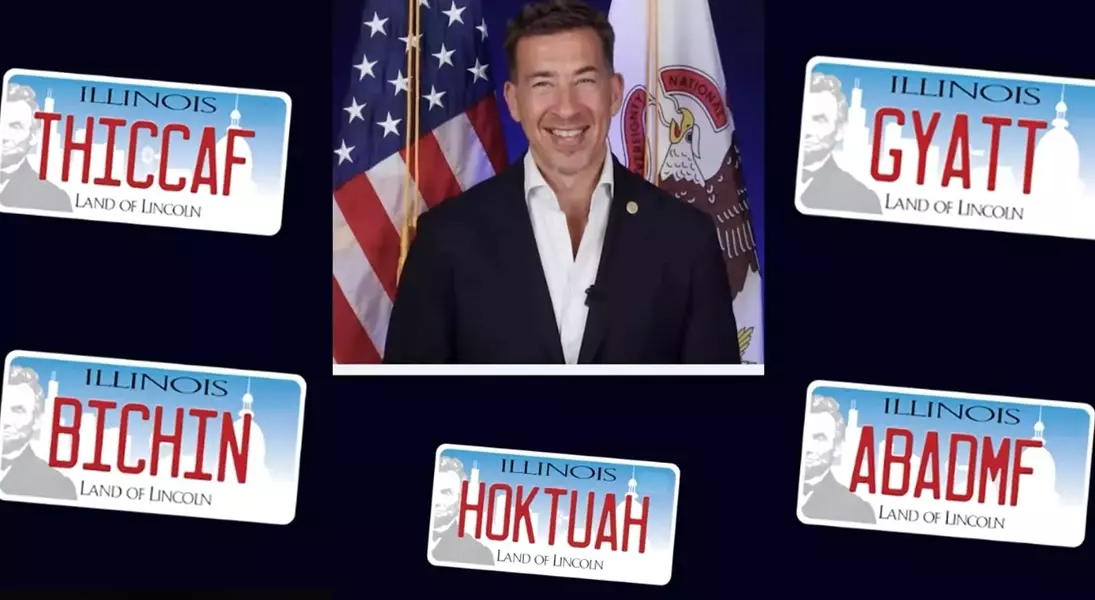
In a unique display of public engagement, the Illinois Department of Motor Vehicles (DMV) has taken to social media to showcase some of the most amusing and unconventional personalized license plate requests received this year. Through a TikTok video, the state highlighted several rejected plates that pushed the boundaries of creativity and good taste. The video not only entertained viewers but also shed light on the stringent yet necessary guidelines governing such customizations. Additionally, it revealed the extensive volume of applications processed annually, emphasizing the popularity of vanity plates among residents.
The Amusing Rejected Plates
The Illinois DMV's recent TikTok post featured a selection of entertaining but ultimately denied license plate requests. These included combinations like "GYATT," "AXEHOLE," "ABADMF," "THICCAF," "SHIDDED," and "HOKTUAH." Each application tested the limits of humor and appropriateness, showcasing the diverse and sometimes audacious imagination of applicants. Despite their comedic value, these plates did not meet the state's standards for public decency and tastefulness.
Secretary of State Alexi Giannoulias expressed appreciation for clever and humorous plates seen on roads, noting that Illinois residents have a penchant for displaying customized plates. However, he emphasized the importance of adhering to guidelines that ensure all messages remain respectful and appropriate for general viewing. The showcased plates, while intended to be funny, crossed the line into lewd or offensive territory, leading to their rejection. This highlights the delicate balance between encouraging creativity and maintaining public standards.
The Extensive Process Behind Vanity Plates
Each year, the Illinois DMV processes a substantial number of requests for personalized license plates, reflecting the widespread interest in this form of self-expression. In 2023 alone, the department received over 60,000 applications for vanity plates. Of these, only a small fraction—335—were denied due to inappropriate content. This statistic underscores both the high volume of acceptable requests and the rigorous review process in place to maintain standards.
For many, the journey to obtaining a personalized plate can be an emotional one. Some applicants, like the author who attempted to secure a "BS" plate in New York, face disappointment when their creative ideas are rejected. The personal experience of having a request conditionally approved only to be later denied by human reviewers illustrates the complex nature of the approval process. While it may be disheartening, it also shows that each application is carefully evaluated to ensure compliance with regulations. Ultimately, the goal is to allow for individual expression while safeguarding against offensive or harmful content, ensuring that everyone can enjoy the roadways without encountering inappropriate messages.
