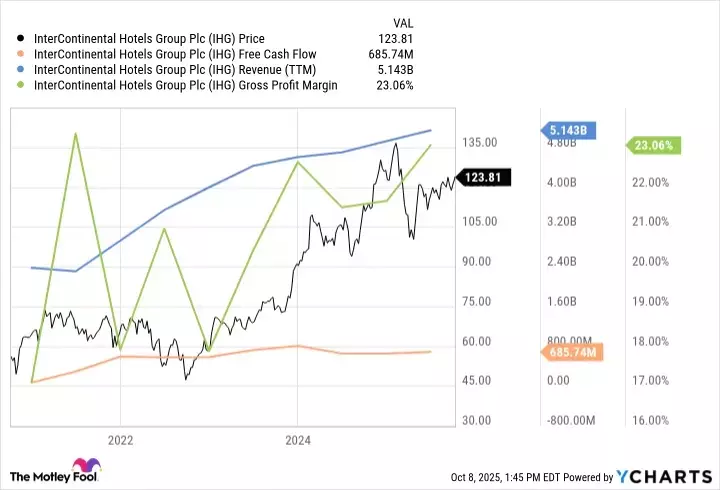
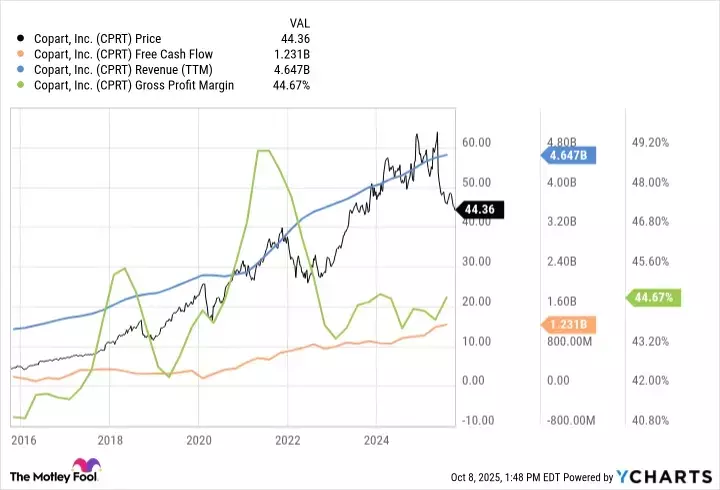

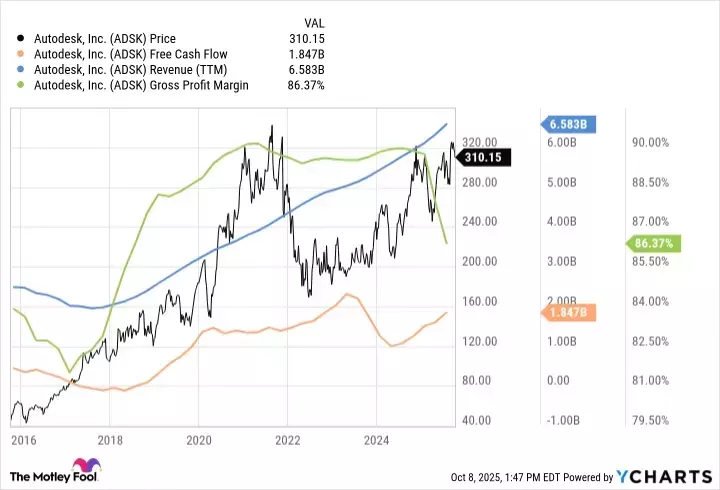
This analysis spotlights three prominent companies—Copart, Autodesk, and InterContinental Hotels Group—as prime candidates for long-term investors. Each company exhibits robust financial health, characterized by substantial revenue expansion, enhanced free cash flow, and impressive gross profit margins. A key factor distinguishing these enterprises is their entrenched competitive advantages, which promise sustained growth and market resilience. From expansive operational footprints to high customer retention through specialized software and recurring revenue streams, these firms present compelling investment cases for those focused on enduring value creation.
Detailed Investment Report: Strong Growth & Sustainable Advantages
On October 12, 2025, a comprehensive review identified three publicly traded entities – Copart, Autodesk, and InterContinental Hotels Group – as possessing the characteristics conducive to generating exceptional returns for long-term shareholders. These companies distinguish themselves through consistent top-line growth, coupled with increasing financial efficiency and market dominance.
First, Copart, a leading online platform for salvage vehicle auctions, operates across 11 countries, including North America, Europe, and the Middle East. Facilitating over 3.5 million annual transactions, it connects vehicle sellers with an extensive network of over 750,000 registered buyers. Copart's growth strategy centers on continuous land acquisition, significantly expanding its capacity to manage salvage vehicles, particularly in areas prone to natural calamities. This physical infrastructure, combined with services like title transfers and salvage estimation, reinforces its competitive moat, making its high-liquidity marketplace difficult to replicate.
Next, Autodesk stands out in the application software sector, catering to architecture, engineering, construction, product design, manufacturing, media, and entertainment industries. With more than 4 million paid subscribers globally, Autodesk's success is rooted in its industry-standard design, rendering, and modeling software. Its competitive advantage is further amplified by substantial switching costs and network effects; professionals trained in Autodesk products find it impractical to transition to alternative software. The company's strategic shift over the past decade to a subscription-based model has resulted in over 95% recurring revenue, promising higher per-user revenue through upselling and a loyal customer base. Potential for additional growth exists by converting users of pirated software to legitimate subscribers.
Finally, InterContinental Hotels Group (IHG), as of late 2024, manages nearly 990,000 rooms under 19 diverse brands, ranging from midscale to luxury accommodations. Its iconic brands like Holiday Inn and Holiday Inn Express, alongside emerging lifestyle brands, are experiencing robust demand. Despite economic uncertainties, IHG's strong brand equity and its loyalty program, boasting approximately 145 million members, are expected to drive market share growth. The company's significant international presence, with 47% of its rooms located outside the Americas, positions it well to capitalize on the growing global middle-income consumer segment. IHG's business model, predominantly relying on managed or franchised properties, ensures high returns on invested capital and creates high switching costs for property owners, thanks to long-term contracts typically spanning 20 to 30 years.
For discerning investors with a long-term outlook, these three enterprises offer compelling opportunities. Their proven ability to escalate revenue while enhancing profitability, coupled with robust, defensible competitive advantages, suggests a strong potential for outperforming market averages in the coming decade. These companies represent excellent starting points for further due diligence and potential portfolio inclusion.
From a journalist's perspective, this report underscores a critical investment philosophy: identifying companies with not just impressive financial figures, but also enduring competitive advantages. The detailed examination of Copart's logistical superiority, Autodesk's deeply integrated software ecosystem, and IHG's resilient, recurring-revenue model provides a blueprint for what constitutes a robust, long-term investment. It highlights that true value often lies beyond quarterly reports, in the strategic depth and operational efficiencies that build a lasting moat around a business. This approach is invaluable for investors aiming to navigate market fluctuations and secure sustained growth.
