
In the wake of substantial workforce reductions initiated by Microsoft across its Xbox studios, id Software, the renowned game developer, has issued a statement to allay concerns regarding its operational capacity and future projects. These cuts, which saw 136 individuals depart from id Software just a day prior to the release of the Doom: The Dark Ages expansion, sparked widespread apprehension among current and former staff, as well as the broader gaming community, concerning the studio's ability to innovate and maintain its proprietary idTech engine. The company emphasizes its enduring strength and commitment to its creative legacy, asserting that its core development team remains robust and capable of upholding its celebrated standards.
The recent restructuring at id Software, part of a larger directive from Microsoft affecting 3,200 employees across its gaming divisions, led to a significant downsizing, reducing the studio's personnel by more than half. This drastic measure prompted immediate reactions, with one affected worker publicly stating, "Nothing says business success like nuking a team into the dirt and relegating them to support studio size while also throwing out massive technological achievements." Such comments highlighted deep-seated worries about the studio's diminished size and its potential impact on its distinctive game development approach and technological advancements. The unexpected timing of these layoffs, coinciding with a major game expansion release, further intensified the uncertainty surrounding id Software's trajectory under Microsoft's ownership.
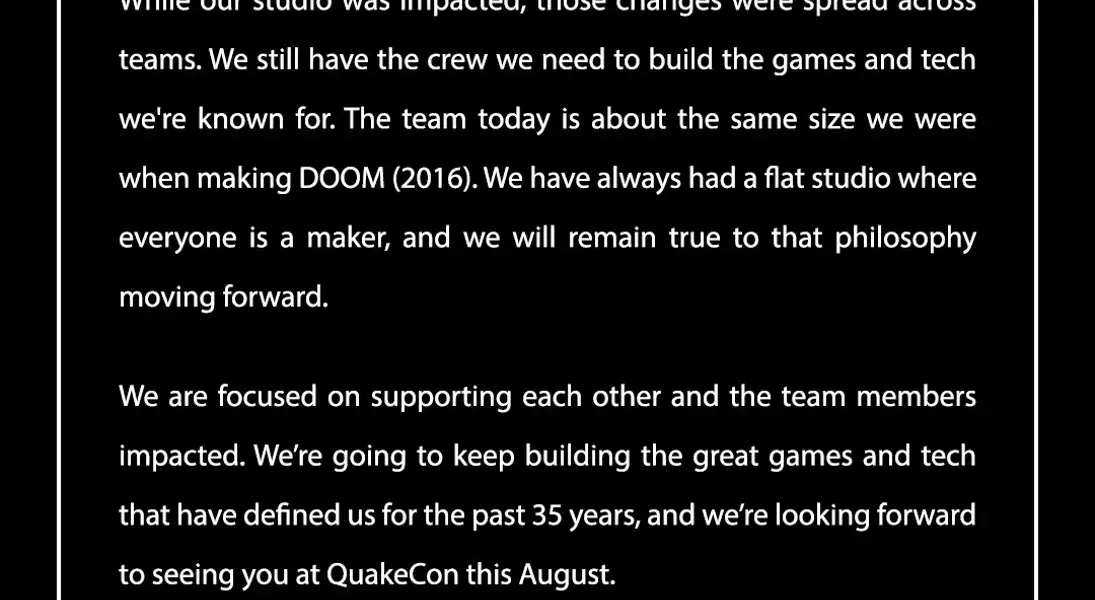
To counter these anxieties and reaffirm its direction, id Software's official social media presence articulated a clear message. The statement read, "While our studio was impacted, those changes were spread across teams. We still have the crew we need to build the games and tech we're known for. The team today is about the same size we were when making DOOM (2016). We have always had a flat studio where everyone is a maker, and we will remain true to that philosophy moving forward." This clarification sought to assure stakeholders that despite the layoffs, the foundational talent and ethos responsible for their acclaimed titles remain intact. Furthermore, the studio indirectly addressed speculations about a forced transition to Unreal Engine, a concern that emerged following the layoffs, by hinting at the continued development and utilization of idTech, their signature engine.
The developer also reiterated its dedication to its workforce, past and present, stating, "We are focused on supporting each other and the team members impacted. We're going to keep building the great games and tech that have defined us for the past 35 years, and we're looking forward to seeing you at QuakeCon this August." This indicates a twofold commitment: first, to assist those affected by the layoffs, and second, to continue delivering the high-quality gaming experiences fans expect. While the reassurances are intended to instill confidence, the broader implications of such significant staff reductions on a studio famed for its innovative output, particularly in a rapidly evolving industry where game development increasingly demands larger teams, continue to be a subject of debate within the gaming community. The path forward for id Software under these new circumstances will be closely watched, especially as they prepare for QuakeCon and unveil future projects.
Despite the studio's optimistic outlook, the comparison of its current size to that of its 2016 team raises questions about future capabilities. Modern game development, especially for titles of Doom's complexity and visual fidelity, typically necessitates larger teams and resources. The fact that the studio had expanded beyond 200 members for The Dark Ages project underscores this reality. Therefore, operating with a smaller team, even if comparable to an earlier successful period, may pose challenges in meeting contemporary development demands and innovating at the pace the industry expects. This situation prompts reflection on the long-term strategic vision for id Software and its ability to maintain its leading edge in a competitive market.
