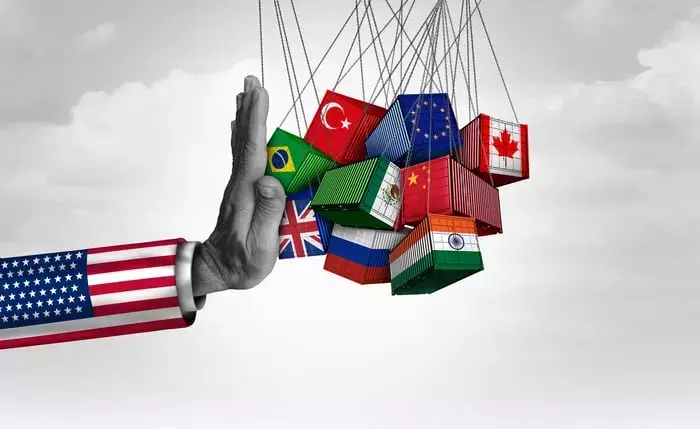
Despite its widespread global presence and substantial international revenue streams, IBM demonstrates remarkable resilience in the face of ongoing global trade tariff policies. While many multinational corporations grapple with the complexities and financial repercussions of import duties, IBM's strategic operational structure and proactive measures have largely insulated it from significant adverse effects. The company's careful management of its supply chain and sourcing practices ensures that the financial impact of tariffs remains marginal, underscoring its ability to navigate a volatile global economic environment with stability.
In 2025, the global economy is characterized by a dynamic and often unpredictable tariff landscape, driven by policies such as those enacted by the Trump administration, which have imposed substantial import fees on goods from various nations, including China and India. These measures, along with retaliatory countermeasures from affected countries, have created a complex web of trade regulations. Amidst this turbulence, IBM, a company inherently international in its operations – even bearing the word “international” in its name – might be expected to face considerable challenges. With research facilities across six continents, a workforce in India surpassing that in the United States, and business offices in over 170 countries, with approximately half of its 2024 revenues originating from the Americas (encompassing Canada and Latin America), its extensive global footprint suggests a high potential for tariff exposure.
However, contrary to initial assumptions, IBM has expressed minimal concern regarding the prevailing trade tensions. This position was articulated by CFO Jim Kavanaugh during the first-quarter earnings call on April 23, following the announcement of Trump's “Liberation Day” tariffs. Kavanaugh highlighted that IBM has deliberately diversified and optimized its supply chain over several years. As a result, goods imported into the U.S. constitute less than 5% of IBM's total expenditure. Under the existing U.S. tariff framework, the financial implications for IBM are therefore negligible.
The negligible impact stems from a careful calculation: even if the “less than 5%” of global spending subject to tariffs were to incur a substantial surcharge, its effect on overall revenues would be minimal. Given that the cost of products and services represented 16.3% of total revenues last year, a 5% portion of this gross expense translates to less than 1% of IBM's incoming revenues. Even in a hypothetical scenario where every tariff reached an extreme 100% surcharge – far exceeding typical international trade fees – the resulting additional cost would still be quite manageable for the company.
Furthermore, IBM is not merely passive in its resilience. The company is actively pursuing strategies to further mitigate any potential financial strain. Kavanaugh indicated that IBM is exploring alternative sources for components that are currently subject to tariffs, emphasizing the company's commitment to cost efficiency. This proactive approach, while addressing a relatively minor financial impact, reflects a prudent business strategy. Additionally, IBM announced a significant $150 billion investment plan in the United States at the end of April. Over the next five years, this initiative will see the relocation of substantial manufacturing and research assets to domestic soil, beginning with a $30 billion investment in mainframe development and quantum computing research operations. This domestic shift, while primarily a strategic business decision, also serves to further insulate IBM from international trade frictions and could potentially foster goodwill with the current administration.
In summary, IBM's robust financial health and its calculated response to the global trade landscape underscore its strong strategic positioning. The company's diversified operations and proactive supply chain management effectively minimize the financial impact of international tariffs, ensuring sustained stability and continued growth. These measures highlight IBM's adaptability and foresight in navigating an increasingly complex global economic environment.
