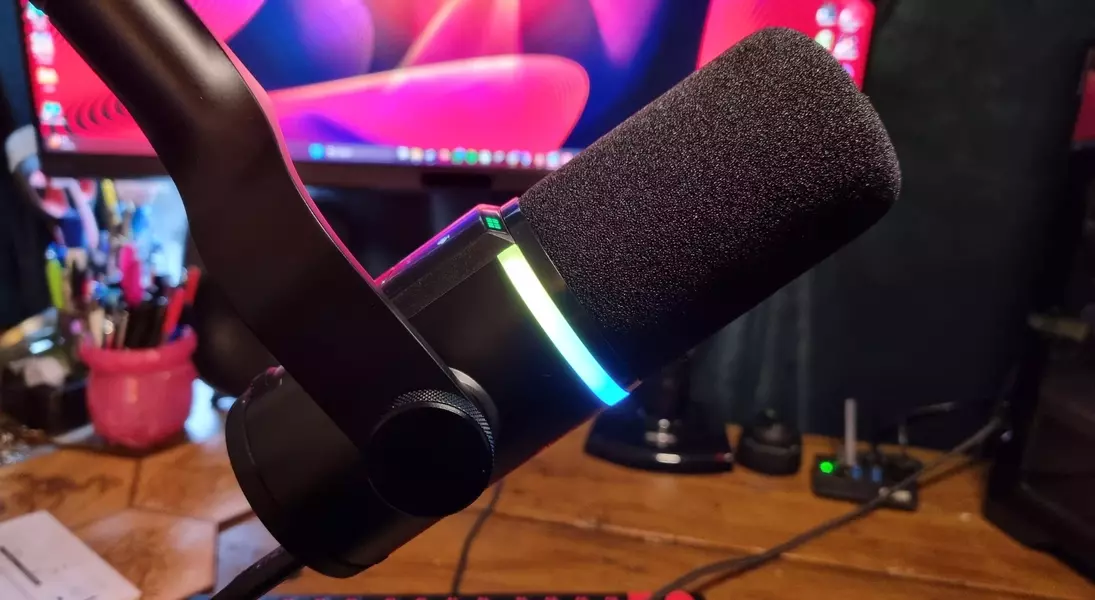
The HyperX FlipCast emerges as a compelling microphone option, showcasing significant strengths in audio fidelity and adaptable connectivity. Its robust design integrates both USB Type-C and XLR ports, catering to a broad spectrum of users, from casual plug-and-play enthusiasts to seasoned recording professionals. While the microphone itself demonstrates a high capability for vocal capture and a sleek aesthetic, its accompanying software suite, Ngenuity, presents a noticeable drawback due to its oversimplified control mechanisms. This dichotomy between high-quality hardware and basic software shapes the overall user experience and positions the FlipCast in a competitive market dominated by alternatives offering more nuanced control over sound processing.
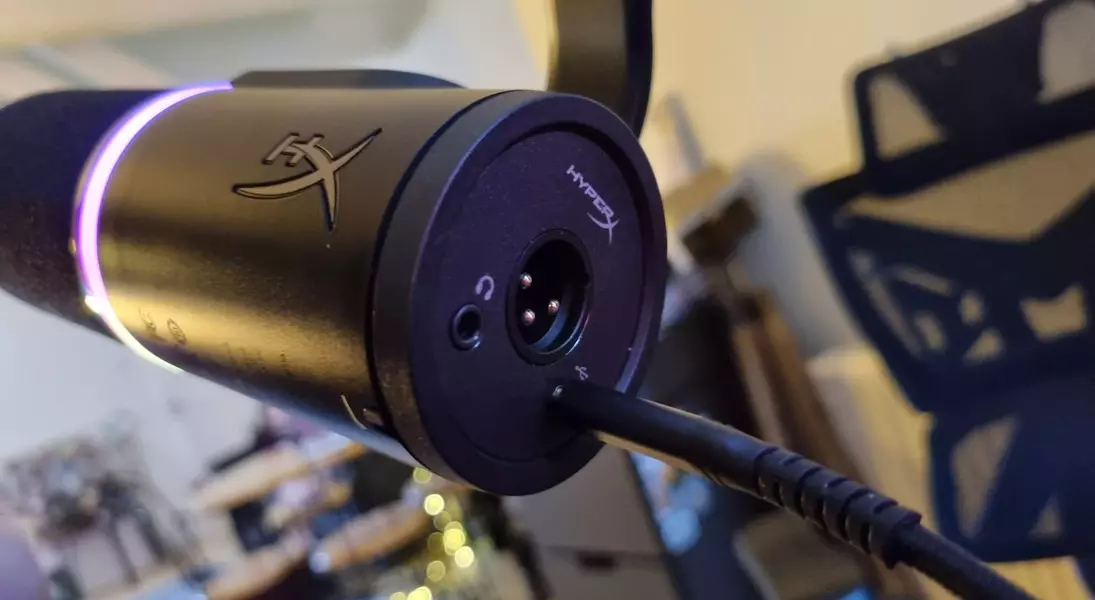
Historically, early USB microphones often compromised on audio quality, forcing users towards more complex XLR setups involving separate interfaces. The FlipCast, however, aims to bridge this gap by offering both connectivity options, enabling seamless integration into various recording environments. Notably, its XLR connection does not necessitate 48V phantom power, a common requirement for professional microphones, thereby enhancing its compatibility and ease of use. This dual-connectivity approach, allowing simultaneous USB and XLR operation, underscores HyperX's commitment to versatility, making the FlipCast a flexible tool for diverse recording needs.
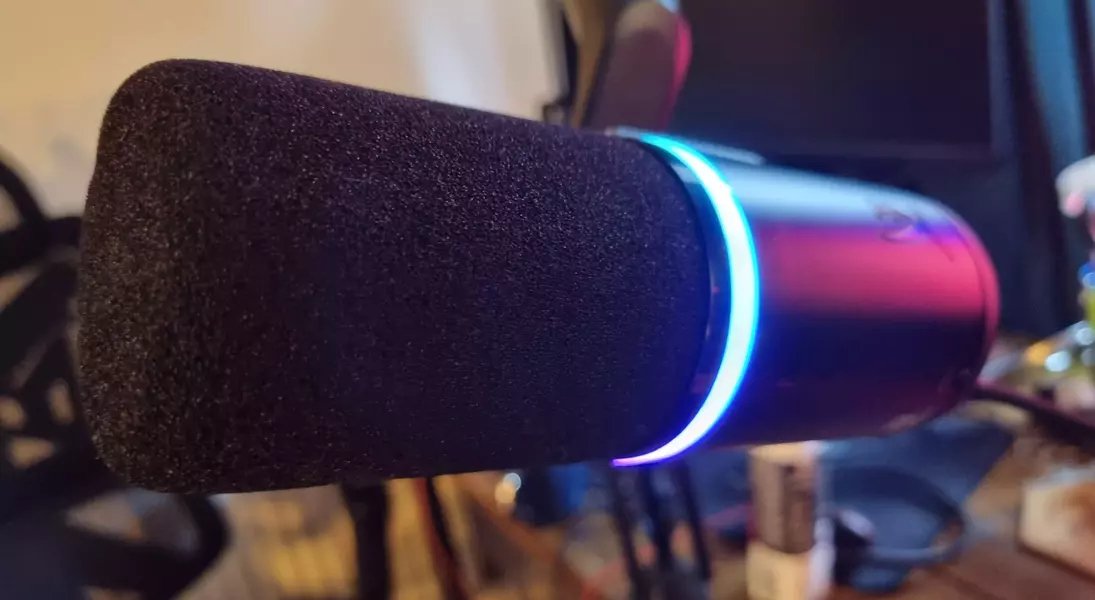
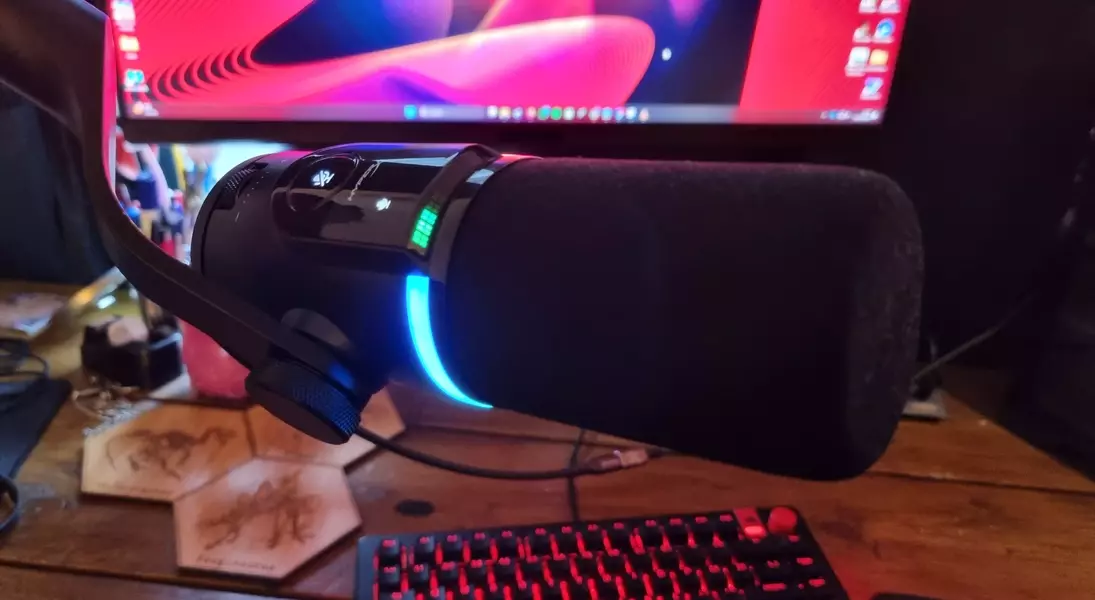
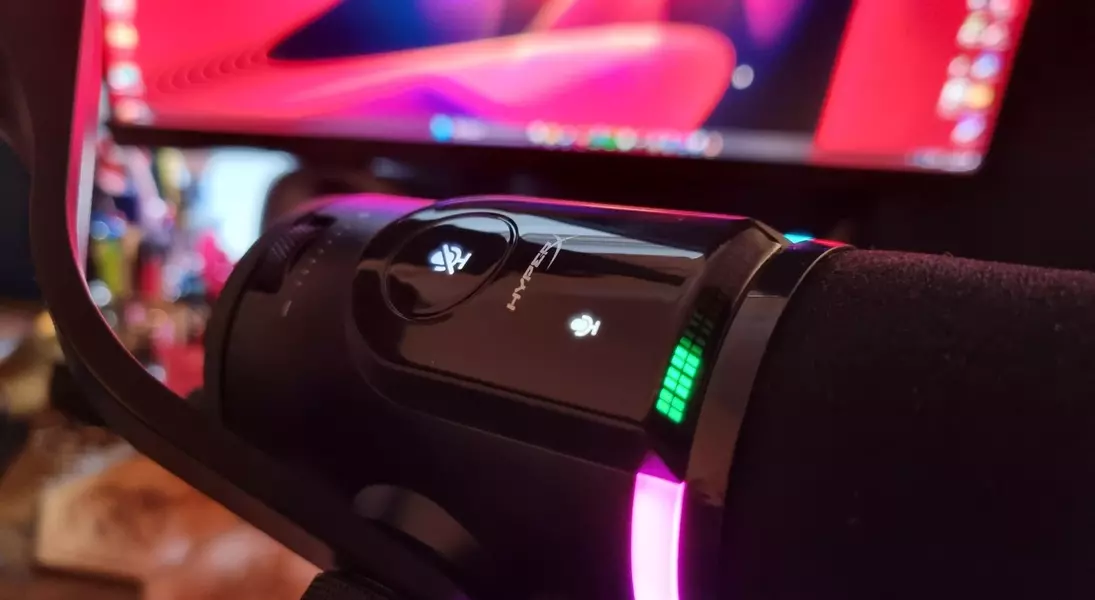
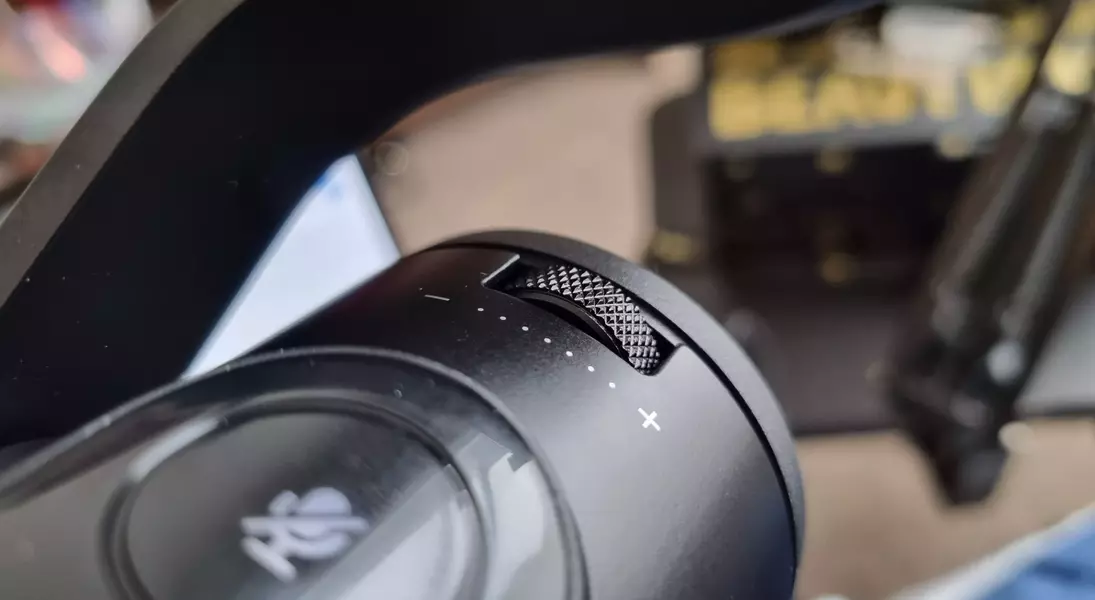
The physical design of the FlipCast is both practical and visually appealing. It features a large, dynamic capsule with a foam filter, reminiscent of professional podcasting microphones. It comes pre-mounted on a sturdy curved stand, ready for attachment to a boom arm, though a desktop stand is not included—a common omission in this product category. The microphone's front houses a responsive capacitive mute button and an LED gain indicator, while the rear includes a volume dial, the aforementioned USB-C and XLR ports, and a 3.5mm jack for real-time audio monitoring. Additionally, a streamer-friendly RGB ring adds a customizable visual element, cycling through colors at a vibrant pace.
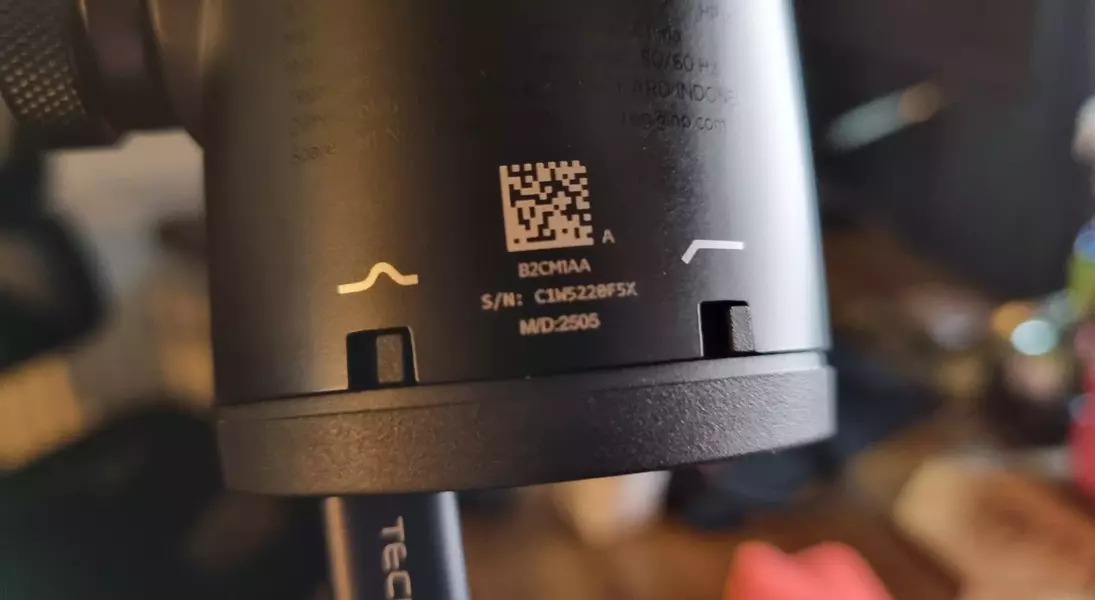
A unique hardware feature of the FlipCast is the inclusion of two subtle switches on its rear, controlling a built-in high-pass filter and a presence boost function. These filters are designed to enhance vocal clarity by reducing low-frequency noise and boosting upper-midrange and treble frequencies. When activated, these settings produce a clear, though slightly less full-bodied, vocal tone, which is ideal for voice chat in noisy environments like gaming. Disabling these filters, or adjusting the EQ within the Ngenuity software, can enrich the sound profile, although it may not quite match the deep, radio-like quality found in top-tier studio microphones such as the Shure MV7+.
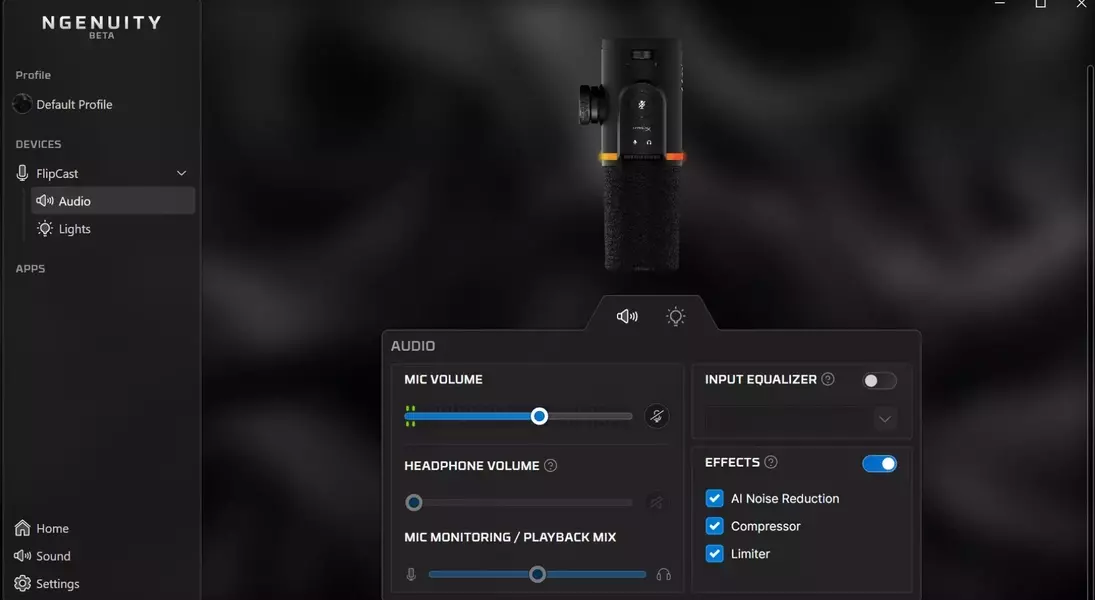
The Ngenuity software, despite its potential, currently offers limited customization. Essential features like noise cancelling, compression, and a limiter are reduced to simple on/off toggles. This simplicity can be a significant constraint, particularly for noise cancellation. The microphone's high sensitivity means it readily picks up ambient sounds, and while the noise-cancelling function effectively mutes much of this unwanted audio, its blunt application can result in abrupt sound cut-offs and re-engagements, creating an unnatural listening experience. More refined control, such as adjustable sliders for these parameters, would greatly enhance the user's ability to fine-tune their audio output.
Despite these software limitations, the HyperX FlipCast delivers commendable audio capture. When optimized settings—such as noise cancelling and limiter activated, with compression off—are applied, it achieves a balanced sound with good dynamic range and clarity. However, its high sensitivity, even via XLR, often necessitates additional post-processing or VST plugins to manage its robust output effectively. Priced at $261, it sits just below the Shure MV7+, a microphone often lauded for its professional-grade sound and superior software. This price point, combined with the FlipCast's software shortcomings, makes a full endorsement challenging. For those prioritizing advanced software control and a more seamless user experience, investing a little extra in alternatives like the Shure MV7+ might be a more rewarding choice. Alternatively, budget-conscious consumers might find comparable or better software experiences with less expensive microphones that, while perhaps lacking some of the FlipCast's raw feature set, offer greater flexibility in sound customization.
