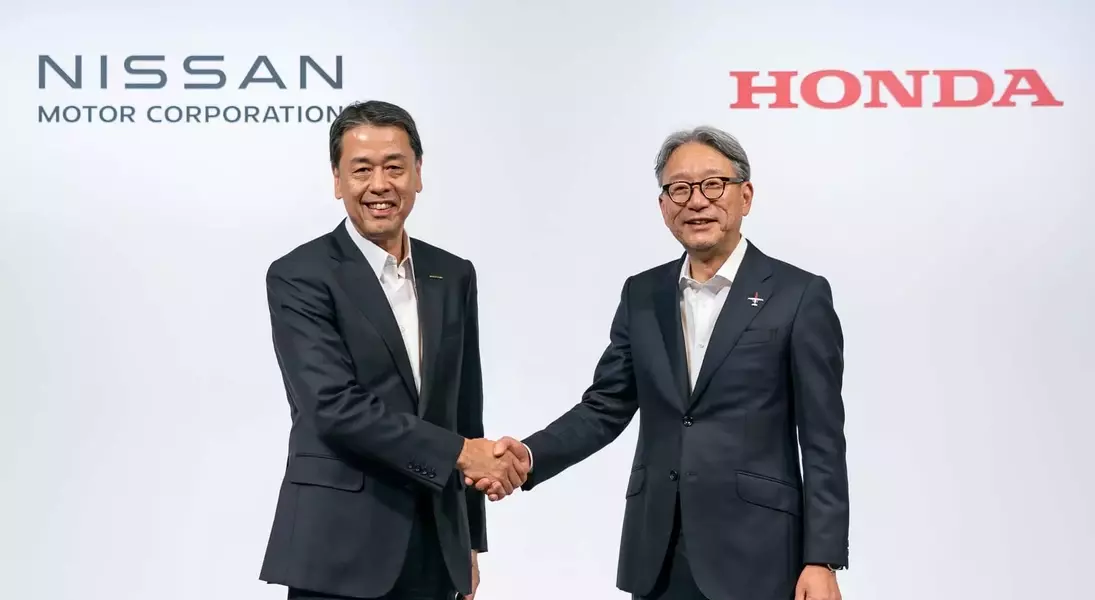
Nissan and Honda have been making waves in the automotive industry with reports suggesting they are on the verge of commencing merger talks. According to a recent Nikkei Asia report, which refrains from naming specific sources, these two automotive giants are set to operate under a new holding company. The specific details of this arrangement will be determined at a later stage. Additionally, it is alleged that Mitsubishi may be included in the future, further expanding the reach and influence of this new group.
Unraveling the Future of Nissan and Honda's Automotive Alliance
Nissan and Honda's Initial Partnership in 2024
In March 2024, Nissan and Honda took a significant step forward by initiating their partnership. This collaboration was further strengthened in August when Mitsubishi joined the fold. The three companies agreed to jointly develop electric vehicles and software, a move that holds great promise for the future of the automotive industry. It is worth noting that Nissan holds a 24 percent stake in Mitsubishi, adding another layer of complexity to this evolving alliance.Nissan and Honda's decision to work together was a strategic one, aiming to leverage each other's strengths and resources. By combining forces, they hoped to enhance their competitiveness in the rapidly changing automotive landscape. The joint development of electric vehicles and software was seen as a key area of focus, as the industry shifts towards a more sustainable future.
However, despite these initial steps, the future remains uncertain. The specific details of the new holding company and Mitsubishi's role within it are yet to be determined. This has led to speculation and anticipation among industry observers, who are eager to see how these developments will unfold.
Nissan's Struggles in the Current Market
This year has been a challenging one for Nissan. The company has been forced to cut production of its best-selling vehicle, a sign of the difficulties it is facing. In an effort to stay afloat, Nissan has asked its dealers to sell cars at a loss, a move that highlights the company's financial woes.Late last month, two unnamed executives shared with the Financial Times that Nissan only had 12 to 14 months to survive. These alarming words serve as a wake-up call for the company and its stakeholders, emphasizing the need for urgent action. To address these challenges, Nissan recently appointed former Jeep CEO Christian Meunier as chairman of Nissan America, hoping that his expertise and leadership will help turn the company around.
The automotive industry is in the midst of unprecedented challenges. There is increased competition from Chinese automakers, who are making significant inroads in their home market and starting to see real sales gains in Europe and other regions. Electrification is another major disruption, as traditional automakers race to catch up with Chinese progress and find innovative ways to stay competitive.
The Implications of the Merger Talks
If the rumored merger between Nissan and Honda comes to fruition, it could have far-reaching implications for the automotive industry. The combined resources and expertise of these two companies could lead to significant advancements in electric vehicle technology and software development. It could also strengthen their position in the global market and enable them to better compete against Chinese automakers.However, there are also challenges and uncertainties associated with such a merger. Integrating two large and complex organizations is never easy, and there are bound to be issues related to culture, management, and operations. Additionally, the inclusion of Mitsubishi adds another layer of complexity, as the three companies will need to find a way to work together harmoniously.
Despite these challenges, the merger talks between Nissan and Honda represent an important moment in the history of the automotive industry. It is a sign of the need for companies to adapt and evolve in the face of changing market conditions. Whether or not the merger actually takes place, it is clear that the industry is undergoing a period of significant transformation, and companies will need to be agile and innovative to survive.
