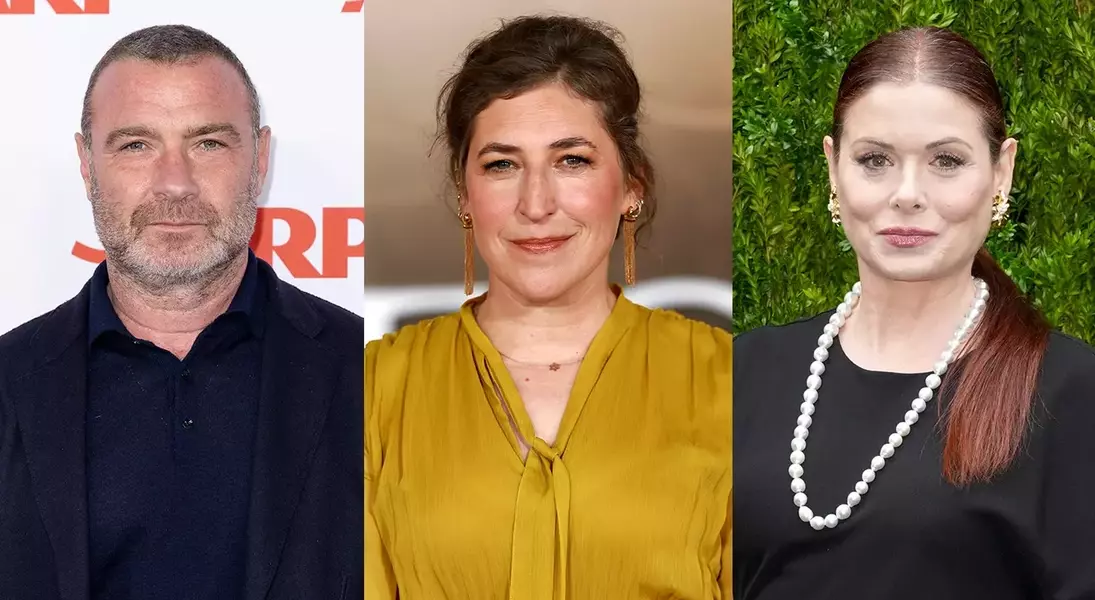
A group of influential individuals from the entertainment sector has publicly expressed their opposition to a proposed boycott of Israeli cinema, characterizing it as a form of collective punishment. This stance comes in response to a separate initiative by other film professionals advocating for a boycott due to the ongoing conflict in Gaza.
United Voices: Rejecting Division in the Arts
The Entertainment Industry's Stance on the Boycott Debate
Approximately 1,200 prominent artists and executives within the entertainment sphere have affixed their names to an open declaration, explicitly condemning any calls for a boycott of Israeli films amidst the ongoing situation in Gaza. This collective statement was issued through the non-profit organizations Creative Community for Peace and The Brigade.
Leading Figures Against Censorship and Collective Punishment
The open letter, disseminated to the public on a Thursday, articulates a clear message: \"To suppress the very voices striving for common ground and to express their shared humanity is incorrect, ineffectual, and a form of collective retribution.\" Among the notable signatories are actors Liev Schreiber, Mayim Bialik, and Debra Messing, alongside other influential personalities such as Gene Simmons, Sharon Osbourne, Greg Berlanti, Jerry O’Connell, Howie Mandel, Jennifer Jason Leigh, Sherry Lansing, and Haim Saban.
Counter-Narrative to the Boycott Movement
This initiative emerges as a counter-response to a previous action where approximately 1,300 filmmakers, actors, and creative professionals in Hollywood pledged to refrain from collaborating with Israeli film organizations and entities they deemed \"complicit in genocide and apartheid against the Palestinian people.\" Supporters of the \"Film Workers for Palestine\" pledge included Olivia Colman, Mark Ruffalo, Riz Ahmed, Hannah Einbinder, Cynthia Nixon, Adam McKay, Asif Kapadia, Javier Bardem, and Tilda Swinton.
Emphasizing Dialogue Over Silence
Those who oppose the Israeli film boycott argue that silencing fellow artists and filmmakers would be detrimental to fostering understanding and dialogue. Their open letter highlights the collaborative nature of the Israeli entertainment industry, where Jewish and Palestinian artists frequently cooperate to produce narratives that resonate with diverse audiences.
Israeli Film Institutions: A Platform for Diverse Perspectives
The letter underscores that \"Israel’s entertainment sector serves as a dynamic center for cooperation between Jewish and Palestinian artists and creators, who consistently collaborate to craft intricate stories that both entertain and inform their communities and the global audience. Israeli cinematic organizations are not governmental bodies. They frequently serve as the most vocal critics of governmental policies.\"
A Call for Peace and Against Discrimination
The open letter concludes with a powerful appeal: \"We urge all our peers in the entertainment sector to reject this prejudiced and antisemitic call for a boycott, which only erects further barriers on the path towards reconciliation.\" This collective statement by the Creative Community for Peace and The Brigade further elaborates on their position.
The Potent Influence of Storytelling in the Modern Age
The letter begins by acknowledging the profound impact of film and narrative. It states, \"We recognize the potency of cinema. We understand the influence of stories. Therefore, we cannot remain silent when a narrative is weaponized, when falsehoods are presented as justice, and when artists are manipulated into promoting antisemitic propaganda. The pledge disseminated under the title 'Film Workers for Palestine' is not an act of conscience. It is a document founded on misinformation that champions arbitrary censorship and the obliteration of artistic expression.\"
Challenging the Notion of \"Collective Punishment\"
The signatories firmly believe that suppressing voices that seek common ground and express humanity is misguided, ineffectual, and represents a form of collective retribution. They emphasize the richness and diversity of Israel's film industry, which includes projects that celebrate, critique, and explore the experiences of both Palestinians and Jews.
Artistic Independence and the Dangers of Blacklisting
The letter portrays Israel's film community as \"unwavering, contentious, and autonomous, where directors challenge ministers and many of the very festivals you target consistently feature dissenting works.\" It warns against the use of vague terms like 'implicating' and 'complicity,' questioning who would determine such involvement and expressing concern that 'complicity' could serve as a pretext to boycott all Israelis and Zionists, regardless of their artistic contributions or beliefs. The historical precedent of censorship, from Nazi Germany to Soviet Russia and Hollywood's own blacklists, is invoked as a cautionary tale, highlighting how such actions, though often framed as virtuous, ultimately lead to oppression.
A Plea for Dialogue and the Release of Hostages
The letter acknowledges that many individuals supporting the boycott may have noble intentions, believing they are advocating for peace. However, it asserts that their names are being exploited to legitimize falsehoods and shield Hamas from accountability. It calls for the immediate release of any remaining hostages, urges support for filmmakers who foster cross-community dialogue, and encourages a stand against Hamas, advocating for art to convey the complete truth. The letter concludes with a renewed plea to colleagues in the entertainment industry to reject the discriminatory and antisemitic boycott, viewing it as an impediment to peac
