

Despite the recent market turbulence, key stock market indexes, including the S&P 500, Nasdaq Composite, and Dow Jones Industrial Average, have recently hit unprecedented highs. This upward trajectory follows a period of significant volatility earlier in the year, particularly after new trade policies caused a sharp decline in market sentiment. However, a shift in presidential rhetoric led to a rapid rebound, pushing these indexes to multiple record-setting close. This quick recovery raises questions about the sustainability of current market levels.
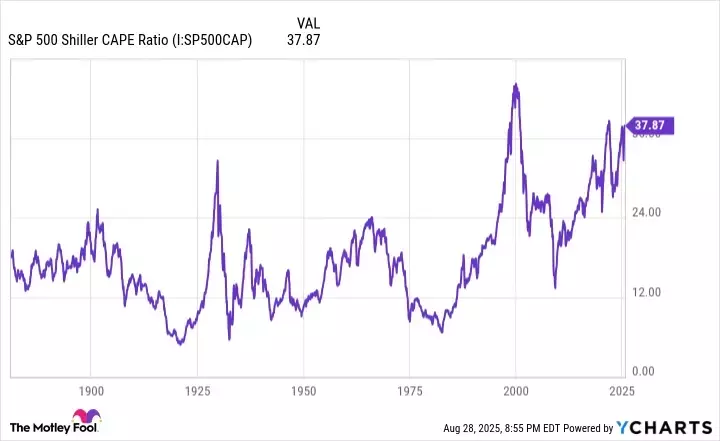
Examining historical valuation metrics offers a sobering perspective on the current market euphoria. The Shiller P/E ratio, also known as the cyclically adjusted P/E ratio (CAPE ratio), which considers inflation-adjusted earnings over a decade, serves as a more comprehensive valuation tool than traditional P/E ratios. As of August 28, with the S&P 500 surpassing the 6,500 mark, the Shiller P/E ratio stood at 39.18, one of its highest points in 154 years. Historically, such elevated valuations, particularly when the Shiller P/E exceeds 30 for extended periods, have often preceded substantial market downturns. For instance, the dot-com bubble and the 2022 bear market saw significant value erosion after similar high valuation levels.
While the immediate outlook, based on historical valuation patterns, suggests a potential for market correction, a wider lens reveals a different, more optimistic picture for long-term investors. The stock market has consistently demonstrated resilience over extended periods, proving to be a superior wealth generator compared to other asset classes. Economic cycles, characterized by short recessions and prolonged periods of growth, consistently support corporate earnings expansion. Data from Bespoke Investment Group indicates that while bear markets are typically brief, bull markets tend to be considerably longer, often lasting for years. This enduring pattern of recovery and growth underscores the importance of patience and a long-term investment horizon, suggesting that despite short-term fluctuations, the overall trajectory of the U.S. stock market remains positive for those willing to commit for the long haul.
Embracing a long-term investment philosophy, anchored by historical market trends, empowers individuals to navigate market volatility with confidence. The enduring capacity of the stock market to generate wealth over decades underscores the fundamental strength and adaptability of the economy. By focusing on consistent growth and resilient recovery patterns, investors can transform short-term challenges into long-term opportunities, contributing to their financial well-being and reinforcing the narrative of progressive prosperity.
