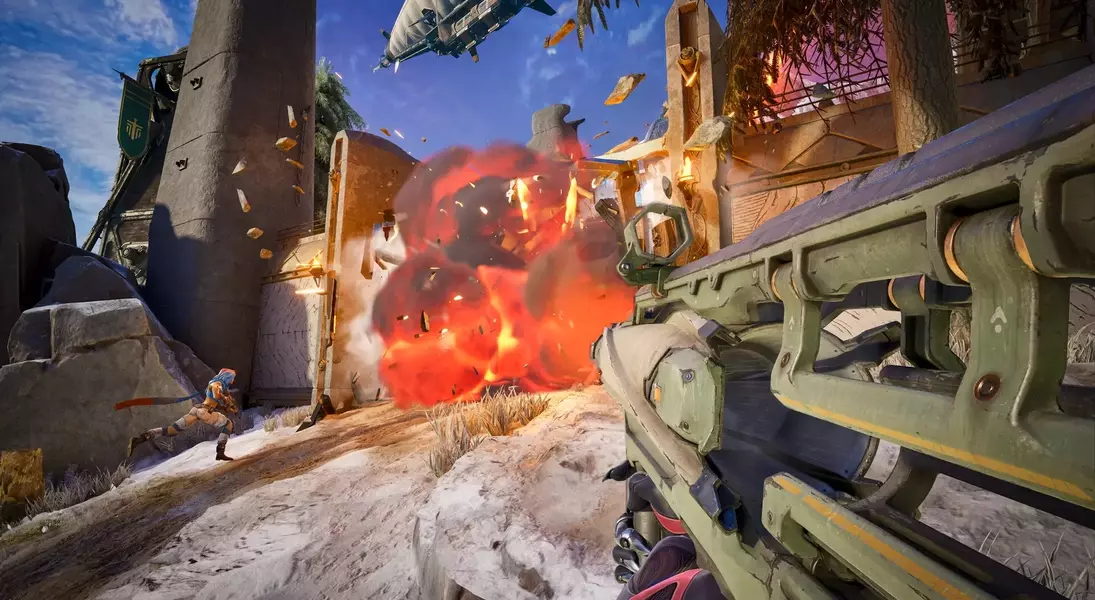

The impending launch of the free-to-play hero shooter, Highguard, is set to introduce stringent system requirements that have ignited discussion within the PC gaming community. Developed by former talents behind acclaimed titles such as Apex Legends and Titanfall, Highguard's demand for Secure Boot, TPM 2.0, and Easy Anti-Cheat as prerequisites for play marks a notable shift in game security protocols. This approach aims to fortify the game against cheating, particularly appealing for a free-to-play model where the barriers to re-entry for banned players are inherently low. However, this strategy inadvertently creates significant hurdles for a segment of the gaming population, notably Linux users and individuals operating older hardware, prompting a re-evaluation of accessibility versus security in modern gaming.
This development underscores a broader trend where game developers are increasingly leveraging kernel-level security measures to combat in-game exploits. While such measures are effective in maintaining competitive integrity, they raise privacy concerns due to the deep system access granted to anti-cheat software. The ongoing debate reflects a tension between securing the gaming environment and ensuring broad compatibility, a challenge that will continue to shape the future of game development and player experience.
Hardware Requirements and System Exclusions
Highguard, an anticipated free-to-play hero shooter, is poised to launch with specific hardware prerequisites that mandate the activation of Secure Boot, TPM 2.0, and Easy Anti-Cheat. For a significant portion of the gaming demographic utilizing contemporary Windows 11 setups, meeting these specifications should pose minimal difficulty, as most modern systems are equipped with the necessary capabilities. This integration of advanced security features is largely aimed at fortifying the game's integrity, ensuring a fair play environment by actively combating illicit activities such as cheating, which are prevalent in free-to-play titles due to their low entry barrier.
However, this technical demand notably excludes a segment of the gaming community. Older computer systems may lack support for Secure Boot or a Trusted Platform Module (TPM), rendering them incompatible with Highguard. More significantly, Linux gamers face a substantial roadblock. Despite the existence of Secure Boot functionalities within Linux, game developers are specifically targeting Windows-based implementations. This effectively prevents Linux users from engaging with the game through conventional means, pushing them towards less direct methods like virtual machines or streaming services if they wish to participate. This situation highlights a growing divide, where the pursuit of enhanced security for a Windows-centric user base inadvertently diminishes accessibility for other operating system communities.
The Double-Edged Sword of Kernel-Level Anti-Cheat
The implementation of kernel-level anti-cheat systems, alongside Secure Boot, in games like Highguard, is a contentious yet increasingly common practice among developers. Proponents argue that this deep integration provides a robust defense against sophisticated cheating mechanisms, which is crucial for maintaining a competitive and enjoyable environment, especially in free-to-play games where the ease of creating new accounts makes it simpler for cheaters to re-enter. Epic Games CEO Tim Sweeney has publicly supported this approach, citing the difficulty of combating large-scale cheating across diverse kernel configurations without such stringent measures.
Conversely, this security strategy elicits considerable criticism on several fronts. Granting anti-cheat software kernel-level access raises significant privacy and security concerns, as it allows the software extensive control over a user's system. Gamers express apprehension regarding potential vulnerabilities or the misuse of such deep system privileges. Furthermore, the mandatory requirement alienates the Linux gaming community, forcing them to adopt complex workarounds or forego the game entirely. While Linux gamers constitute a minority, their exclusion contributes to a fragmented gaming landscape and fuels discussions about the balance between game security, user privacy, and platform inclusivity. This ongoing debate reflects the complex challenges developers face in protecting game integrity while striving for a broad and diverse player base.
