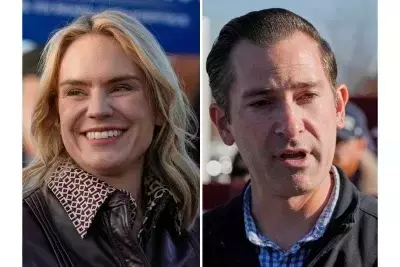
This report delves into the heated special election for Tennessee's 7th Congressional District, highlighting the substantial financial and political resources being deployed by both major parties. It explores the historical political landscape of the district, the evolving dynamics of recent special elections, and the key issues driving the campaigns of the Republican and Democratic candidates.
A Pivotal Battleground: Tennessee's Special Election Draws National Spotlight
A Contested Territory: The Genesis of the Tennessee Special Election
A recent congressional special election in Tennessee has emerged as a critical proving ground for both Democrats and Republicans, each striving to refine their electoral strategies in anticipation of the 2026 midterm elections. This particular contest has garnered national attention due to its potential implications for future political trends.
The District's Conservative Roots: A Historical Perspective
Traditionally, Tennessee's 7th Congressional District has been a stronghold for conservative ideologies. In the preceding November election, President Trump secured a substantial majority of the vote, mirroring the margin of victory achieved by former Representative Mark Green, who vacated his position in July. This historical voting pattern underscores the inherent challenges faced by Democratic contenders in this region.
Shifting Tides: Democratic Momentum in Recent Elections
Despite the district's conservative leanings, Democrats have recently demonstrated a remarkable ability to exceed their past electoral performance in special elections throughout the current year, often by significant margins. This surge in support, coupled with a series of high-profile triumphs in various elections last month, has injected a renewed sense of optimism and determination into the Democratic campaign.
The Intense Rivalry: Van Epps Versus Behn
The evolving electoral landscape has intensified the contest between Matt Van Epps, the Republican former commissioner of the state's Department of General Services, and Aftyn Behn, a Democratic state representative. As the campaign nears its conclusion, the national spotlight has firmly fixed on this high-stakes race, with both candidates engaging in a fervent competition for votes.
Financial Deluge: External Funding Shapes the Race's Final Stages
In the final weeks of the campaign, an enormous influx of external funding has significantly influenced the race. Federal Election Commission records indicate that independent organizations have collectively invested over 6.5 million dollars, with a substantial portion, exceeding 1.6 million dollars, originating from a pro-Trump Super PAC. A significant segment of this Super PAC spending occurred during the two weeks leading up to the election, coinciding with the peak of early voting.
Uncertainty and Urgency: The Polling Landscape
The absence of reliable public opinion polls for this traditionally low-turnout special election, combined with an unpredictable voter demographic, has heightened the pressure on both political parties. Each side is acutely aware of the necessity to maximize voter turnout in what is widely anticipated to be a closely contested outcome. Early surveys hinted at a slight advantage for the Republican candidate, albeit within the margin of error, aligning with the observed trend of Democratic overperformance in similar special elections this year.
Economic Concerns Take Center Stage: Campaign Messaging
Both political factions have strategically positioned affordability as a central theme in their campaigns, especially in their media outreach. The Republican candidate has embraced the former President's endorsement while emphasizing economic issues in his concluding statements. His campaign advertisements criticize established politicians and advocate for policies aimed at reducing prices, fostering well-compensated employment opportunities, and decreasing healthcare expenditures for working families.
Diverse Voices and Shared Economic Focus: Candidate Appeals
The Democratic candidate's concluding campaign advertisements articulate a commitment to disrupting the political status quo in Washington by making healthcare more accessible, mitigating living expenses, and safeguarding workers and small businesses from detrimental trade tariffs. Despite their differing political affiliations, both candidates recognize the paramount importance of addressing the economic challenges confronting the electorate. During a tele-rally, the former President dismissed the concept of affordability as a mere rhetorical device employed by Democrats to deflect attention from what he regarded as his administration's accomplishments.
