
A puzzling software anomaly within the classic game Half-Life 2, deeply rooted in its physics engine, presented a formidable challenge during the development of a virtual reality iteration. This subtle yet critical flaw, arising from a change in compiler settings and the resulting numerical precision variations, manifested as a door that refused to open, effectively soft-locking players early in the game. The incident underscores the often-unforeseen complexities that can emerge in software development, particularly when migrating or updating older codebases, where seemingly insignificant technical shifts can have profound impacts on gameplay mechanics and overall user experience.
Details of the Peculiar Programming Predicament
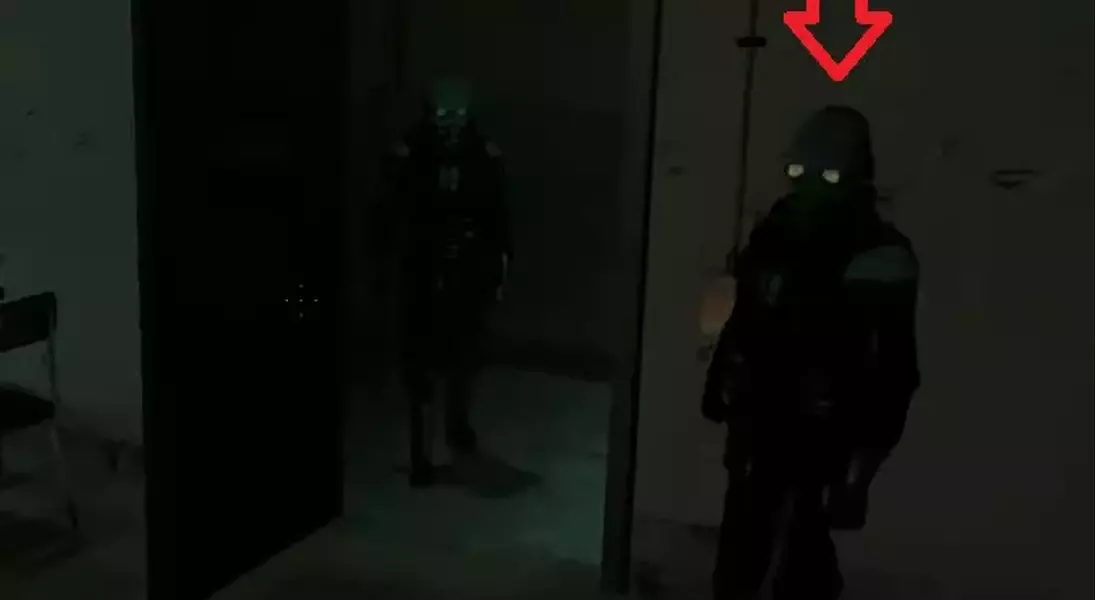
In 2013, as Valve explored the potential of virtual reality technology, an attempt to adapt Half-Life 2 for VR uncovered a perplexing problem. Tom Forsyth, a former developer at Valve, recounted on Mastodon how the VR version of the iconic game became stuck at an early stage. During the introductory sequence, a metro police officer was supposed to open a door for the player, allowing them to advance. However, in the VR build, this door remained inexplicably shut, preventing any further progression. This issue wasn't isolated to the VR adaptation; further investigation revealed it was also present in the original game's engine when recompiled with modern tools.
The root cause was eventually traced to an almost imperceptible interaction: a non-player character (NPC) standing just a fraction too close to the door. The collision detection, while robust, registered the NPC's bounding box slightly overlapping the door's opening path. This minuscule contact caused the door to initiate its opening animation, collide with the NPC's virtual 'toe,' immediately bounce back, and then lock itself. The critical difference between the original and modern compiled versions lay in the floating-point precision used by their respective compilers. The older x87 instruction set, with its varied precision levels, allowed for a minute rotation of the NPC that moved its toe out of the way, enabling the door to open smoothly. Conversely, the newer SSE instruction set, while generally offering higher precision, resulted in slightly different calculations for friction and mass. This meant the NPC, although still rotating, did so by an even tinier margin, insufficient to clear the door's path. Thus, on subsequent simulation frames, the 'toe' remained an obstacle, leading to the door's perpetual closure and the player's inescapable predicament.
Reflections on the Intricacies of Game Design and Development
This incident vividly illustrates the intricate and often unpredictable nature of game development, especially when dealing with physics engines. It serves as a compelling reminder that even the most robust and celebrated game mechanics, like Half-Life 2's advanced physics, are susceptible to subtle, hard-to-detect flaws. The anecdote highlights the immense dedication and meticulous problem-solving required from development teams to unravel such complex issues. It also offers a valuable lesson: when confronted with a seemingly simple in-game problem, like a stuck door, one should consider the myriad underlying calculations and interactions that contribute to its functionality. The journey from a game-breaking bug to a resolved physics interaction underscores the continuous pursuit of precision and the profound impact of minute details in crafting seamless virtual experiences. It also reminds us that technological advancements, such as new compilers, can unexpectedly alter established behaviors, necessitating a deep understanding of their implications.
