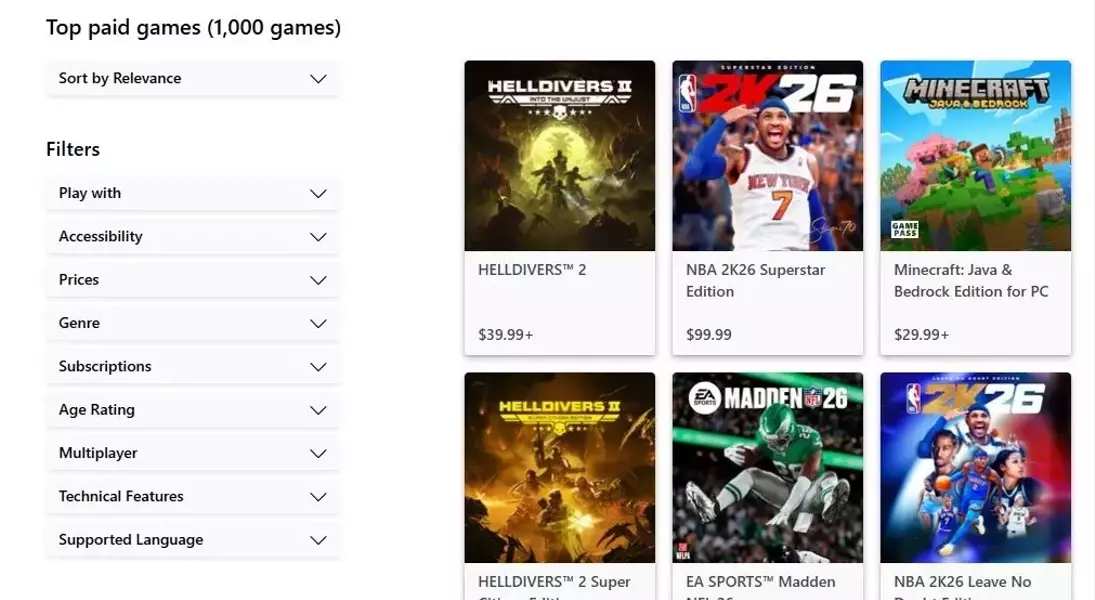

In an intriguing turn of events within the gaming world, a title primarily associated with Sony's PlayStation, Helldivers 2, has achieved the unexpected feat of becoming the top-selling game on Microsoft's Xbox platform. This development is not merely a statistical anomaly but a compelling indicator of an evolving philosophy among major console manufacturers. The traditional 'console wars,' once defined by strict platform exclusivity to drive hardware sales, appear to be giving way to a more interconnected, game-centric business model. This shift emphasizes reaching wider audiences and maximizing software revenue, demonstrating a significant departure from past competitive strategies in the interactive entertainment sector.
Helldivers 2's ascendancy on the Xbox charts is a testament to its broad appeal, building on its already substantial success on the PS5 and PC. Previously, Sony revealed that the game shattered records, becoming PlayStation's fastest-selling title ever, moving over 12 million units within its first three months. The game's strong performance has continued, with recent reports suggesting it has surpassed 18 million sales globally, including nearly a million purchases on Xbox within its debut week on the platform. This unprecedented cross-platform success signals a noteworthy change in how leading console entities approach their intellectual properties and market reach.
The strategic pivot by companies such as Sony and Microsoft is particularly striking. Historically, these corporations leveraged exclusive game titles to entice consumers into purchasing their respective hardware. However, the current trend suggests a reevaluation of this approach. Instead, the focus is broadening to prioritize the sheer volume of game sales across various platforms. This is evident in previous instances where top-selling games on PlayStation were titles published by Microsoft, and now the situation is mirrored with a Sony-published game dominating Xbox sales.
Sony's move towards a more platform-agnostic strategy has been gradual but deliberate. By 2022, the company had already outlined plans for approximately half of its game releases to be available on PC or mobile, alongside consoles. While some significant single-player PlayStation experiences might still retain an initial period of console exclusivity, the overarching trend points to a departure from a hardware-centric business model. The emphasis is now squarely on the software side, aiming to generate revenue directly from game sales rather than solely using them as a means to sell consoles.
The question of whether Helldivers 2 can truly be labeled a 'PlayStation game' given Sony's role as publisher and Arrowhead Game Studios' independent developer status is worth considering. Yet, it's clear that Sony exerted significant control over the game's distribution and strategic decisions. When controversies arose, such as the initial requirement for a PlayStation account login for PC players, it was Sony's directive, not the developer's. Similarly, the decision to launch an Xbox version rested solely with Sony. In contrast, Microsoft enjoys direct ownership of major publishers and developers like Bethesda and Ninja Theory, granting it immediate control over multi-platform releases like Indiana Jones and Hellblade 2 on PS5. This evolving landscape prompts a fundamental redefinition of what a 'console' represents, shifting from a proprietary gaming hub to potentially a mere launcher or a branded interface within a broader gaming ecosystem. The ongoing challenge for both Microsoft and Sony lies in maintaining a distinct identity and value proposition as they continue to explore these new frontiers in the industry.
