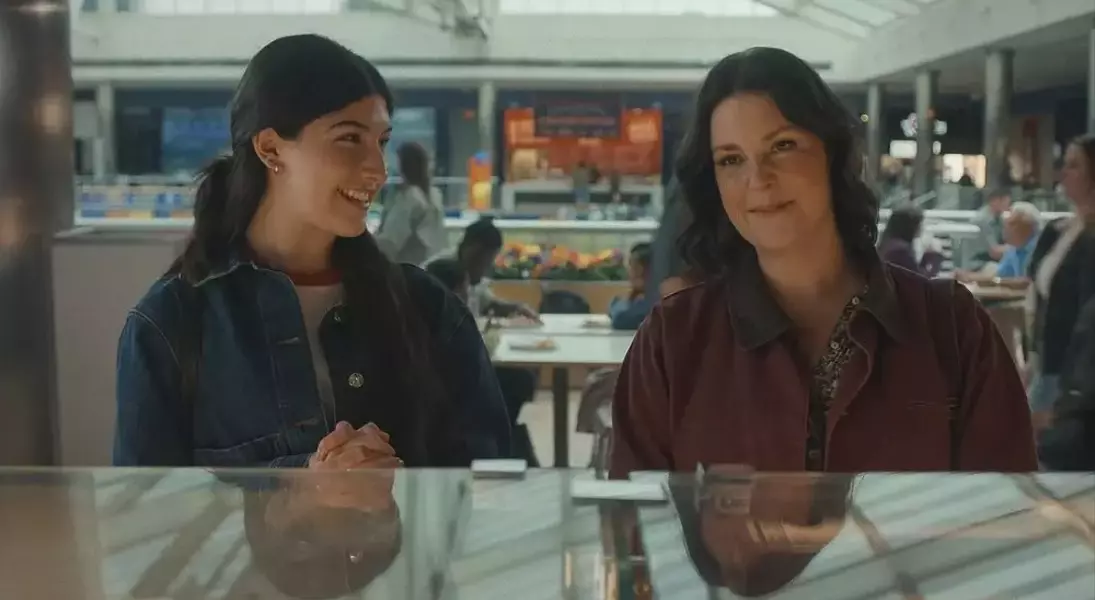
Julia Hart's latest cinematic offering, “Don't Say Good Luck,” a Netflix production, has garnered significant attention for its poignant exploration of the bond between a mother and daughter. The film, which features compelling performances from Sunny Sandler and Melanie Lynskey, transcends typical genre conventions by infusing genuine emotion and relatability into its narrative. It deftly handles themes of adolescence, personal growth, and familial responsibility, creating a story that is both heartwarming and deeply affecting, leaving a lasting impression on viewers.
“Don’t Say Good Luck” Explores Familial Bonds and Self-Discovery with Nuance
The film, “Don’t Say Good Luck,” premiered online on August 11, 2026, receiving a PG-13 rating and running for 95 minutes. This Netflix and Happy Madison Productions collaboration stands out for its tender approach, diverging from some of Adam Sandler’s more typical comedic ventures. Directed by Julia Hart, with a screenplay co-written by Hart, Jordan Horowitz, and Laura Hankin, the movie centers on Sophie (Sunny Sandler), a high school sophomore who unexpectedly lands the lead role in her school's musical, “Waitress.” This new responsibility adds to the pressures she already faces as her mother, Elizabeth (Melanie Lynskey), grapples with a recurrence of cancer. The narrative delicately avoids explicit medical scenes, instead focusing on the intimate domestic challenges faced by the family. Elizabeth, a devoted mother of three and a deli owner, must reconcile her desire to protect her children with the need to prepare them for an uncertain future. Sophie, having previously experienced her mother’s illness, finds herself at a pivotal moment, navigating her theatrical aspirations, a budding romance with her co-lead Jack (Jack Champion), and the evolving dynamic with her best friend Carolyn (Scarlett Estevez), who is exploring her own identity. The film is enriched by supporting roles, including Elizabeth’s mother, Linda (Bebe Neuwirth), who manages her anxieties through control, and her stepfather Dale (Steve Buscemi), who offers Sophie simple yet profound advice on processing her emotions. Bryce Fortner’s cinematography and Shayar Bhansali’s editing contribute to the film’s intimate tone, complemented by Yuli’s evocative score. The ensemble cast includes Max Greenfield as Ted, Elizabeth’s husband, and Stephanie Beatriz as Ms. Parker, Sophie’s understanding teacher and director, all of whom contribute to a rich tapestry of characters.
This film serves as a powerful reminder of the complexities inherent in family relationships and the journey of self-discovery. It highlights the often unspoken struggles faced by teenagers coming of age while simultaneously dealing with significant family challenges. The movie’s strength lies in its ability to present these profound themes with authenticity and empathy, demonstrating that even in the face of hardship, there is space for growth, connection, and artistic expression. It encourages viewers to embrace vulnerability and to find strength in emotional honesty, reinforcing the idea that genuine support can come from unexpected places and that sometimes, the most challenging moments lead to the deepest personal revelations.
