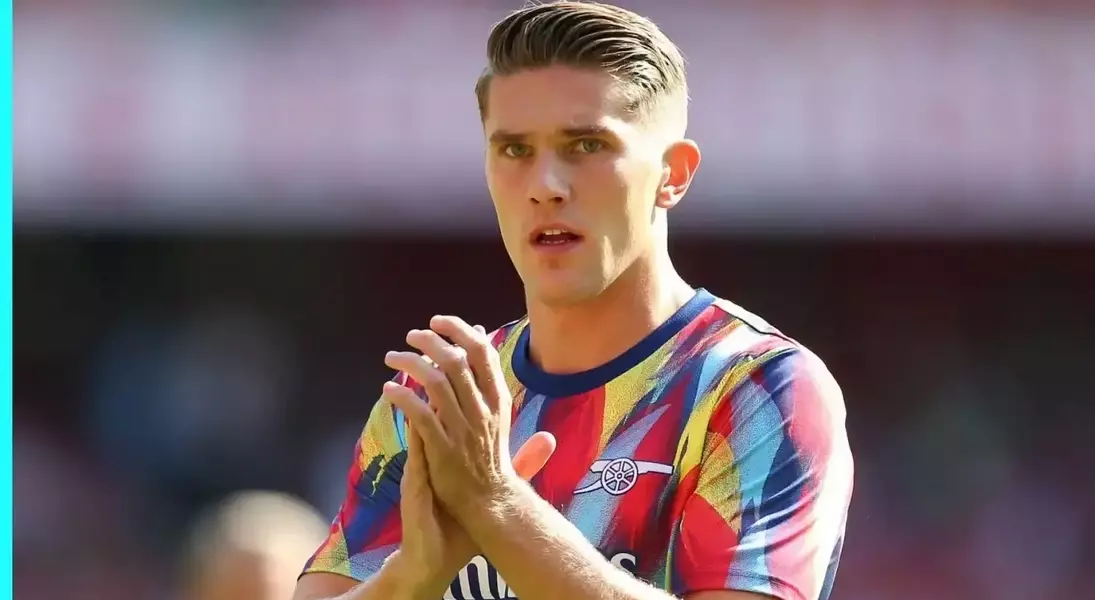
The recent debut of Arsenal's new forward, Viktor Gyokeres, has sparked considerable debate and concern within the football community. His initial performance, characterized by a notable absence of goal attempts, has led former professional Frank Leboeuf to draw parallels with Rasmus Hojlund's challenging start, advising Mikel Arteta to adapt his team's strategy to fully utilize Gyokeres's capabilities. Arteta, conversely, views the team's collective play as the primary factor behind the striker's subdued introduction, emphasizing that individual brilliance thrives within a cohesive unit.
Gyokeres's Arsenal Introduction Ignites Tactical Debate
On a significant day, August 18, 2025, during his inaugural appearance for Arsenal against Manchester United, Viktor Gyokeres found himself under an intense spotlight. Despite the anticipation surrounding his debut, the Swedish international's sixty minutes on the pitch yielded no shots on target, leading to swift commentary from critics and pundits. Among the most vocal was Frank Leboeuf, the esteemed former footballer, who expressed apprehension on ESPN. Leboeuf underscored that if Arsenal’s gameplay, particularly their ball delivery, doesn't align with Gyokeres's direct style, he risks becoming ineffective, echoing the struggles of Rasmus Hojlund in his early career. Leboeuf pointed out the disconnect between the team's possession-heavy, slower build-up play and Gyokeres's preference for quicker, more vertical passes and immediate crosses, asserting that a player of Gyokeres's profile is rendered 'useless' without the requisite service. He likened Gyokeres's debut performance to Hojlund's early days, voicing hope that the Swede would avoid a similar trajectory and ultimately succeed in scoring numerous goals for the Gunners.
In response to the growing scrutiny, Arsenal's manager, Mikel Arteta, stepped forward to defend his new acquisition during the post-match press conference. Arteta articulated that the lack of attacking opportunities for Gyokeres was a systemic issue, reflecting on the team's overall performance rather than a failure of the individual player. He acknowledged that the team needed to refine its ability to provide Gyokeres with the ball in dangerous areas, particularly in the final third. Despite the initial setback, Arteta remained optimistic, characterizing the victory against Manchester United, coupled with Gyokeres's participation, as a promising beginning for the striker's journey with Arsenal.
The unfolding narrative surrounding Viktor Gyokeres's start at Arsenal serves as a compelling reminder of the intricate relationship between individual talent and team synergy in professional football. It highlights how a player's perceived value and performance can be profoundly shaped by tactical frameworks and collective dynamics. For journalists and avid followers of the game, this situation presents a fascinating case study. It prompts reflection on the initial judgments of new signings, the patience required for adaptation, and the crucial role of managerial strategy in unlocking a player's full potential. It's a testament to the fact that even in the high-stakes world of elite football, success is rarely a solitary endeavor but rather a symphony of coordinated efforts and thoughtful leadership.
