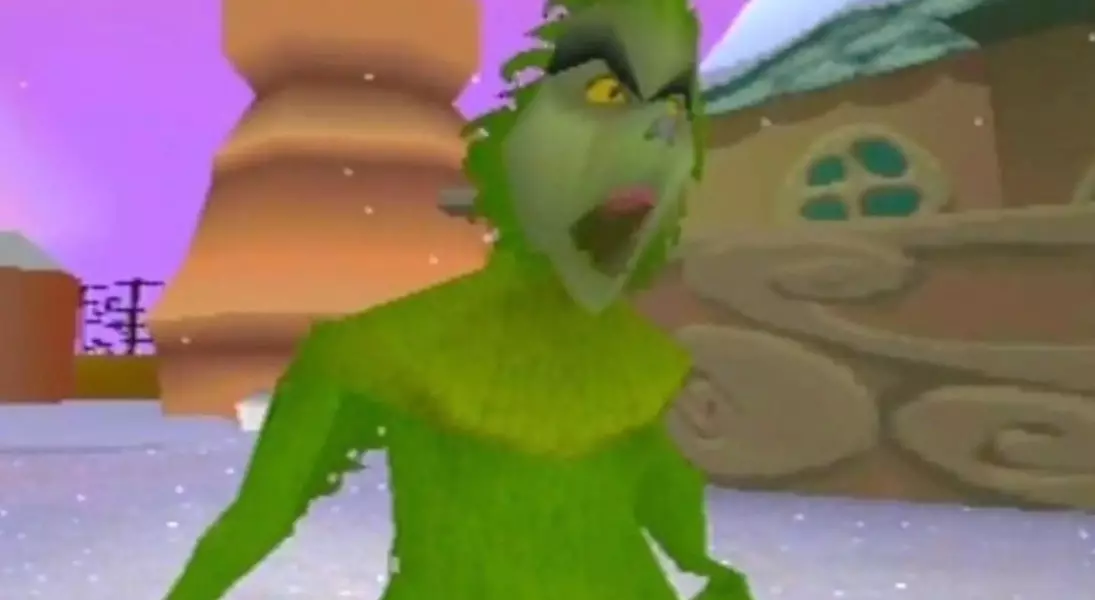
Exploring the unique and often bizarre conclusion of the 2000 "The Grinch" video game reveals a fascinating, if unsettling, aspect of festive media adaptations. This game, despite its lackluster commercial and critical performance, offers an ending that deviates remarkably from the typical heartwarming resolutions associated with the Grinch's narrative. It delves into an unexpected blend of a seemingly repentant Grinch and a surprisingly dark, glitch-ridden rendition of Whoville, ultimately culminating in a hidden bonus that further twists the tale into an even more peculiar direction than anticipated, demonstrating a rare and somewhat disturbing take on a beloved holiday character.
Amidst the ubiquitous festive Grinch merchandise, the 2000 "The Grinch" video game stands out as a curious artifact from the era when the Jim Carrey film adaptation was released. This PlayStation, Sega Dreamcast, and Windows PC title, published by Konami, tasked players with navigating a Grinch-led rampage through Whoville to recover stolen blueprints. However, its sales figures were modest, and critical reception was largely lukewarm, with many reviewers citing repetitive or frustrating gameplay. This obscurity means that very few players ever reached its peculiar conclusion, let alone discovered its even more unusual secret ending.
The Unexpected Turn in Whoville's Narrative
The game's narrative takes an unexpected turn, diverging from the traditional heartwarming Grinch story. Initially, the Grinch expresses a newfound affection for Christmas and the Whos, leading to a clumsy attempt to return all the stolen gifts. However, this seemingly sweet resolution quickly devolves into a visually unsettling scene where Cindy Lou Who and the other Whoville children appear glitchy and inanimate, singing a song without moving their mouths. This bizarre sequence transforms the intended heartwarming moment into something distinctly unsettling, providing a memorable, if not entirely pleasant, conclusion to the game's main story.
Upon reaching the conclusion of "The Grinch" video game, players are confronted with a scene that starkly contrasts the expected joyous transformation. Following his change of heart, the Grinch attempts to reconcile by returning the pilfered presents to Whoville. This act of contrition is marred by a rather unsettling visual presentation: the Whos, particularly Cindy Lou Who, exhibit graphical anomalies, including distorted facial features and unmoving mouths as they sing. This renders the emotional climax of the story somewhat grotesque, transforming what should be a tender moment of forgiveness and acceptance into a strange, almost horror-esque finale that leaves a lasting impression due to its technical flaws and uncanny valley effect.
The Enigmatic Bonus Ending and Its Revelation
The game's most intriguing secret is its bonus ending, accessible only to players who achieve 100% completion. This hidden finale introduces an entirely different, even more absurd scenario: the Grinch, now riding a custom motorcycle, participates in a racing minigame set within Whoville. This bonus content, shared online by dedicated fans, provides a campy and unexpected twist to the Grinch's story, rewarding the most persistent players with a glimpse into a bizarre, non-canonical continuation of his post-redemption life, further cementing the game's status as a unique and quirky adaptation of the classic tale.
For the truly dedicated, or perhaps masochistic, players who endured the challenges to achieve 100% completion in "The Grinch," a bonus ending awaits that completely subverts any lingering narrative expectations. Instead of a further exploration of the Grinch's integration into Whoville society, this secret conclusion features the Grinch on a high-speed motorcycle, engaging in a racing minigame through the festive streets of Whoville. This bizarre addition, widely circulated thanks to online communities, showcases a completely different side of the Grinch, transforming him from a reformed holiday hater into an unlikely extreme sports enthusiast. It's a remarkably unconventional reward for completing an already unusual game, providing a final, indelible, and utterly baffling memory for those who ventured deep into its digital world.
