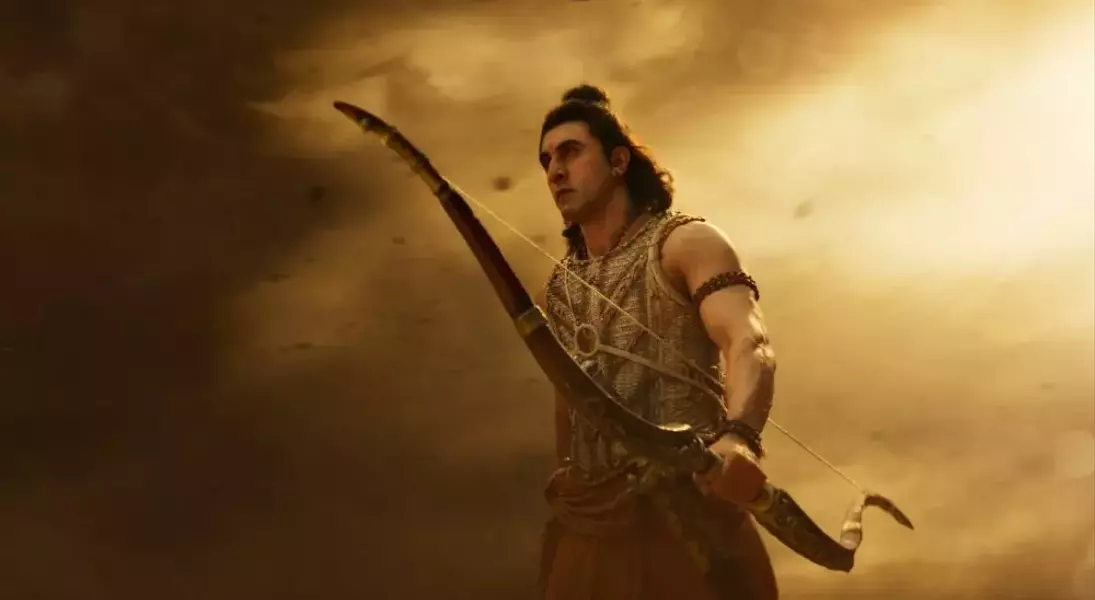
The eagerly awaited cinematic adaptation of the ancient Indian epic, 'Ramayana', is poised for its global premiere this November. This two-part saga promises an unparalleled visual and narrative experience, aiming to captivate diverse audiences across the world with its rich storytelling, spectacular effects, and a star-studded cast, all set against the backdrop of a profound cultural celebration.
Epic 'Ramayana' to Unfold Globally on November 6, Featuring Stellar Cast and Renowned Creative Team
Mark your calendars for November 6, as Sony Pictures Entertainment prepares to launch the first installment of 'Ramayana' worldwide. This monumental production, helmed by visionary director Nitesh Tiwari, reimagines the timeless narrative of exiled Prince Rama, portrayed by Ranbir Kapoor, and his consort Sita, brought to life by Sai Pallavi. Their journey into exile culminates in a cataclysmic conflict triggered by Sita’s abduction at the hands of the formidable Ravana, played by Yash. This central event propels an epic confrontation between the forces of righteousness and malevolence.
Designed to resonate with a global audience, the film will be distributed in multiple languages, including English. An earlier trailer provided a tantalizing glimpse into the movie's grandeur, showcasing breathtaking visual effects, mythological armaments, and vast battle sequences. Prince Rama's unwavering resolve to vanquish Ravana across all three realms and secure Sita's return heralds the dawn of the 'Rama era'.
The film's sonic landscape is crafted by an extraordinary duo: the legendary Hans Zimmer and the acclaimed A.R. Rahman, promising an immersive and emotionally charged score. Adding to the spectacle, the action sequences are choreographed by industry veterans Terry Notary and Guy Norris, while the production design is meticulously overseen by Ramsey Avery and Ravi Bansal. Namit Malhotra's Prime Focus Studios and Yash's Monster Mind Creations are at the helm of production, ensuring a cinematic masterpiece.
The strategic release of 'Ramayana' Part 1 coincides with the Diwali holiday, a profoundly significant festival in the Hindu calendar. This timing is deliberate, as Diwali commemorates Prince Rama's triumphant return to his kingdom of Ayodhya after fourteen years of exile and his ultimate victory over Ravana. The symbolic lighting of lamps during this festival is said to represent the radiant illumination of Ayodhya on the night its beloved prince returned home, beautifully mirroring the film's theme of light overcoming darkness.
Envisioned as an unprecedented cinematic event, both parts of 'Ramayana' are specially filmed for IMAX, guaranteeing an immersive viewing experience. The visual effects are masterfully handled by DNEG, an eight-time Oscar-winning VFX powerhouse renowned for its work on films such as the 'Dune' series, 'Interstellar', and 'Inception'. Nitesh Tiwari, celebrated for directing 'Dangal'—the highest-grossing Indian film to date—directs from a screenplay penned by Shridhar Raghavan. The distribution of the film within India will be managed by Karan Johar’s Dharma Productions, a prominent entity in the media landscape.
The upcoming release of 'Ramayana' prompts us to reflect on the enduring power of ancient epics. In an era dominated by rapid technological advancement, the decision to invest in a grand-scale adaptation of such a foundational cultural narrative speaks volumes about the human desire for stories that explore universal themes of love, duty, sacrifice, and the eternal struggle between good and evil. This film could serve as a bridge, introducing a new generation and a global audience to the rich tapestry of Indian mythology, while simultaneously showcasing the immense talent and technical prowess of modern Indian cinema. It reminds us that some stories transcend time, offering profound insights and inspiration, much like the timeless tales of other cultures. Perhaps, in its elaborate retelling, 'Ramayana' will not only entertain but also reignite conversations about cultural heritage and shared human values on a global stage.
