For over a decade and a half, Grammarly’s team of linguistic experts meticulously refined its grammar-checking software, establishing it as a leading tool for English writing. Now, this powerful platform is leveraging cutting-edge artificial intelligence to broaden its linguistic horizons, adding support for five major Romance and Germanic languages. This strategic move not only fulfills a highly requested user demand but also positions Grammarly as a more inclusive and versatile writing assistant in an increasingly globalized world. The integration of AI has enabled the company to efficiently adapt its sophisticated algorithms, ensuring that the nuances of each new language are accurately captured, from basic spelling corrections to intricate stylistic suggestions.
Expanding Global Communication: Grammarly's Linguistic Leap
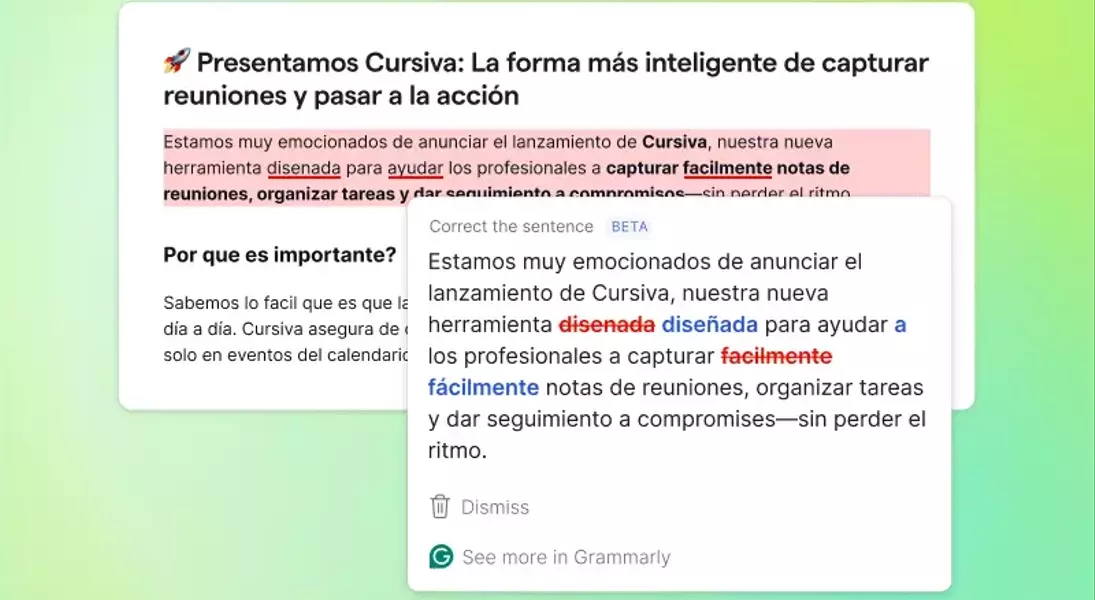
On September 10, 2025, a significant announcement from Grammarly sent ripples through the digital writing sphere: the AI-powered writing assistant, long celebrated for its mastery of English, officially extended its capabilities to Spanish, French, Portuguese, German, and Italian. Luke Behnke, Grammarly’s Vice President of Enterprise Product, revealed that this expansion was the most frequent request from users since the company’s inception. The enhanced application goes beyond mere spell-checking, offering sophisticated sentence restructuring and tone adjustments to mirror the authenticity of native speech, thereby significantly improving overall clarity across these six core languages. Furthermore, Grammarly now boasts the ability to translate text between these six languages and 19 other distinct languages seamlessly, eliminating the need for external translation tools.
This development arrives amidst a burgeoning trend in AI-driven linguistic software. Recent competitors, such as Google Search’s AI Mode and Apple’s innovative live language translation feature in its latest AirPods, have similarly expanded their multilingual offerings, intensifying the race to provide comprehensive language solutions. Grammarly itself has demonstrated a broader strategic vision to evolve into an all-encompassing AI productivity suite. This ambition was underscored by its acquisition of the email application Superhuman in July, followed by the introduction of nine specialized AI agents designed for students and educators. Behnke emphasized that Grammarly’s core proofreading product has always utilized machine learning, referring to it as an early form of an "agent" in the AI landscape. Large language models (LLMs) were incorporated into their system in 2023, with Grammarly employing fine-tuned open-source LLMs hosted on its secure infrastructure, ensuring rigorous security protocols and data training rules. Initial beta testing with approximately one million users demonstrated promising results, with native speakers of the new languages accepting Grammarly's suggestions at rates comparable to English speakers, despite some initial surprise at the sudden appearance of familiar red underlines in their native texts. While the company maintains that third-party LLMs cannot access user data for training, Grammarly does train its own models on user data, though enterprise and educational clients have the option to disable this feature. Looking ahead, Grammarly is actively exploring further language expansions, driven by requests from its customer support clients located in various global call centers, indicating a continuous commitment to enhancing multilingual communication.
The expansion of Grammarly into multiple languages signifies a pivotal moment in fostering global communication. It highlights the growing importance of AI in bridging linguistic divides and democratizing access to high-quality writing assistance. As our world becomes more interconnected, tools like Grammarly will play an increasingly crucial role in ensuring clear, effective, and culturally sensitive communication across borders. This move not only benefits individuals and professionals but also demonstrates the immense potential of AI to enhance human capabilities and break down barriers in an ever-evolving digital landscape. It underscores the idea that technology, when thoughtfully applied, can truly empower people to express themselves more confidently and accurately, regardless of their native tongue.
