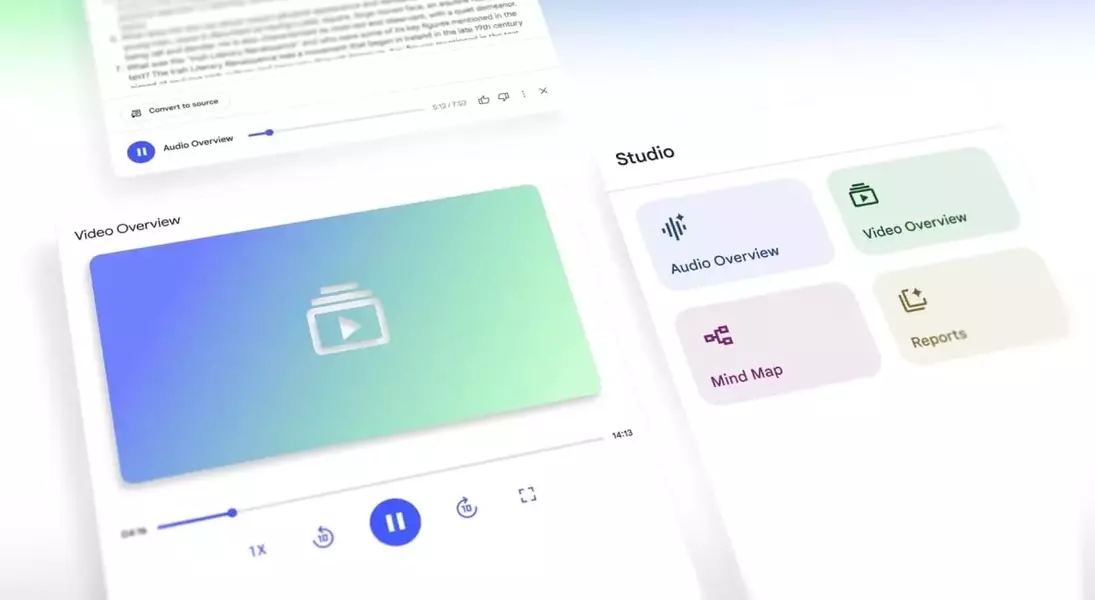
Google's innovative AI research tool, NotebookLM, is significantly expanding its capabilities, introducing a new feature called 'Video Overviews.' This enhancement allows the platform to transform uploaded source materials into dynamic visual presentations, akin to AI-generated PowerPoint slides. Designed to cater specifically to visual learners, this update complements NotebookLM's existing functionalities, which include producing podcast-style audio summaries and intricate mind map diagrams based on user-provided content. This development marks a pivotal step in making complex information more accessible and engaging through diverse AI-powered formats.
Originally launched with the goal of revolutionizing learning, NotebookLM began by offering an audio-centric approach where AI-driven 'podcast hosts' would verbally explain topics sourced from user uploads. The recent integration of 'narrative slides' enables the system to process a wide array of document types, such as audio files, PDFs, text documents, images, and web pages. From these diverse inputs, the AI intelligently extracts key information, generating relevant visuals, diagrams, quotes, and numerical data to illustrate points within the presentation. Users now have the flexibility to customize these visual presentations based on specific learning objectives and the intended audience, with the English version rolling out first, followed by support for additional languages.
This strategic update comes as students prepare to return to school, underscoring Google's broader commitment to enhancing educational technologies. Alongside NotebookLM's new video capabilities, Google has also unveiled several improvements to its AI Mode in Search. These include the introduction of a 'Canvas' workspace for creating study guides, the ability to query PDFs directly within the search interface, and screen-sharing functionalities in Chrome that facilitate AI Mode discussions about web content. Such advancements reflect a concerted effort to provide comprehensive academic support.
The competitive landscape in AI-driven education is also heating up, with other tech giants like OpenAI making notable strides. OpenAI, for instance, has introduced 'Study Mode' for ChatGPT, transforming the chatbot into a tutor that employs the Socratic method to guide learning. As the summer concludes, the message from these leading technology companies is clear: both Google and OpenAI are heavily invested in delivering advanced AI solutions designed to assist with homework and various other educational pursuits.
In essence, Google's continuous evolution of NotebookLM, particularly with the introduction of Video Overviews, signifies a major leap forward in personalized and multi-modal learning experiences. By offering both auditory and visual summaries, alongside other analytical tools, NotebookLM empowers users to engage with information in ways that best suit their cognitive styles. This commitment to educational innovation, mirrored by developments from competitors, highlights an exciting era where artificial intelligence increasingly serves as a powerful facilitator for knowledge acquisition and retention.
