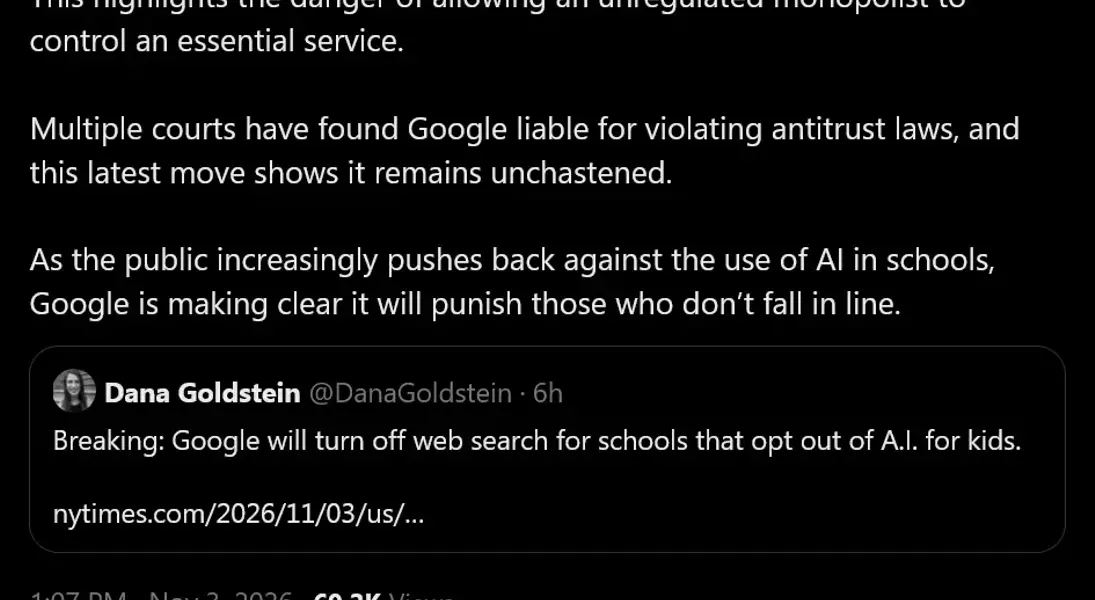

Google has recently implemented a new policy regarding the use of its artificial intelligence tools within K-12 educational settings, stirring considerable discussion among stakeholders. The tech giant declared that AI functionalities, including those integrated into its search engine, will be deactivated by default for student accounts. Schools will need to proactively opt-in to reinstate these features, a move Google describes as empowering educational institutions with greater control over AI deployment in classrooms.
However, this decision has met with strong opposition from various quarters. Critics contend that Google's policy is a coercive tactic, exploiting its near-monopolistic control over educational search and productivity tools to push AI adoption. Prominent figures such as the president of the American Federation of Teachers, Randi Weingarten, and former FTC chair Lina Khan, have vocalized their concerns, accusing Google of prioritizing corporate interests over student welfare and educational integrity. They highlight the ethical dilemmas and potential for data exploitation inherent in mandating AI use, especially given the nascent stage of research into AI's impact on learning and mental well-being. Furthermore, New York City Mayor Zohran Mamdani characterized Google's action as an attempt to leverage its market dominance to force AI into public schools, questioning the appropriateness of corporate influence in pedagogical decisions.
This contentious policy arrives on the heels of financial setbacks for Google's parent company, Alphabet, following a decline in its search business revenues, which some attribute to its AI initiatives. The timing has fueled speculation that the company's educational policy is a strategic response to these financial pressures, aimed at expanding its AI footprint under the guise of offering schools autonomy. The situation underscores a broader debate about the role of technology giants in shaping public education, the necessity of robust privacy protections for students, and the need for independent scrutiny of AI tools before their widespread implementation in learning environments.
The controversy surrounding Google's AI policy in schools highlights a critical need for transparent dialogue and ethical frameworks to guide the integration of advanced technologies in education. It is imperative that decisions affecting student learning and development are made with their best interests at heart, free from undue commercial influence. Ensuring access to unbiased information, protecting privacy, and fostering genuine critical thinking should remain paramount in the digital age, encouraging a future where technology serves to enrich education without compromising its core values or students' well-being.