
This report delves into the performance and implications of Google's AI Overviews, an artificial intelligence feature that provides summarized answers directly within search results. Despite Google's assertions of enhanced user experience and factual accuracy, the analysis uncovers inconsistencies, occasional misinformation, and a potential shift in user behavior that could significantly impact web traffic for publishers.
Navigating the Information Landscape: The Double-Edged Sword of AI Overviews
Google's Shifting Search Landscape: The Rise of AI Summaries
Google, a dominant force in the search engine realm, is currently experiencing a period of transformation, marked by a slight decline in its market share since 2015, although it remains a leader. A key component of its strategy to maintain this position is the expansion of AI Overviews. These AI-generated summaries, typically around 250 words, appear prominently at the top of some Google search results. While the exact proportion of queries featuring these overviews remains proprietary, research indicates a significant increase, with studies showing their presence on nearly 30% of searches by May 2025.
The Paradox of Trust: User Perception Versus AI Accuracy
Despite anecdotal evidence of AI Overviews occasionally generating erroneous or unusual information, Google maintains that users are more content with their search experience due to this feature, leading to an increase in query volume. However, this assertion lacks concrete data. A study by Pew Research suggests a contradictory trend: users tend to trust AI Overviews more than traditional search links, resulting in a 50% decrease in clicks to external websites. This shift is concerning for online publishers, who are already observing a significant reduction in web traffic, a phenomenon some are calling a 'traffic apocalypse.' This raises critical questions about whether such summaries, which may not always be rigorously fact-checked, should command more trust than expert-cited articles, especially in an era where AI models can exhibit significant inaccuracies.
Unveiling the Discrepancies: When AI Overviews Fall Short
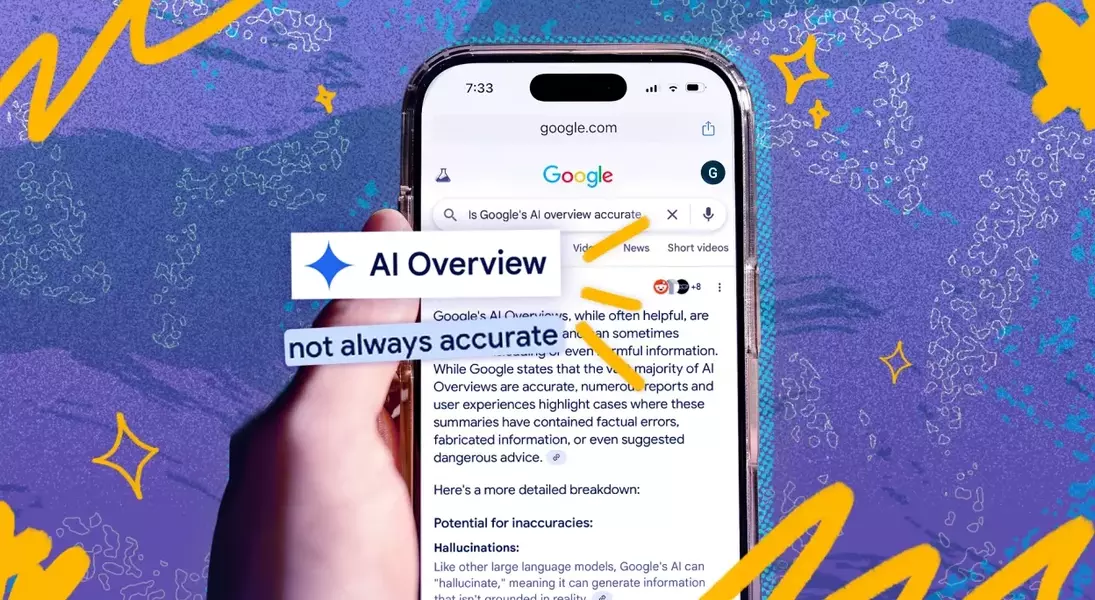
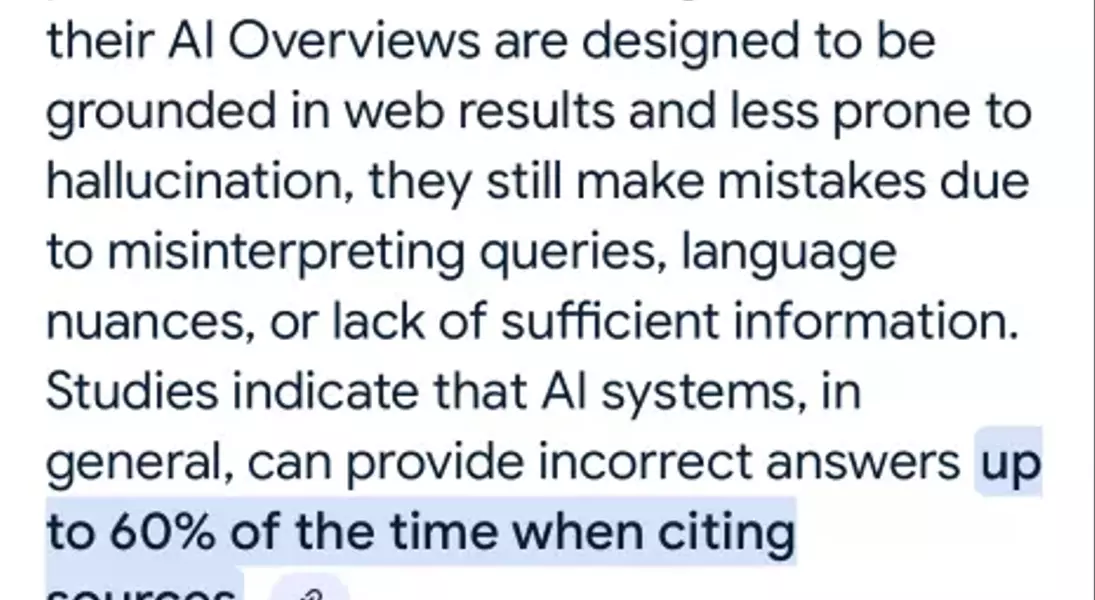
Google spokespersons claim that the majority of AI Overviews are highly factual and continuously improving. Yet, a peculiar irony emerges when querying Google's own AI Overview about its accuracy. The AI itself may erroneously suggest a much higher error rate, misinterpreting data from other AI research. Google attributes the accuracy of its AI Overviews to their foundation in search results, likening their reliability to older features like 'featured snippets,' which have also been known to provide inaccurate or misleading information. Personal tests, while not exhaustive, indicated that a smaller proportion of AI Overviews (around 20%) provided inaccurate or misleading answers, suggesting the problem is present, though perhaps less pervasive than some AI responses might imply.
AI Mode Versus AI Overviews: A Tale of Two Answers
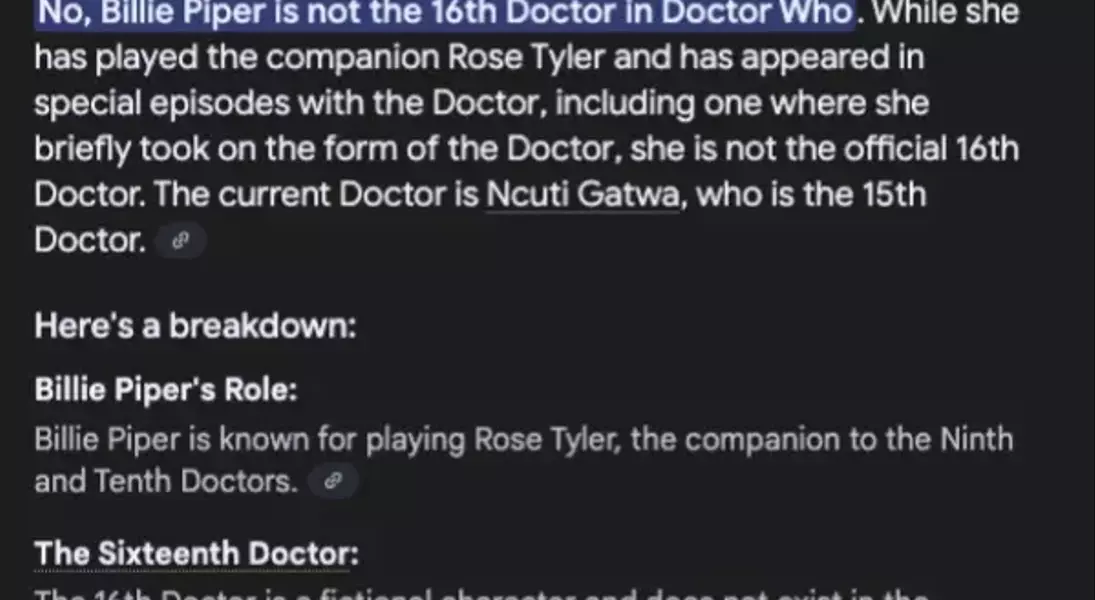
The inconsistencies within Google's AI offerings become particularly evident when comparing AI Overviews with 'Google AI Mode.' For complex or nuanced queries, such as the identity of the 16th Doctor in 'Doctor Who,' AI Overviews can confidently provide incorrect or outdated information, even contradicting widely available public statements. In contrast, Google AI Mode, which is based on the latest Gemini models, can deliver a more comprehensive and nuanced response, reflecting a deeper understanding of the subject matter. This disparity suggests that Google is knowingly presenting less accurate information in its more visible AI Overviews, while a more reliable but less accessible answer is available just one click away. Google explains this by stating that AI Mode requires more processing power and that its advanced results will gradually be integrated into AI Overviews.
Current Events and Cryptocurrencies: AI Overview's Knowledge Gaps
The challenges for AI Overviews extend to current events and rapidly evolving topics. For instance, when asked about the next Moon mission, the AI Overview provided an outdated launch date, citing a NASA press release from January 2024, despite a more recent update in December 2024. Similarly, a query regarding 'Elon Musk DOGE controversy' yielded information about a settled lawsuit from November 2024, missing more recent and significant developments. While these examples highlight areas for improvement, it is important to note that many AI Overviews still offer helpful and accurate summaries, such as tips for vegan cooking or car dent removal. Ultimately, the question of whether occasional inaccuracies outweigh the general utility of AI Overviews remains a matter of perspective, even as Google continues to integrate these features more deeply into its search experience.
