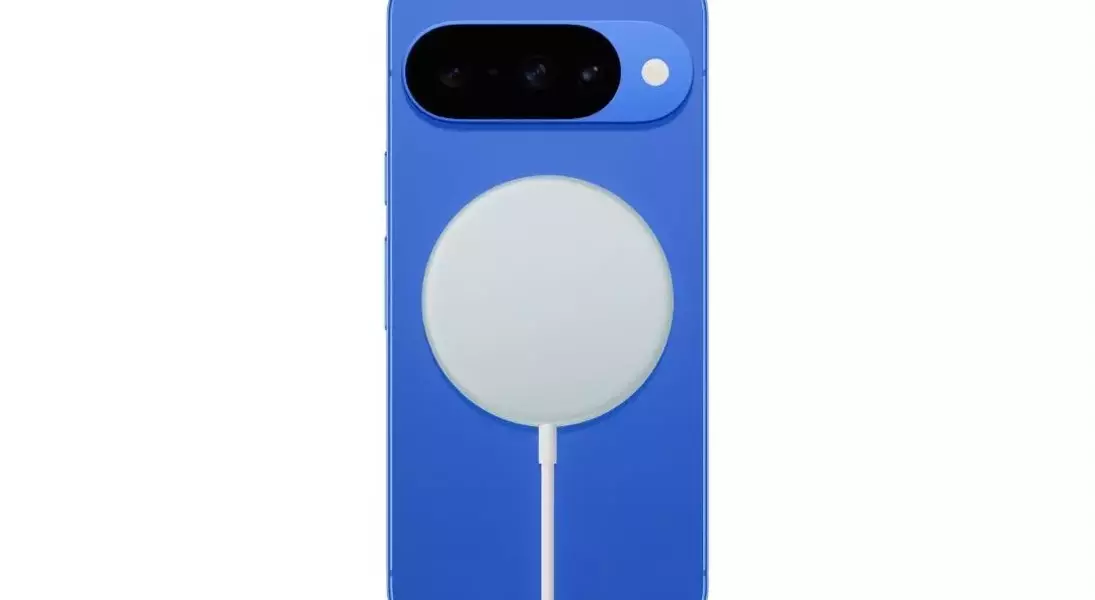
Emerging details strongly suggest that Google's next-generation Pixel 10 lineup will embrace Qi2 wireless charging, a move that would integrate magnets directly into the device's structure. This represents a significant step for Android, providing a direct competitor to Apple's well-established MagSafe ecosystem. The most compelling evidence supporting this transition is a recently leaked photograph showcasing a Pixel 10 with a magnetic wireless charging accessory firmly affixed to its rear.
The image, shared by a reputable source known for accurate technology leaks, prominently displays a vibrant blue Pixel 10 model. This particular device, believed to be the standard version based on prior visual releases, is shown interacting seamlessly with what appears to be a magnetic wireless charging puck. This visual confirmation aligns with earlier reports concerning Google's \"PixelSnap\" accessory range, even though this specific charger has not been previously unveiled. Prior speculations had left open the possibility that magnetic charging might rely on specialized phone cases, similar to solutions adopted by other manufacturers. However, this new imagery clearly demonstrates a direct magnetic attachment to the phone itself, confirming Google's decision to embed magnets within the handset, akin to Apple's approach.
Further supporting the notion of built-in magnetic capabilities are reports indicating a slight increase in the Pixel 10 series' thickness and weight compared to its predecessors. Such design adjustments often accommodate new hardware, lending credence to the idea that Google is fully committing to integrated magnetic Qi2 support. The Qi2 standard, developed with Apple's collaboration, is an industry-wide initiative for magnetic wireless charging. While only a few Android devices currently offer this feature, or are designated as \"Qi2 Ready\" through case compatibility, the Wireless Power Consortium's recent announcement of 25W charging speeds for Qi2 hinted at an imminent wave of compatible Android smartphones. The Google Pixel 10 appears poised to lead this significant technological shift, promising enhanced convenience and efficiency in wireless power delivery.
Innovation and user convenience continue to drive technological advancements, exemplified by Google's anticipated integration of magnetic wireless charging in the Pixel 10. This forward-thinking approach not only elevates the user experience by simplifying charging but also fosters a more interconnected and standardized tech landscape. By embracing such universal standards, companies pave the way for greater interoperability and accessibility, ultimately benefiting consumers through more efficient and seamlessly integrated devices that enhance daily life.
