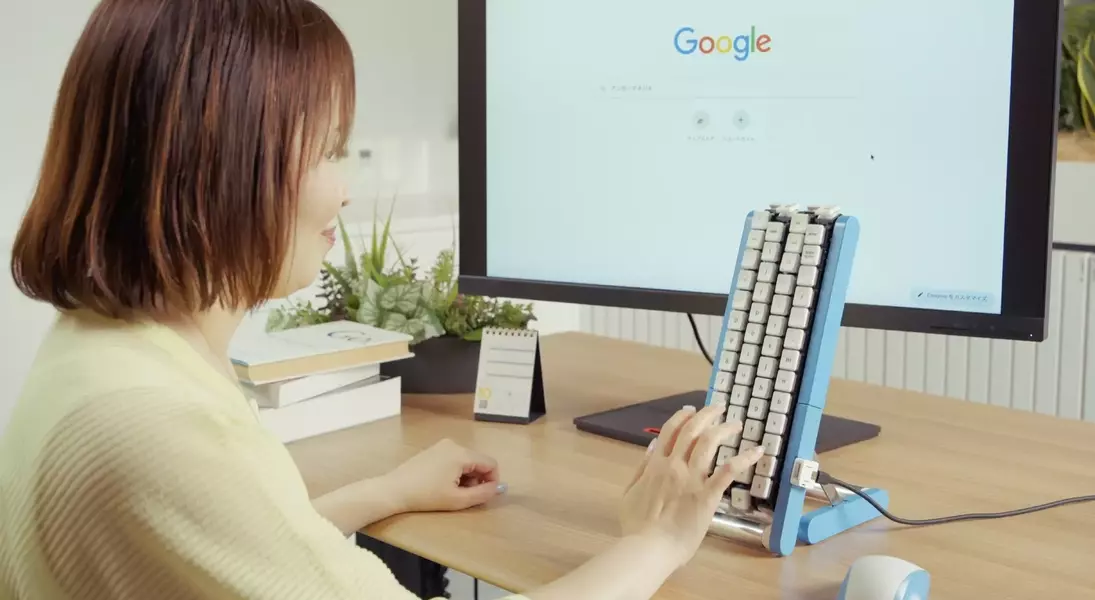
Google Japan has once again captured attention with its innovative, albeit unusual, take on keyboard design, introducing the Gboard Conveyor Belt Version. This latest creation, which literally brings keys to the user's fingertips on a rotating belt, is a testament to the company's long-standing tradition of quirky inventions, following previous designs like the rotary and extended-stick keyboards. The new design, humorously explained in a promotional video, suggests a paradigm shift in typing, where user movement is minimized in favor of the keys coming to them. This playful approach to technology sparks both amusement and a hint of nostalgia for a Google known for its lighthearted ingenuity before its evolution into a corporate giant.
The concept behind this conveyor belt keyboard is to enhance typing fluidity and productivity, drawing a parallel to factory assembly lines. Future plans for this unique peripheral include a variety of aesthetic choices, a high-speed setting to hone hand-eye coordination, and an intriguing voice guide that vocalizes each key as it passes. While these advancements promise a novel typing experience, the underlying sentiment for many observers is a longing for the earlier, more whimsical era of Google, where such imaginative projects were a more common reflection of the company's spirit.
The Ingenious Design of the Gboard Conveyor Belt Keyboard
Google Japan's latest creation, the Gboard Conveyor Belt Version, is a remarkable example of unconventional design in keyboard technology. This innovative device features columns of vertically stacked keys that circulate on a belt, allowing users to type without moving their hands. The core idea is to deliver the correct key directly to the user's fingertips, streamlining the typing process. As highlighted in the promotional material, the concept draws inspiration from the efficiency of factory conveyor belts, aiming to translate that productivity into a novel typing experience. This design represents a bold departure from traditional keyboard layouts, reflecting Google Japan's history of experimental and imaginative peripheral concepts.
The Gboard Conveyor Belt Version builds upon Google Japan's legacy of introducing unique input devices, such as the previously launched rotary keyboard and an elongated keyboard composed of single keys. This newest iteration is arguably the most imaginative yet, embodying a "touch-and-go" typing philosophy. The company is actively exploring further enhancements, including a range of vibrant color options for personalization, and a high-speed mode specifically designed to improve users' hand-eye coordination. Additionally, a future development includes a "voice guide" feature, where the keyboard verbally announces each key as it approaches, adding another layer of interaction to this already distinctive typing solution. This product showcases a playful yet thoughtful approach to human-computer interaction, aiming to make typing more intuitive and engaging.
A Whimsical Reminder of Google's Past Innovation
The introduction of the Gboard Conveyor Belt Keyboard by Google Japan evokes a sense of nostalgia, serving as a powerful reminder of Google's earlier days—a period characterized by unbridled creativity and a unique sense of humor. Before its transformation into a more corporate entity, Google was known for its playful and innovative projects that often bordered on the whimsical, demonstrating a freedom of thought that captivated users worldwide. This latest keyboard, with its eccentric design and ambitious future features like a voice guide and high-speed mode, harks back to that era, suggesting that at least within its Japanese division, the spirit of lighthearted invention continues to thrive, untouched by broader corporate shifts.
This unconventional keyboard, which aims to revolutionize typing by bringing keys to the user, offers more than just a new way to input text; it's a cultural artifact that speaks to a certain loss of creative abandon in the tech industry. The Gboard Conveyor Belt Version, along with its predecessors like the rotary and elongated-stick keyboards, showcases a willingness to experiment and challenge conventional wisdom. For many, it underscores a longing for the days when technology companies were perceived not just as profit-driven entities, but as innovators capable of delightful and surprising inventions. Google Japan's continued commitment to such imaginative projects serves as a heartwarming echo of Google's foundational ethos, reminding us of the joy found in pure, unadulterated innovation.
