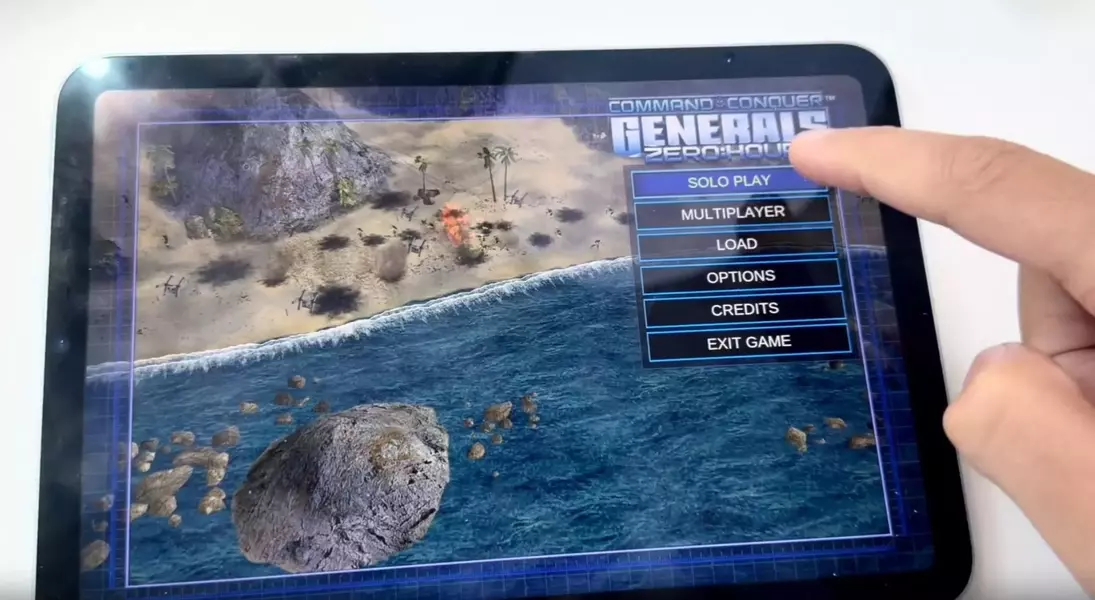
In an exciting development at the intersection of artificial intelligence and gaming, a leading figure from Google AI Studio has successfully adapted a classic real-time strategy game for modern mobile platforms. This achievement highlights the growing potential of AI in streamlining complex development processes.
Details of the AI-Assisted Game Porting Project
On July 4th, Ammaar Reshi, who heads product and design at Google AI Studio, made waves with his announcement on X regarding the successful port of the 2003 strategy classic, "Command & Conquer: Generals – Zero Hour," to iOS devices. This remarkable undertaking utilized Anthropic's advanced Claude Fable 5 AI model, which recently became accessible following a temporary restriction by the U.S. government.
The port is a direct evolution of an existing Linux and macOS version of the game developed by The Super Hackers. Reshi emphasized that this was a collaborative effort between human expertise and artificial intelligence. While the AI, specifically Claude Fable 5, handled much of the coding and debugging, human testers were crucial for identifying and addressing issues—such as a non-functional mini-map or unexpected audio cues—that the AI alone could not perceive. This synergy resulted in a native iOS application, not an emulation, complete with intuitive touch controls tailored for the mobile experience, including tap-to-select, drag-to-create-boxes, and long-press-to-deselect functionalities.
Interested players can now access the port via its GitHub page, though they will need to provide their own copy of the original game. Reshi's project consumed a substantial amount of Claude Max's processing power, incurring a cost of $100-$200 in tokens within just two days, underscoring the intensive computational resources required. He noted that other AI models, including Opus 4.8, proved inadequate for the task, highlighting Fable 5's unique capabilities.
Despite this success, Reshi remains cautious about the general applicability of this method. He expressed skepticism about porting other older titles, like "Red Alert 2," due to the potential lack of accessible source code. Furthermore, the prospect of game developers freely sharing their proprietary source code for AI-driven ports raises concerns about intellectual property and the market for future remasters or remakes, as AI models are designed to learn from all data they process.
This initiative represents a pivotal moment, showcasing how AI can significantly augment human developers in bringing beloved older titles to new platforms. However, it also brings to light the ethical and practical considerations that will need to be navigated as AI continues to integrate deeper into the creative and technical facets of the gaming industry.
