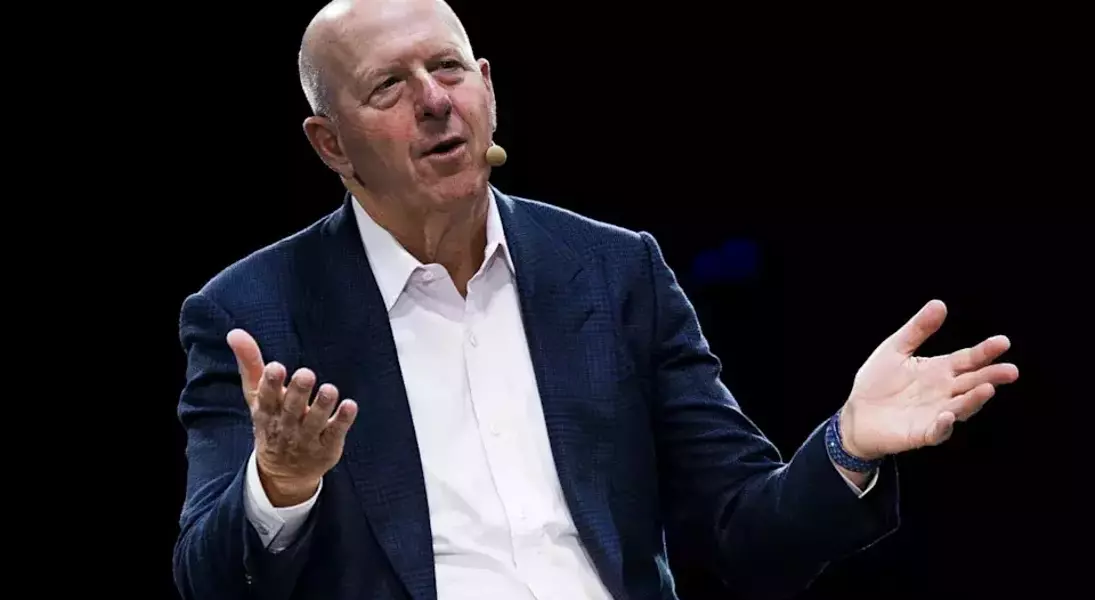
Despite prevailing concerns about an economic downturn, Goldman Sachs CEO David Solomon presents an optimistic forecast for the 2026 economic landscape. His perspective is rooted in several key factors, including robust governmental financial aid, substantial capital flowing into artificial intelligence, and a generally more favorable environment for businesses. This positive sentiment is further bolstered by data indicating increased consumer spending, signaling a healthy and active market contrary to the 'doom and gloom' narratives.
Goldman Sachs CEO Foresees Robust Economic Growth and Surging IPO Market in 2026
New York, NY – February 15, 2026 – In a recent interview, David Solomon, the Chief Executive Officer of Goldman Sachs, articulated a distinctly contrarian and sanguine view of the economic prospects for 2026. While many analysts continue to voice apprehension regarding a potential recession, Solomon emphasized a macroeconomic backdrop characterized by significant strengths. He specifically pointed to the pervasive fiscal support measures, the remarkable level of capital investment channeled into artificial intelligence (AI) technologies, and a progressively accommodating business regulatory environment as primary drivers for this positive outlook. This optimistic stance echoes similar sentiments from other financial titans, notably Bank of America CEO Brian Moynihan, who cited robust consumer spending figures for January 2026, indicating nearly a 5% increase over the previous year, with broad-based participation across various income demographics.
Solomon further elaborated on an anticipated resurgence in strategic business activities, particularly in the realm of mergers and acquisitions (M&A) and initial public offerings (IPOs). He suggested that discussions around IPOs are intensifying, with expectations for several offerings of unprecedented scale. This comes on the heels of a strong earnings period for major banking institutions, including Goldman Sachs and JPMorgan, which have demonstrated resilience through consistent fee generation, margin protection, and adept credit risk management amidst economic fluctuations. Goldman Sachs' latest quarterly results, for instance, revealed a comfortable beat on earnings per share despite a revenue miss attributed to a temporary accounting adjustment related to the divestment of its Apple Card business. The bank reported an EPS of $14.01 against an expected $11.65, demonstrating significant year-over-year growth.
Looking ahead, Goldman Sachs economists, including Jan Hatzius, project a substantial 2.9% real growth and 5% nominal growth for the U.S. economy, with potential for even stronger performance. The investment banking sector is poised for a busy year, with global M&A volumes experiencing a notable surge in 2025, driven by a record number of deals exceeding $10 billion. The IPO market is also heating up considerably, with U.S. IPO proceeds reaching $44 billion in 2025, a significant jump from previous years. Goldman Sachs forecasts a potential quadrupling of U.S. IPO proceeds to $160 billion in 2026, with the number of offerings doubling. High-profile companies such as SpaceX, OpenAI, Anthropic, Stripe, and Databricks are reportedly laying the groundwork for substantial IPOs or tender offers, signaling a vibrant and active capital market in the coming year.
The current economic narrative, as presented by leading financial institutions, offers a compelling counterpoint to the widespread fear of recession. The confluence of strong fiscal policies, transformative technological investments, and resilient consumer behavior paints a picture of an economy poised for continued growth and significant activity in capital markets. While concerns about deficits persist, the overall sentiment points towards a dynamic and expanding financial landscape.
