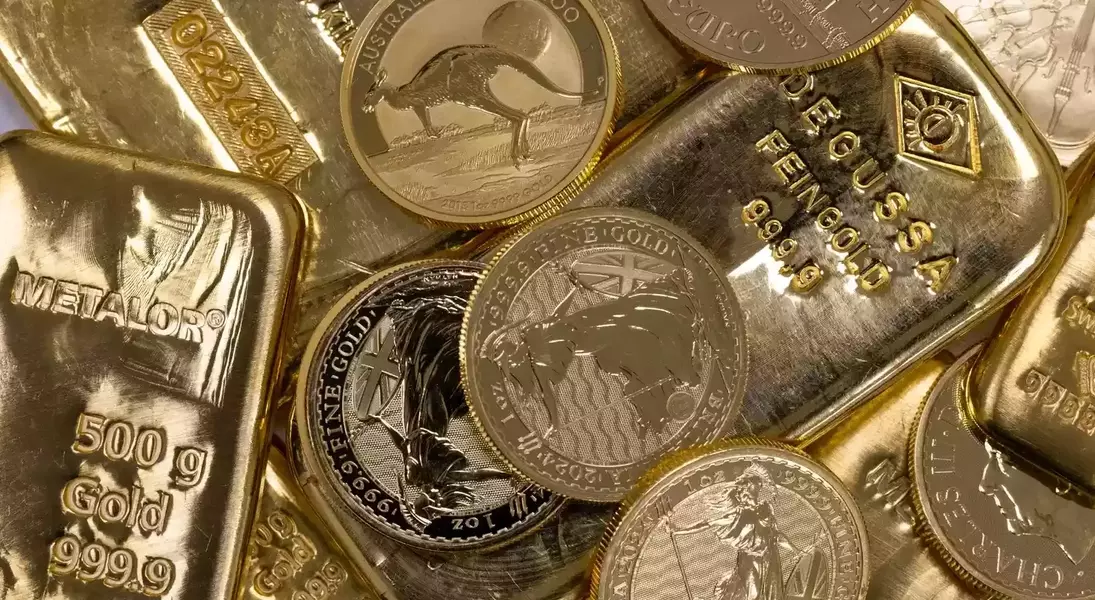
Gold prices have recently reached unprecedented levels, fueled by a confluence of geopolitical instability and a growing skepticism toward the U.S. dollar's value. This surge highlights gold's enduring role as a safe-haven asset, attracting significant interest from both institutional and individual investors seeking to protect their wealth amidst economic turbulence. The renewed focus on precious metals as a hedge against various global risks underscores a shift in investment strategies, with many re-evaluating traditional financial instruments in favor of tangible assets.
On a recent Wednesday, the value of spot gold soared to a new peak, almost touching the $4,900 per troy ounce mark. This impressive ascent has led many in the investment community and media to speculate about the possibility of gold reaching $5,000 for the first time. Although U.S. equity markets saw a recovery from earlier anxieties, particularly those related to former U.S. President Donald Trump's interactions with European leaders and the geopolitical situation surrounding Greenland, the lingering uncertainty continued to steer investors towards assets perceived as safe havens. This consistent demand for gold and other precious metals reflects a broader concern about the stability of global financial systems and the potential for unexpected political shifts to impact economic performance.
Following this peak, gold prices experienced a slight dip as market tensions somewhat alleviated. Similarly, silver, which has also demonstrated robust performance in recent times, saw its value decline marginally. However, the overarching question for market observers remains whether these precious metals can maintain their exceptional performance into the coming year. In 2025, precious metals were among the top-performing asset classes, with silver leading the charge with an impressive 146% gain, closely followed by gold. If this trend of increasing investor and central bank allocation to gold continues, a further upward trajectory in spot prices is highly probable.
A notable observation from last year, highlighted by JPMorgan analyst Nikolaos Panigirtzoglou, was the emergence of a "debasement trade." This trend saw investors funneling capital into assets like gold, which are traditionally considered safeguards against fears such as persistently high government debt and geopolitical unrest, while simultaneously moving away from the U.S. dollar. This strategy reflects a widespread concern about the potential erosion of currency value due to expansive fiscal policies and international tensions.
Panigirtzoglou's analysis further revealed that the proportion of gold within central banks' total reserves increased during the final quarter of 2025. Based on the acquisition rates observed in the first three quarters of the year, he projected that gold's share could have reached an unprecedented high, close to 30%. This significant accumulation by central banks, alongside endorsements from seasoned investors like Bridgewater Associates' Ray Dalio and DoubleLine Capital's Jeff Gundlach, who have publicly advocated for gold allocations, reinforces the metal's growing appeal as a crucial component of a diversified investment portfolio.
The clear divergence in performance between the U.S. dollar index and the popular SPDR Gold ETF (GLD) over the past year offers a compelling illustration of these shifting investment preferences. While the dollar index has depreciated by almost 9%, the GLD exchange-traded fund has soared by more than 75% within the same timeframe. This stark contrast underscores the market's response to the current economic and geopolitical climate, with investors increasingly favoring gold as a bulwark against currency devaluation and broader market volatility. The continued interest from major financial players and central banks suggests that gold's role as a key investment asset is likely to strengthen in the foreseeable future.
